Showing posts with label bear. Show all posts

Tuesday, February 12, 2019

Lincoln’s Poem About Working Terriers


Abraham Lincoln had the first Presidential dog ever photographed -- a dog named "Fido" -- and he is surely the first President to have ever written a poem about a hunting terrier.

Before there were pedigree terriers in America there were cross-bred feists (sometimes spelled "fice" or "fyce") -- small, scrappy dogs with a terrier genetic base. These dogs were used for everything from ratting to fox hunting, and even bear hunting.

The first know written use of the term feist (written "foist") is found in George Washington's diary in 1770 ("A small foist-looking yellow cur.").

Feists were used for squirrel, possum, raccoon, deer, and fox hunting, and found particular favor among bear hunters for their fearlessness and ability to worry a bear enough that they would bolt out of thickets.

Teddy Roosevelt's favorite dog -- Skip -- was a small feist he obtained from John Goff during a 1905 bear hunt, but Abraham Lincoln was the first President to write a poem mentioning the small purely-American hunting dog.

In the poem below, written in 1844 for his friend Andrew Johnston, Lincoln mocks the bragging hunter while giving a nod to the bravery of the hounds and the need to curb "bears [that] preyed on the swine".

Later on William Faulkner would feature a feist as a prominent component of his short novel, "The Bear".

The Bear Hunt

By Abraham Lincoln

A wild-bear chace, didst never see?
Then hast thou lived in vain.
Thy richest bump of glorious glee,
Lies desert in thy brain.

When first my father settled here,
'Twas then the frontier line:
The panther's scream, filled night with fear
And bears preyed on the swine.

But wo for Bruin's short lived fun,
When rose the squealing cry;
Now man and horse, with dog and gun,
For vengeance, at him fly.

A sound of danger strikes his ear;
He gives the breeze a snuff;
Away he bounds, with little fear,
And seeks the tangled rough.

On press his foes, and reach the ground,
Where's left his half munched meal;
The dogs, in circles, scent around,
And find his fresh made trail.

With instant cry, away they dash,
And men as fast pursue;
O'er logs they leap, through water splash,
And shout the brisk halloo.

Now to elude the eager pack,
Bear shuns the open ground;
Th[r]ough matted vines, he shapes his track
And runs it, round and round.

The tall fleet cur, with deep-mouthed voice,
Now speeds him, as the wind;
While half-grown pup, and short-legged fice,
Are yelping far behind.

And fresh recruits are dropping in
To join the merry corps:
With yelp and yell,--a mingled din--
The woods are in a roar.

And round, and round the chace now goes,
The world's alive with fun;
Nick Carter's horse, his rider throws,
And more, Hill drops his gun.

Now sorely pressed, bear glances back,
And lolls his tired tongue;
When as, to force him from his track,
An ambush on him sprung.

Across the glade he sweeps for flight,
And fully is in view.
The dogs, new-fired, by the sight,
Their cry, and speed, renew.

The foremost ones, now reach his rear,
He turns, they dash away;
And circling now, the wrathful bear,
They have him full at bay.

At top of speed, the horse-men come,
All screaming in a row,
"Whoop! Take him Tiger. Seize him Drum."
Bang,--bang--the rifles go.

And furious now, the dogs he tears,
And crushes in his ire,
Wheels right and left, and upward rears,
With eyes of burning fire.

But leaden death is at his heart,
Vain all the strength he plies.
And, spouting blood from every part,
He reels, and sinks, and dies.

And now a dinsome clamor rose,
'Bout who should have his skin;
Who first draws blood, each hunter knows,
This prize must always win.

But who did this, and how to trace
What's true from what's a lie,
Like lawyers, in a murder case
They stoutly argufy.

Aforesaid fice, of blustering mood,
Behind, and quite forgot,
Just now emerging from the wood,
Arrives upon the spot.

With grinning teeth, and up-turned hair--
Brim full of spunk and wrath,
He growls, and seizes on dead bear,
And shakes for life and death.

And swells as if his skin would tear,
And growls and shakes again;
And swears, as plain as dog can swear,
That he has won the skin.

Conceited whelp! we laugh at thee--
Nor mind, that now a few
Of pompous, two-legged dogs there be,
Conceited quite as you.

Saturday, February 18, 2017

Faulkner's Feist


I find that some paragraphs need shattering.

A case in point is this one from William Faulkner's The Bear in which he writes of the little bear-hunting terrier.

The words are all Faulkner, but the carriage returns are my own.

Apologies if the addition of space to the text is an irritation, but this is such an intricate piece of work done in such dense rhetorical wood,  that I fear the good bits may get lost if presented too quickly as a whole.


..[A]nd a little dog,

nameless and mongrel and many-fathered,

grown

yet weighing less than six pounds,

who couldn't be dangerous

because there was nothing anywhere much smaller,

not fierce

because that would have been called just noise,

not humble

because it was already too near the ground to genuflect,

and not proud

because it would not have been close enough

for anyone to discern what was casting that shadow,

and which didn't even know it was not going to heaven

since they had already decided it had no immortal soul,

so that all it could be was brave

even though they would probably call that too

just noise.
.

Tuesday, August 28, 2012

The Beast of Exmoor and Other Nonsense

A repost from February 2009

Stories of feral "beasts" lurking in the darkness of the English countryside have been around for hundred of years, and were already old when Sir Arthur Conan Doyle used such a tale as the basis of The Hound of the Baskervilles.

The stories persist, of course.

Here are a few contemporary descriptions of various U.K. beasties:
  • Beast of Muchty: "I was travelling to my work at 04:30 when a cat the size of a Lurcher, jet black, small head, very slim with a long tail ran in front of my car (about fifty yards). The whole incident was over in 2 seconds ... "
  • Beast of Bont: "The main evidence for the existence of these sharp-clawed, but mysterious stalkers has been the death toll among vulnerable herds of sheep."
  • Beast of Barford: "It is twice the size of a dog print and clearly shows three huge claws and a large pad at the back. Wildlife experts believe the print is the most conclusive evidence yet that big cats are roaming Warwickshire."
  • The Beast of Gloucester and The Black Beast of Inkeberrow: "A 'huge black beast' ran in front of Ray Lock's car on the other side of the river near Lydney... one evening near Monmouth where it was described as 'jet black and about the size of a large dog.'"
  • Beast of Burford: "A £5,000 reward has been offered for the capture of a 'big cat' which has been terrorising a farming community ..... Pc Ray Hamilton, wildlife crime officer at Thames Valley Police, admitted there had been several sightings - but said this was not unusual. 'We've had sightings of everything you could imagine - pink flamingos, lions, dingos, wolves and even a giant ant-eater in Pangbourne.'"

The human desire to create imaginary "beasts" seems to have some correlation to the loss of large predators and true wilderness.

With the extinction of the bear and the wolf, the U.K. has lost all large predators and now has to suffice with two rather unimpressive meso-predators, the fox (average weight 15 pounds and living almost entirely off of mice) and the badger (average weight around 25 to 30 pounds and living almost entirely off of worms, beetle grubs, and small bulbs).

So what are these large feral "beasts" seen in the English countryside, and why is it that they are never actually found?

The short answer is that these "beasts" are nothing more than large escaped lurchers (coursing dog crosses) that have taken to livestock-worrying. As an article on the Beast of Osset notes:

"On a parkland estate in rural Yorkshire a poacher's lurcher (a fast greyhound-like hunting dog) was at large for six months but was sighted only once during that period. The gamekeepers knew it was there because they found the roe deer that it had killed, but it took a concerted effort with volunteers to flush it out of the wood."


In fact, sheep worrying is a serious problem
in the U.K., and while any dog can end up attacking sheep, it is the larger dogs such as Lurchers and Bandogs (mastiff crosses) that do the damage that lead some to think a large cat or lion is loose in the English countryside.


Sheep worrying by lurcher.


In fact, a lurcher really does look like a large cat if seen in the dark or fog, and especially if it is seen only briefly from a moving car, as most "big cat" sightings are.

A Bandog (what the Hound of the Baskervilles was) really does look like a lion if seen under the same circumstances.

What is amazing about the "big cat" stories in the U.K., however, is how easy they are disprove, and yet how utterly resistant people are to having their bubbles burst.

Take the issue of "big cat footprints". Most of these footprints are clearly large dog prints. How can we be sure? Simple -- all the footprints show claw marks. All the large cats, except the cheetah, however, walk with retracted claws, otherwise they would quickly dull


This foot print of the "Beast of Barford"
is held up by a young hopeful.


The other issue has to do with hounds -- the U.K. is crawling with fox packs, and yet none has ever chased and cornered a large cat other than the now very rare native Scottish Wildcat, which is not much larger than a tabby.

You can be sure that if the big cats were out there, British fox hounds would have found them by now! In the U.S., small teams of less experienced hounds manage to track down marauding farm-country cougars in only a few hours time.

Finally, we come to the issue of rub strips -- bits of carpet and tacks impregnated with a mixture of catnip and beaver castoreum -- that have failed to turn up any positive large cat hits in the U.K.

Wherever these rub strips are used -- whether in North America, South American, Europe, Africa, or Asia -- they are quickly found and rubbed against by large cats and other predators.

A DNA analysis of fur caught on the hooks of the carpet tacks can not only identify what species of animal has left it behind, it can identify what specific animal has come by in the night.

Rub strips are so accurate they are now routinely used to survey population densities of such elusive large cats as leopard, lynx, cougar, and jaguar, as well as badger, wolverine, bear, wolf, coyote and bobcat.

Of course, "Beast of" stories are not unique to the U.K.

Here in the United States we have Sasquatch and some local tales of little green men, swamp creatures, and even a werewolf or two (all delivered with a wink to small children).

In truth, however, we have far fewer fantasy "Beast" stories than the U.K. for a simple reason: we have more real top end predators.

In states like Minnesota, Wyoming, Idaho, Montana and North Carolina we really do have wolves prowling the remote sections.

In Florida, Louisiana and South Carolina we really do have 12 foot lizards slithering out of drainage ditches and quite capable of eating an old lady alive.

Mountain lions really do prowl the remote sections of Idaho, Wyoming, Montana, New Mexico, Colorado and even Texas, and are now being found as far east as Iowa.

Black bears number well over 400,000 in the lower 48 states, and there are over 100,000 more in Alaska.

Bobcats are everywhere, as are coyotes -- the later so common that there are bounties on them, including in my home state of Virginia.

No one living in a large America city today lives more than two hours away from a major top-end predator of some kind.

This is a glorious thing, and something we should count among our greatest national treasures.

But a "Beast of Bondwynn?" No, we don't have that.

In a world in which top-end predators are still common, there is no reason to invent ghost stories.

.

Friday, September 23, 2011

Bear Versus Squid

Over at Sea Monster, Emmett Duffy has this awesome pictue of a black bear with a Humboldt Squid -- no doubt a beach scavage.


.

Wednesday, September 08, 2010

Bear Meets Deer


This Whitetail buck was struck by a car just as young and hungry black bear happened by.


Mother Nature takes care of the rest.


No, wildlife does not die on a morphine drip with Mozart on the stereo.


And yes, bears do eat meat when they can.

There are now about 500,000 black bear in the U.S.

I'm not sure where these photos come from (New Jersey and Virginia have both been suggested), but black bears are thriving all over, with more than 4,000 black bears in New Jersey and maybe 22,000 in Virginia.


Entrails are generally the first course for any predator. This bear will be full long before it gets to the back strap or rump.

Huge hat tip to Teddy M. for sending along these photos!
.

Monday, December 14, 2009

Hook and Bullet Conservation Results in More Game

The picture at right is an American bobcat taken in Michigan. We have bobcats all over the U.S., and in surprisingly large numbers -- over 3,000 were shot last year in the little state of Virginia alone (37th largest out of our 50 states), where we also shot over 1,000 black bear last year and have a bounty on coyote (our eastern coyote is quite a bit bigger than the western variety). Depite (or because of it), all game numbers continue to rise due to excellent game management.

Bear, lion and bobcat are often hunted with dogs in the U.S., and increasingly large numbers of coyotes are being hunted with hounds and lurchers.

Black bear numbers are on the increase over much of the U.S., and probably top 500,000, while cougar numbers are skyrocketing in the West, and pushing young male animals further east every year.

Coyote are now found in every state, and wolves are at carrying capacity in Minnesota with rising numbers in Wyoming, Montana and Idaho.

The return of top-end predors to our forests and mountains is due to hook and bullet conservation -- the marriage of land and habitat protection with regulated hunting based on scientific census of animal populations. Hook and bullet conservation was pioneered by people like George Bird Grinell, Theodore Roosevelt, Gifford Pinchot, William Tecumseh Sherman, and John Lacey -- all founding members of the Boone and Crockett club which remains the official recorder of big game trophy animals and the "keeper of the flame" as far as Fair Chase hunting in America.

Nothing has helped America's wildlife recover and flourish as much as hook and bullet conservation which has given forest a voice, and wildlife a vote.

This post recycled from 2005.
.

Thursday, June 25, 2009

The Cull of the Wild


This book set out the tenets of wildlife management still in use today.


This post is reprinted from this blog circa June, 2005


Despite a three-fold increase in U.S. population since 1900, the U.S. now has more bear, cougar, buffalo, turkey, geese, duck, fox, raccoon, possum, alligator, groundhog, bald eagle, pronghorn, wolf, coyote, bobcat, and deer than at any time in the last 100 years. Beaver, turkey and river otter have been reintroduced into areas where they were wiped out, and wolf, elk and cougar are beginning to return to the east.

Though animal rights organizations decry sport hunting, the truth is that organizations such as Ducks Unlimited, the Rocky Mountain Elk Foundation, Trout Unlimited, Pheasants Forever, Quail Unlimited, and the National Wild Turkey Federation are the backbone of true wildlife protection in the United States. These organizations, and their state and local affiliates, work to protect and improve habitat across the U.S., as well as fund wildlife reintroduction and research campaigns.

For their part, groups such as the Humane Society of the United States and People for the Ethical Treatment of Animals (PETA) are little more than direct mail mills. Both organizations are entirely absent from all habitat protection efforts in the U.S., and neither organization runs even a single animal shelter in the U.S. despite the scores of millions of dollars they collect from the public. Instead these organizations send out millions of pieces of direct mail every year -- all of it highly emotional and designed to get suburban matrons to part with their "most generous gift of $10, $20 or even $50".

One of the perennial topics of animal rights direct mail campaigns is a push to outlaw trapping. Carefully staged photos and antique traps are used to pluck at the heartstrings, but donor beware! It should serve as a warning that blue-chip environmental organizations such as the National Audubon Society have sued the Humane Society (and won) in order to preserve the use of leghold traps as a wildlife management tool. All of the wolves now in the Yellowstone, for example, are routinely caught in leghold traps in order to inoculate them against rabies and distemper and to switch out the batteries on their radio-tracking collars. Modern leghold traps, properly set, are far more selective and less brutal than those that existed 100 or even 50 years ago -- a fact conveniently omitted from the direct mail literature of animal rights advocates.

Trapping for pelts in the U.S. is now largely independent of wildlife numbers -- when trapping numbers go down it is not because of a dip in the target species population, but because of a dip in pelt prices.

As of this writing, green (untanned) fox or raccoon pelts sell for between $8 and $12 dollars apiece -- not much considering the time and effort it takes to boil, dye and and wax a trap, set it out, check it daily, and skin and flesh the resulting catch.

That said, a surprising number of fox and raccoon are still trapped in the U.S. In the winter of 1999-2000, for example, when pelt prices were quite low, 29,739 fox were trapped in the state of Virginia (15,632 red fox and 14,107 Gray Fox), as well as 83,369 raccoon, 3,304 coyote, and 3,050 bobcat. In Pennsylvania that same year, 63,654 fox were taken (26,794 Gray fox and 36,860 red fox), as well as 107,407 raccoon, 9,508 coyote, and 58 bobcat.

For comparison purposes, the state of Virginia is 42,700 square miles in size, and Pennsylvania is 46,058 square miles in size as compared to England, which is 50,800 square miles and all of the UK which is 94,200 square miles in size.

.

Sunday, April 26, 2009

A Recidivist with a Tattoo, And This Is News?

Talk about your bad news bears!

The state of Maryland has caught a recidivist, whom they have identified from his tattoos.

The perpetrator in question was a young black bear found on the Eastern Shore in Maryland.

Originally thought to have come from Pennsylvania, he has been identified as a New Jersey bear based on his tattoos, his propensity for wearing "Members Only" jackets, and his insatiable love of bird seed.

The full story can be found at The Washington Post.
.

Saturday, January 03, 2009

Hunting and Fishing Like Adults

This is a recycled post from August 18, 2006 prompted by a recent discussion, in the comments section to a post about mounted Maryland fox hunting.


I got a couple of emails on my post about stocking 400 pheasants an acre in the UK.

Matt M. in Idaho correctly notes that canned birds hunts are becoming more popular in the U.S., and canned deer hunts as well. Though he lives in one of the wildest states in the U.S., there are at least four commercial bird shoots with an hour or two of where he lives.

Matt writes:

"When I was living in Pennsylvania, a local hunting preserve somehow heard I had traveled to hunt big game, so the owner assumed I was rich and would be interested in his trophy deer operation. Both assumptions are false, but I accepted his invitation to tour the place he called 'Deerassic Park.' During my two hours, I had huge trophy deer parade by me 20 yards away. The guide told me 'Five thousand dollars may seem like a lot for a deer now, but in the second week of deer season, when all your coworkers are asking if you got your deer, it won't seem so much.' He was wrong again. The deer were raised in carefully controlled pens, like cattle, to ensure the best genetics. The bucks were then periodically released. I cringed when I read purple-prose stories by 'famous outdoor writers' who embarked on the challenge of hunting deer at this place. Shooting one of my father-in-law's dairy cows would be just as challenging, and as fun."


On the other side of the coin, and on the other side of the Atlantic, Lyndsey H. writes to note that: driven bird shoots are an important part of the rural economy in the UK; that not all shoots are intensely stocked; that on those shoots that are heavily stocked the land can generally support the bird populations that have been placed on them; that the pheasants are well cared for, and that income from shoots supports the upkeep of large estates (to say nothing of game keepers and the like).

Let me begin by saying that my earlier squib on pen-raised birds and driven shoots was not intended to be the beginning of a book on canned hunts. This is a topic far outside my expertise or knowledge base.

That said, the ethics of "guaranteed hunts" has sparked considerable debate in the hunting community, and so perhaps it is (pun intended) "fair game."

Let's see if I can fence in the debate a bit. Sometimes when we define terms and try to put a fine point on things, we can find common ground.

First, let us dispense with the notion that there is an absolute right and wrong. The issues here are too big for such neat box fitting.

As with so many things, there are degrees of good and bad, and there is also the matter of perspective, which is so often shaped by economics, class, social convention, and geography, to say nothing of human population densities, biology and history.

One man's sacred cow is another man's hamburger.

Hunting is a red-hot topic so let me start by talking about something different -- fishing.

To the best of my knowledge and memory, the first fish I ever caught was a trout pulled from a large blue plastic kiddy pool set up at the Washington Boat show.

The fish were hatchery-fed trout, plainly seen against the bright blue bottom through crystal clear water. The fish had been brought in by truck from a hatchery, and the fish and cane poles were designed to attract people to a nearby boat display.

It worked. For a couple of dollars, kids could toss in a hook with a small bit of canned corn on the end, and pull out a wet and wriggling trout while their parents perused the boats.

Even at age four I knew this was not fishing. I remember feeling a little embarrassed at the artifice of the situation.

And yet, looking back on it now, what harm did it do? Trout are raised to be eaten, and we do not belabor the point when Trout Almandine is served at a restaurant.

This was not "real" fishing, of course, but at age 4 or 5 could I be expected to have memorized "Fishing With Ray Bergman"? It was fun.

And yet I no longer think kiddy pool trout fishing is a good thing.

It is not that I am against fun (I'm always for that!). I am simply against bluring the line between true fishing and slaughterhouse taking.

Yes, we want activities for children to be fast and easy. Perhaps, however, fishing is the wrong activity to satisfy this niche.

Fishing may have other lessons to teach young people – lessons about food and habitat, skill and delayed gratification, for example.

No self-respecting adult would stand in line to yank a trout from a plastic pool at an indoor boat show. Yet (and much to my amazement) adults DO show up for "pay lake" trout and catfish. What are we to make of adults that fish in such a childish manner?

Only one step up from pay-pond fishing are the folks who follow hatchery trucks to the stream in order to "get a jump" on their fellow anglers at the start of trout season. Is this "real" fishing? Not in my book.

But what I think hardly matters. Within 72-hours of opening day, half the trout placed in East Coast streams are gone - stripped from the water by "put and pull" anglers.

I will not belabor the point, nor will I venture further through the cosmology of fishing in America (catfish bait-ballers, top water bass-pluggers, crappie jiggers, surf casters, fly fishermen, tuna trollers). Suffice it to say that there are many fish, many tribes of fishermen, and many methods of fishing. Each to his own.

Let's move up the evolutionary ladder to birds.

Here too we have hunting in a variety of manifestations from "tower shoots," where captive pen-raised birds are tossed into the air from a tower while gunners blast away, to "plant and shoot" releases of birds into a field the night before, to stocked and "naturalized" birds released at the start of a shooting season.

The parallels to "kiddy pool" fishing, over-stocked pay-lakes, and "wild stocked" streams and ponds is obvious.

Again, where do we draw the line?

In my opinion, tower shoots are pathetic, and so too is any form of stocked shooting where a man or woman can plink more birds in a day than he can put in his freezer at night.

At some point, you are not "hunting," you are just killing chickens.

The issue here is not "animal rights." The issue is fakery and debasement of a true set of skills. Shooting brain-addled pen-raised birds under the umbrella of "hunting" debases the art of true hunting. When we snap-trap a few mice in the garage, we do not talk about a "holocaust of mice" -- to do so would be to cheapen the horror of the Holocaust while dramatically inflating the status of rodents and denigrating the lives of millions of once-vital human being.

Language matters.

And so it is with guaranteed bird shoots and pay-pond fishing. Angling is an art, and hunting assumes an element of field craft not evident when birds are purchased as units like Chicken McNuggets.

Hunting is about the experience over the day, not the number of fish boated or birds bagged.

But, as noted earlier, not everything is quite so simple, is it?

What are we to make of the 3,000-acre scrub farm were 1,000 pheasants and quail at a time are released into the wild three times a year?

At this population density, and at this bird-release interval, there is a fair chance that more than a few birds will die of natural causes, and some birds may even die of old age.

On a “natural" farm that is “wild-stocked,” the land may be kept not only free of development, but also free of pesticides and herbicides. Brush rows and mottes may be planted and maintained, enhancing the survivability not only of planted game birds, but also of rabbits, deer, and native songbirds.

Surely, such a bird shoot farm is morally and environmentally superiour to a "Roundup Ready" corn field or cow pasture?

More birds are shot on such a farm than are being naturally replaced, of course, but if the bags are low and a "successful" hunt still requires both a skilled dog and a skilled shot, is it really so bad a thing?

Low-stock shoots of field-acclimated birds is a bit different from a driven bird shoot where 400 to 1,000 pheasants are being stocked per acre-year. It's not entirely natural, no, but it's not entirely awful either.

Of course, some may disagree.

Let us leave bird hunting, for a moment, and now think about "big game".

On one extreme we have lions and tigers and other large and rare exotic animals that are released into 10-acre enclosures to be shot by "sportsmen."

It's easy to be outraged by this kind of activity, and no one I know thinks this is actually hunting.

That said, it's worth noting that canned big game shoots of exotic animals are a natural outgrowth of the public's fascination with "zoo babies".

Zoos routinely over-breed animals because tiger cubs and baby zebras boost attendance and generate profits. Cute baby animals quickly grow up, however, and that's a problem. It turns out that the world has more caged lions, tigers and zebras than it knows what to do with.

What to do? Answer: canned shooting preserves in Texas. It's not an accident that at one point nine board members of the San Antonio Zoo owned hunt preserves.

Not all exotic animals used in canned hunts come from large zoos. Many come from small zoos and private breeders of large exotic animals. If you have a checkbook in this country, you can buy anything from a lion to a bear, and from a bobcat to a gemsbok.

And if you have ever bought a wildife magazine with amazing shots of baby cougars, lynx, red fox, black bear and wolf, you are a small part of the problem. Most of those pictures were taken in private "photography zoos," and at least some of those baby animals were later sold, as adults, to canned hunts.

An example is as current as this morning's headlines:


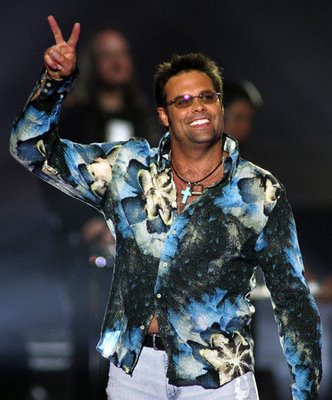
"Country music star Troy Lee Gentry (one half of popular duo Montgomery Gentry) is facing charges for shooting a tame, captive bear and then trying to mask the killing as a proper hunt.... Indictment documents made public this week showed that Gentry paid $4,650 U.S. to kill a 'trophy-caliber' bear named Cubby. The incident took place two years ago at the Minnesota Wildlife Connection, a company that claims to offer photographers a chance to capture wild animals on film. ... Gentry killed the bear using a bow and arrow while the animal was in its pen."

I think most people would agree that shooting a large, rare, exotic or tame animal in a small enclosure is several time zones removed from true hunting.

But what if the animal is less rare -- such as a Russian Boar -- and the enclosure is quite a bit bigger -- a few hundred acres?

Where do we draw the line?

Is it OK to shoot an exotic animal, such as a Fallow or Axis deer, in a very large fenced parcel of ground provided the countryside is more-or-less natural, and the animal actually runs when stalked? Is it OK to shoot it when it is pressed against the fence?

Does it matter if the animals are not exotics, but are native elk, moose, whitetail or mule deer? Is that better or worse?

What if the animals are not fenced in, but are fed every day from an automatic corn-dispensing bait station set on a timer?

Does it matter if the person shooting the animal over such a feeder is hunting for meat or hunting for trophy or sport?

If you decide it's OK to shoot wild whitetail deer on an open farm over a broadcast corn feeder, why is it not OK (as a matter of law) to do the same thing with birds?

If a mechanical caller is OK for fox and coyote, why is it illegal to use it on ducks and elk?

A lot of people will find some of these questions easy to answer, but will pause at others.

The brain dead Vegan and the knuckle-dragging slob-hunter will find all of these questions easy to answer.

So too will the older, thoughtful, skilled hunter who hunts only wild lands and who only fishes wild waters. He knows what he chooses and why.

This last point needs to be stressed.

The types of questions and dilemmas I have posed here are relatively new. Our grandfathers did not have canned hunts and potted bird shoots. This is not part of the American hunting tradition most of us grew up with.

So what has changed?

To some extent, population growth is part of the problem. Though the percentage of hunters may be less than it was in years past, the absolute number is higher than it was 50 years ago due to rapid U.S. population growth. With increasing population density and suburban sprawl has come greater distance to suitably large farms, forests and fields.

More important than suburban sprawl and hunter density, however, is the fact that America has become a land of rapidly rising expectations and a rapidly declining ability to delay gratification.

The American public wants everything it can imagine, and it wants it NOW, and it wants it “super-sized.” We want fast food, fast cars, and instant communication. We want bigger houses, more money and early retirement.

In short, we have become a nation of spoiled, rich and demanding children. The rise of commercial shooting preserves is simply an outgrowth of that phenomenon. Canned hunt operators are, in effect, telling their client base:


"We know you have zero knowledge of field craft or wildlife and that everything has to be easy for you or you will pout. So, just like your Daddy did when you were 6 years old, we are going to rig every game you play so you will always win. And when you do manage to kill some brain-addled, food dependent, hand-tamed creature, we will slap you on the back and say, 'Look what a BIG boy you are!'"

This type of canned shoot is to real hunting what peroxide-blonde hookers are to marriage: a sad charade that debases the individual and jeopardizes the institution.

Just as we have the Playboy channel and Hustler magazine selling the fantasy that every woman is a lesbian-curious nymphomaniac waiting to be unbound, so we have TV hunting shows and magazines selling the idea that every foray into the field should result in a trophy buck, a monster bear, and a bucket-mouth bass. In this sense, "Rack "Em Up" and "Antler King" feed supplements are to the game farm industry what silicone implants are to porn producers.

Just as "sexual service" ads can be found at the back of girly magazines, so too can ads for canned hunts be found at the back of hunting magazines.

It's not an accident that every episode of ESPN's "Hunting the Country" closes with a nod to the outfitter on whose land the “monster buck” was shot.

An “outfitter? What the hell is an an "outfitter"? And how can these people hunt bull elk while trailing a camera crew and talking?

The answer is that you are watching a canned hunt. In the context of television hunting shows, an "outfitter" is a fellow who trains ranch-raised elk to come to a corn-spewing time-released bait station.

"Start feeding them in the spring, and shoot 'em dead in the fall." That’s the business plan, and it’s one that hunting show producers, who need to film a new trophy kill every week, are loathe to criticize.

There are about 1,000 "canned" or potted hunts in the U.S. catering to about 500,000 hunters a year.

That may sound like a lot to folks at the Humane Society, but in fact this represents less than three percent of the 20,000,000 Americans that hunt in this country every year.

For better or worse, you can find an "idiot three percent" in almost every endeavor.

Of course, hunting is not just any sport.

Unlike skate boarding, mountain biking, or motor boating, hunting is under attack from groups like the Humane Society and PETA.

Ironically, the folks at PETA and the Humane Society are just as childish as the slob hunters.

Raised on Bambi cartoons and "Wind in the Willows" stories, the typical Animal Rights lunatic has not spent a single second considering the fact that everything that lives will also die, and that death in the wild is generally slow, painful, violent and miserable.

When a deer dies in the woods, it does not expire with a morphine drip and a Mozart concerto in the tape deck.

The alternative to hunting is not perpetual life - it is vehicle impact, wasting disease, starvation or predation.

Hunting your meat is certainly more ethical than buying it in a store. Childish Americans seem to think cows are raised pre-sectioned, wrapped in plastic, and frozen.

In fact, most feedlot cows never know one tenth the freedom of a deer. For a steer, the last hour or two of its life is typicaly spent in a crowded and lurching truck on the interstate. The last minute of its life is spent slipping on a blood-wet floor in an alien metal-clanging slaughterhouse.

A mature adult does not shrink from death -- he recognizes that life is short and red in tooth and claw.

This is the way it has always been. God did not make a mistake when He created the cycle of life and gave humans canine teeth and molars.

If you spend enough time in the woods, you will eventually see a predator kill something. A hawk or fox does not always kill quickly. In fact, it may play with its food and then eat it alive and screaming. Compared to that, a cow dies with some grace.

On the opposite end of the spectrum from the infantalized slob hunter and the anthropomorphic PETA member are serious adult hunters and anglers.

These folks know where meat comes from, and they respect both the life lived and the life taken.

While the slob hunter and the cringing Animal Rights reactionary are obsessed with the kill, the hunter is focused on the experience of hunting.

It’s almost a universal truth that if you do something for very long, you get good at it, and if you get real good at it, you begin to handicap yourself in order to prolong the experience and keep it interesting.

This not only occurs in golf and chess, it also occurs in hunting and fishing.

If you start fishing at age 5, as I did, you stop using bait by age 12. By age 15, your hooks no longer have barbs, and you are snapping the trebles off the back of your plugs. Your leader line gets thinner, and more and more fish are returned to the water.

There is nothing wrong with killing a few fish, but if you have ever caught so many you had to bury some in the backyard to get rid of them, you try to stay clear of embarrassing abundance. A great deal of dignity can be found in simple moderation.

It is perhaps a little too easy to focus on the idiocies of slob hunters. In truth, they represent a small minority, and their numbers may be in decline, rather than in ascendency. There are some small signs that America may be maturing.

Let me give you one example. When the state of Colorado banned shooting bears over bait a few years back, the number of bear hunters in the state did not decrease, it increased.

It turned out that more people were willing to hunt bear provided that the onerous stain of hunting over bait was lifted.

The trend can be seen outside of Colorado, too. The fastest growth area in hunting today is the rise of bow hunting and the increasing use of black powder. Granted many bow and black powder hunters are also going forth in shotgun and rifle season as well. But not all are.

In a day and age when whitetail deer populations are at record levels, and elk populations are holding steady or increasing over much of their range, more and more hunters are embracing the challenge of bow and blackpowder in order to keep in contact with the elements of skill and chance that are at the core of the true hunting experience.

Of course not everyone is so conscientious.

There’s always Ted Nugent. Ted Nugent, for those who do not know, is the loud adolescent faded rock-star who now holds forth on right-wing radio. He is all blood and guts, tough talk and feisty belligerence. He likes to accuse everyone else of being a weak-knee'd “pastrami-breath" liberal, and a cut-and-run chicken.

What his fans do not know is that Ted himself was a Vietnam draft dodger who got himself cut loose from service by showing up for his physical covered in his own feces and after not showering in weeks. He had a child out of wedlock and only ponied up support when the court forced him to. Real family values. A Great American.

But never mind that. He’s a hunter, right?

Well maybe not.


It turns out that Ted Nugent is not just a sunshine patriot, he is also a canned hunter. In fact, Ted runs his own canned hunt facility in Michigan called Sunrize Acres where, for a hefty fee, you can shoot tame buffalo that have been trucked to his 340-acre spread.

Along with buffalo, Ted's farm is a pay-shoot for whitetail deer ($2,000 for a doe!), wild boar, “exotic ram” (that would be farm goats for you who are wondering), and Sika and Fallow deer.

These are not wild animals -- they are trucked-in farm stock. The bison are no better than glorified farm cows, the Russian boar are no better than glorified farm pigs, the "exotic rams" are just farm goats, and the deer are corn-fed dependents.

Cartoon buffoons like Ted Nugent and his canned hunt farm are, I am sad to say, the loud and ugly public face of hunting in America today.

Last year, in my little state of Virginia, we shot 220,000 deer, and we did it without drama, canned hunts, or a peep from PETA, which is headquartered in this state.

Deer hunting in Virginia reduces crop damage, reduces deer-vehicle impacts, feeds poor hungry families, saves our forests and hedgerows from being over-browsed, stems Lyme Disease, and generates jobs and economic benefits across the state.

But the big "hunting story” told in my state last year was not about the ecological or economic benefits of open-farm natural deer hunting. It was about how Dick Cheney shot his buddy in the face in Texas. Nearly every story also mentioned his canned bird hunting exploits in Pennsylvania.

As for today's newspaper hunting story -- the one about how Troy Gentry was caught shooting a tame black bear in an enclosed pen in Michigan -- my bet is that the hunting TV shows will be silent about the travesty. After all, they engage in canned hunts themselves.

The hunting magazines will be silent because they do not want to lose advertisers from their back pages.

Ted Nugent will be silent, because he sells canned hunts and participates in them too.

Troy Gentry's buddy, Hank Williams Jr., will be silent as he participates in canned hunts himself.

And so, through silence, America’s hunting community will apparently signal acceptance of the ugliest thing going on in the hunting community today.

As noted before, hower, canned and potted hunts are NOT part of America's hunting tradition. This perversion has only risen up in the last 20 or 30 years.

And yet peversion and silence often go hand-in-hand, don't they?

Look at Islam. I grew up in a host of Muslim countries, and I can assure you that radical psychotic violence was not part of that world 30 years ago.

Yet it is today, and in the face of that radical hate-spewing violence, what do we see from the Muslim community?

Silence.

There have been no "Million Muslim Marches" for peace and love in London, Paris, New York or Washington.

Instead, we get terrorists beheading people on TV, suicide bombers trying to kill innocents on airplanes, and car bombs going off everyday.

Muslims sit in silence and wonder why the world does not "understand" them. In fact their silence has become their message to the world.

People that stand silent while others defile and define their culture and community are taking action.

That is how Islam -- once a religion of peace -- has come to be see as a religion of seeminlgy unending violence and irrational extremism.

Are we going in the same direction in the world of hunting?

Time will tell.

All I know for sure is that if you are a hunter willing to stand up and fence off right from wrong, you are sure to get a missive from someone advising you to be quiet.

"We are all in this together," you will be told.

Right. We are. That's why 97 percent of hunters in this country need to stand up and roar against the likes of Troy Gentry -- the three percent morons.

It's time we defined what we are about -- and what we are NOT about as well.

"I ain't gonna spare the rod
Cuz that ain't what my daddy did
And I sure know the difference between wrong and right
You know, to me it's all just common sense
A broken rule, a consequence
You do your thing, I'll do mine"

- Lyrics from the Montomery-Gentry song "You Do your Thing" in which Troy Genry drives through suburbia with a dead deer strapped on the hood of this car.


Tuesday, September 16, 2008

Grizzlies Are Coming Back!


Forbes Magazine lets us know that Grizzlies are coming back, even as they remind us (however gently) that John McCain is an idiot:


WASHINGTON - The majestic grizzly bear, once king of the Western wilderness but threatened with extinction for a third of a century, has roared back in Montana. The finding, from a $4.8 million, five-year study of grizzly bear DNA described by Republican presidential candidate John McCain as pork barrel spending, could help ease restrictions on oil and gas drilling, logging and other development.

Researchers with the U.S. Geological Survey announced Tuesday that there are approximately 765 bears in northwestern Montana. That's the largest population of grizzly bears documented there in more than 30 years, and a sign that the species could be at long last recovering.

The first-ever scientific census shattered earlier estimates that said there were at least 250-350 bears roaming an eight-million-acre area stretching from north of Missoula to the Canadian border. More recent data placed the minimum population at around 563 bears.


Back in Jan. of 2001, I ghosted a piece that appeared in Endangered Species Update (published by the University of Michigan School of Natural Resources) in which I noted that the roadless areas of Idaho remained perfect areas for Grizzly and that protecting areas like the Clearwater and Nolo National Forests were vital to ensuring that the Grizzly expand its territory and numbers in the United States.

Now I wonder if it is too crazy to dream that one day there might be Grizzlies in California ... and not just on the state flag.

The last confirmed California Grizzy was dead shot in Fresno County back in 1922.
.

Monday, March 31, 2008

Otter Ironies


One of the ironies of wildlife management is that the very devices that pushed so much wildlife to the edge of extinction -- guns and traps -- are the very things that are now working to bring wildlife back.

The difference between today and 120-years ago is the rise of hunter-conservationists who understand the value of hunting seasons, the need for limits, and the necessity of wildlife habitat conservation and reclamation.

In earlier posts, I have detailed the history behind the return of the wild turkey which, in the space of 50 years, went from teetering on the edge of extinction to a population of 5.5 million birds distributed over a greater range than occurred even in pre-Columbian times.

Wild turkey hunting is now a billion-dollar-a-year industry, with 2.6 million hunters harvesting about 700,000 birds a year.

The article below is about the return of the river otter to Middle America. As Audubon magazine noted just a few years ago, "More than 2,000 river otters have been caught in legholds in the South and released virtually unscathed in Midwestern states where the species had been extirpated."

Back in the 1990s, when the river otter was being reintroduced in Ohio, Audubon was not only defending the use of leghold traps as necessary for the reintroduction of species like the river otter, but also for management of such species as the wolf and nuisance abatement of other species such as beaver, raccoon, and red fox.

For those interested in the foundation history of wildlife management in America, Aldo Leopold's book on Game Management is still in print more than 70 years after its first publication. Chapter 10 is on predator control. >> Click here to buy


January 21, 2005

Ohio wildlife officials consider allowing otter trapping after success of reintroduction programs

By: Carrie Spencer, Associated Press

_____________________

The wily and playful river otter was once on the verge of extinction in Ohio. Now they're thriving - and causing so much damage that wildlife officials are considering allowing hunters to trap them.

It's a situation other states have had with other animals. In Florida and New Jersey, it's the black bear. The Rockies and Alaska have the gray wolf. Nearly everywhere else, it's the white-tailed deer and Canada goose.

"In a human-dominated landscape, it's really tough to keep wildlife in the numbers we feel are appropriate," said Greg Butcher, a zoologist with the Washington-based National Audubon Society. "We have affected the environment so much that a lot of natural checks and balances are gone."

The otter's numbers have soared in just two decades - from 123 to about 4,300 - and Ohio wildlife officials are proposing a permit-only two-month trapping season. The Ohio Wildlife Council will vote on the proposal in April.

The U.S. Department of Agriculture estimates that wildlife causes US$1 billion ([euro]770 million) in crop and livestock damage each year, while deer collisions injure about 29,000 motorists a year and cost another $1 billion ([euro]770 million). Bird collisions cost the aviation industry $740 million ([euro]572 million) annually.

The otter's story is familiar. Fur trapping drove the native species from Ohio by the early 1900s, but their reintroduction - starting in 1986 and lasting seven years - has been so successful that farmers are starting to complain. A family of otters can eat half the fish in a privately stocked pond before the owner gets wind of their visits.

"If they find a nice trout farm, they're pretty happy with that," said C. Greg Anderson, assistant biology professor at the University of the Pacific in Stockton, Calif.

Otters used to be in every U.S. state except Hawaii but were wiped out over 70 percent of their range, Anderson said. Reintroduction programs began in the 1980s in 21 states, all successes. Missouri, one of the first with 19 otters released in 1982, now has more than 10,000 and allows trapping, he said. Kentucky began its first otter season this winter, running through February.

Government-sanctioned hunting of all kinds of animals is proliferating across the country.

Starting in February, private landowners in Montana and Idaho won't need written approval to kill gray wolves harassing livestock, while Wyoming is suing the federal government to get its wolf management plan approved. From about 30 wolves introduced 10 years ago, 825 or more now live in the three states.

Florida wildlife officials reported a record number of sightings of threatened black bears in 2004 because of sprawling development and busier roads. The state is studying the bear population and could lift its protected status this year.

New Jersey's second annual bear hunt was called off this year amid a dispute over the state's management plan. New Jersey has more than 3,000 bears, up from fewer than 100 in the 1970s.

Hunting groups once feared the disappearance of white-tailed deer, but management encouraging reproduction worked too well. Last fall, the Cleveland suburb of Solon became the latest Ohio community to hire sharpshooters to cull the prolific landscape munchers.

Few success stories compare with that of the giant strain of Canada goose, which was nearly extinct in the 1960s because of hunting and lack of their preferred grassland habitat.

In the Midwest, restrictions on hunting coincided with the explosion of office parks with manicured lawns and lush golf courses. The birds, with their 6-foot wingspans, are now fouling picnic spots and hissing and nipping at golfers. States from North Dakota to Pennsylvania have expanded hunting allowances.

While some see overpopulation as triumph over extinction, the Animal Protection Institute sees it as failure on the part of wildlife officials. Reintroduction of a native animal requires planning to prevent an overrun, said Barbara Schmitz of the Sacramento, California-based institute.

"A lot of times, lethal solutions are looked at first," Schmitz said. "It is possible for them to become part of the balance of nature again."
.

Wednesday, February 06, 2008

Dangerous? Compared to What?


According to data from the National Center for Health Statistics, for every person killed by a black bear in North America, 60 are killed by domestic dogs, 180 by bees, and 350 by lightning.
.

Wednesday, November 07, 2007

Coffee and Provocation

Disrespecting Tintin:
Snowy (Milou), Tintin's dog, did not make the first list of inductees into the "Dog Walk of Fame." Dogs that did make the cut, include such lesser canines as Greyfriars Bobby, Gromit of the Wallace and Gromit films, Toto from The Wizard of Oz, Lassie, and Fang from the Harry Potter films. The fact that "Fang" was allowed to beat out Snowy/Milou suggests the whole thing is rigged and certainly a travesty. Adding insult to injury we find Bullseye from the movie Oliver made the cut, as well as two two ne'er-do-well dogs best relegated to a "where are they now?" special: Chance and Shadow from the saccharine-sweet Homeward Bound movies. Upon investigation, it was no surprise to find that the whole thing is a put up job by the U.K. Kennel Club working in conjunction with Sky Movies. You will note that all the dogs are big box-office movie dogs, while Tintin's Milou/Snowy was more of a literary dog (if a comic book can be described as literature, and I think it can). Balto? Gelert? Argos? Hachikō? Cerberus? These barbarians have never heard of them. In any case, the light-weight celluloid dogs that made the cut this year will be honored with a bench and plaque in London's Battersea Park, with more benches and plaques added in subsequent years. Hopefully Tintin, our favorite terrierman, will be added next year. Blistering barnacles!

Indiana Cougar: Real or Fake?
I rarely give a nod to incredible assertions, but sometimes an unlikely story is too easily written off. It seems a cougar has been spotted (repeatedly) in Indiana and a photograph has even been taken (a very grainy one). Some folks are quick to dismiss the claim, but not so fast: there are special circumstances here. It seems that a 70-pound female cougar named Donner escaped the Exotic Feline Rescue Center near Center Point just 80 miles away in January. The director of the Exotic Feline Rescue Center says she thinks her escaped cougar is dead, but she has no proof to support this claim, as the escaped cat was never found. It would not be hard for a young cougar to find deer and other food in Indiana, even if it were just roadkill. One wonders if the Center is simply trying to avoid liability and responsibility if something bad occurs. In any case, a naturally occuring wild cougar in Indiana is not out of the range of possibility either; roadkill lions have confirmed their presence in Iowa, and camera traps have confirmed their presence in Minnsesota. Rangers in Michigan and Illinois have seen lions in their states as well.

He's Dead Either Way:
There's a Lyle Lovett lyric that goes: "Was that the yacht club/Or just a fishing boat ; Was that the leg of lamb/Or was it a billy goat ; Was that a snail baby/ Or escargot?" Its the kind of lyric Kenton Carnegie might appreciate if he were alive today. Sadly, Carnegie is dead, either the first semi-confirmed person in North American to have been killed by a wolf, or else just one more name in a small sea of people killed by a black bear. No one will ever be sure, as no one witnessed the attack, and wolf and bear experts disagree. An autopsy (if that's what it can be called after someone has been ripped apart by a wild animal) shows Carnegie's stomach, kidneys and intestines had been eaten. Bear experts claim these are the "organs of choice" preferred by black bears, while wolves are supposed to prefer the liver, heart and lungs which have more fat in them. I am pretty certain neither bears nor wolves read such reports. Wolf-kill advocates will note that a coroner's inquest ruled that the killing was by a wolf, but in fact this may have been weighed to some degree by the natural desire of all parties at the inquest to make news and history. This is not to say that a wolf cannot kill a human; they most certainly can, and they have certainly done so in Europe. It's just that in 200 years, there has yet to be a confirmed case of a fatal wolf attack on a human in North America. And, like it or not, there still isn't a confirmed fatal attack by a wolf on a human in this hemisphere. I have no doubt it will happen one day, but it has not yet.

The Cut and Run Irish:
In other news, while Ulster boxer John "The Derry Destroyer" Duddy was in America training for a fight, he encountered a black bear on the side of the road. Did he lay down and play dead as he was told to do if he saw a bear? He did not! Did he go "bear knuckle" and punch it out with the bruin? He did not! Instead, he ran like a girl. And probably for no reason. Bears are all over the Poconos, where this occured, and they rarely do anything more violent that rip down a bird feeder and turn over a few garbage cans. More people are killed by golf balls in America every year than are killed by black bears, and it's not like we don't have a huge population of the animals to work with; over 500,000 wild black bears roaming all across the U.S. That works out to be one black bear for every 600 people in America.

"Crocodile Hunter" on Oz Stamp:
Australia has put Steve Irwin and family on one of the ugliest stamps ever made which also seems to feature a magazine cover in some sort of strange cross-promotion. Proceeds from the sale of the 50 cent stamp will go to Irwin's conservation charity, Wildlife Warriors, but it seems to me that they have denigrated the Australia's postal system and the memory of Steve Irwin more than they the charity (or the animals) will ever benefit. Enough is enough!

Good News from the Sudan:
Good news from the Sudan? Can it be? Well yes. Apparently after an end to 20 years of fighting, the wildlife of Sudan is beginning to return. Sudan's wildlife service estimates that 7,000 elephants have returned, along with an estimated 1,500 giraffes and 500 oryx antelopes. Lions, leopards and a wide variety of gazelles have also returned, and hippo numbers are again starting to rise. Elephants live a long time, and they remember, which means that older elephants have been able to lead younger members of their herds back to their historical haunts from neighboring Uganda. Another bit of good news is that Africa’s elephant population seems to be rebounding a bit thanks to the Convention on International Trade in Endangered Species, or CITES, which outlawed ivory sales worldwide beginning in 1989. Elephant populations across Africa (which is nine time bigger than the U.S.) may now number 400,000..

.

Thursday, September 06, 2007

Thanks for the Fear J.R.


J.R.' Absher's blog got my attention this morning with his post that an aggressive rabid bear had been shot in Maryland. It was attacking a land owner's goat pen, and then it began attacking the house when the land owner yelled to try to shoo it off. Read all about it on J.R.'s blog at the link, above.

Meanwhile, my boss says the fellow that lives one farm over from him in Virginia lost a calf to a bear the week before last.

Bear populations are on the rise all over; we have about 500,000 of them in the lower-48 right now. But rabid bears is something I have never thought about.

I hunt in Maryland. And while I have assimilated the idea of a rabid raccoon or fox (a lot of us have seen them), even a timid Sunday-going-to-meeting bear that has rabies is enough to give me the willies. Honest; it doesn't even have to be aggressive for me to want to get the hell out of the woods.

We've got some rabid coyotes running around too. Nothing like rabid wolves and bears to put a little mystery and sport back into hunting, eh? Sometimes you get the bear, and sometimes the bear gets you.

.

Tuesday, June 26, 2007

Great Headlines in America, and a Great Blog Too

I love it when I find a new site that is simple and well done. That's certainly the case for "The Outdoor Pressroom" which describes itself as "An Outdoor Blog Before Blogs Were Called Blogs." You 'betcha, and yahoo!

Because most people are as lazy as sin, I am cutting and pasting a few links from the web site below. Full credit to J.R. Absher for putting all these great links together, and I strongly recommend his new blog-blog over at Outdoor Life magazine which has nice pictures and his well-written commentary. Go there by clicking >> HERE

Excellent stuff, eh? The good news is that you can click on this link or the one above a couple of weeks from now and get another full hat load of crazy headlines that will make you shake your head and say, "Is this a great country, or what??" Only in America!

.

Thursday, March 08, 2007

Zumbo was (Mostly) Right


Sharp-shooting prairie dogs in South Dakota with a truck-mounted professional-grade shooting stand.


Some years back, I was lurking on several boards and list-servs when PETA came out with an advertising campaign against dairy milk. The folks over at FOL (Foxhunters On Line) went nuts. To listen to them talk, this was the end of the world and PETA's silly campaign was proof that the Anti-Christ was coming.

Over on the Dairy Management list, however, everyone yawned at the PETA campaign, and the talk quickly moved on to more germane matters such as the best low-grade slope to have on a loafing shed (3 percent as I recall).

The point here is that one embattled group -- the fox hunters -- freaked out, squawking like pet store parrots next to a slamming screen door. The dairy folks, on the other hand, knew One True Thing, which is that America will always drink milk.

I was recently reminded of these two divergent reactions when Outdoor Life columnist and Big Game Hunter Jim Zumbo posted a short rant to his blog concerning the use of semi-automatic "assault" rifles to shoot prairie dogs.

The gun community went nuts. Outdoor Life promptly fired Zumbo, and everyone in the Mainstream Media was quick to pronounce Zumbo -- a modest man with a small column in a magazine most people do not read -- as economic toast.

It seems all sides wanted to martyr Zumbo for their own purposes. The black-helicopter-spying, UN-hating, survivalist wing nuts wanted a martyr so they could show that they were powerful. The granola-eating, foreign-aid-giving lefties who assume all depravity is due to deprivation wanted a martyr so that they could prove that the "Gun Nuts" were as myopic, intellectually shallow and intolerant as anyone who ever served on a Taliban governing council.

The editors at Outdoor Life, of course, simply wanted to continue to pimp out America for their corporate advertisers. Zumbo must die so that another ad for something you do not need can be tossed into a land fill at the end of the month.

What no one seems to have actually asked is what was Zumbo actually trying to say in his blog? This is, after all, a man who has spent his entire life buying, carrying, cleaning and firing guns. He has shot deer in every state of the Union and knows how to skin a bear with a pocket knife. Is it really possible he woke up one morning possessed by the demon spirit of PETA-founder Ingrid Newkirk? I seriously doubt it.

While a lot has been written about "L'affaire Zumbo," I think most writers have missed the point -- perhaps because not too many of them actually read what Jim Zumbo said.

Here's a little of that original missive:


"While at the SHOT Show recently, I ran into a guy who complained that too many hunters were taking excessively long shots. He’s an outfitter, and witnessed plenty of people shooting at elk at distances greater than 350 yards. He suggested that that was too far, primary because the majority of those hunters had no clue of ballistics. Most were 'Hail Mary' shots. I agree. We read about people making 500 yard shots and more, and that, to me, is ridiculous.

Then at the SCI convention last week, I talked to a guy who bragged that his custom gun kills deer out at 800 yards and better. To each his own, I suppose, but that isn’t hunting. It’s shooting. And I don’t care how great a marksman you are. The risk of wounding an animal at extremely long ranges is high, and where’s the sportsmanship, the ethics, the satisfaction of taking outrageously long shots? I understand there’s a group in PA that shoots deer at 1,000 yards and more. More power to them. Just don’t ask me to support that kind of 'hunting.'”


Zumbo was making a point: there's a difference between shooting and hunting. We do not call range-shooting hunting, and we do not call skeet-shooting hunting.

In the English language, hunting means something and we all know it, and should be working to preserve and protect it.

Now, where Zumbo strayed on to thin ice is when he began to talk about marmots. I know something about marmots, and I think a man like Zumbo should just leave them the hell alone.

Marmots, you see, are a special problem. While Zumbo the Great White Hunter is definitely the man you want with you shooting elk in the field, he is not the man you want leading a charge into the dangerous thicket known as marmot politics.

In Zumbo's defense, let me point out that he is not the first ship to wreck on these rocks. In the last election cycle, when my friend Andy (a great Medicaid policy mechanic) stopped by my office to tell me he was going to South Dakota to work on the Rosebud Indian Reservation as an election monitor, I was the first one to give him the bad news: Senate Majority Leader Tom Daschle of South Dakota was political toast. Andy wanted to know why I thought so. "Simple," I said, "He's soft on Marmots."

Andy thought I was kidding. He gave me a weird look (I get those a lot), and changed the topic to something I might have real expertise in: the pricing of anti-psychotic medications.

When Andy came back two weeks later, however, he admitted I was right. "The entire election hinged on marmots," he said. "Marmots!" He was amazed. I was not.

Prairie dogs have long been an emotional issue in parts of the West. In truth, these little animals do no harm and quite a lot of good. Of course, that's not the way cattlemen see them. In arid and marginal country, ranchers are always anxious to blame their misfortunes on something more tangible than the weather, and so they take it out on coyotes, prairie dogs and the IRS, not one of which has the slightest impact on a herd of Angus.

While government-sponsored poisoning is the main cause of prairie dog mortality, recreational shooters also have an impact.

Notice what I called these folks -- shooters. They are not hunters. A prairie dog colony does not move. This year it will be exactly where it was last year, and the year before that. There is no "hunting" for prairie dogs.

Nor is there any woodcraft involved. The shooter knows nothing about marmots nor does he care about them. For the shooter, marmots are simply a small target shot from a great distance.

If you hang out on the prairie-dog and groundhog-shooting sections of varmint-hunting bulletin boards and list-servs, you will find that these folks do not talk about the gestation period of their respective marmots, the symbiotic relationship between the prairie dog and the buffalo, the depth of the burrows, the importance of prairie dogs to black-footed ferrets, or the call structure (both audible and sub-sonic) of marmots. A marmot shooter does not know -- or care -- about these kinds of things.

What interests the prairie dog shooter is not the prairie dog, but the ballistics -- the grains of gunpowder used, the feet-per-second, the effect of wind, and the flatness of the trajectory.

Prairie dog shooters have a fetish for physics. The animal itself is simply a convenient excuse to drive out into the countryside with a couple of sandwiches, a cooler full of beer, and a few small sandbags to help steady the barrel on the hood of a car or portable bench.

Zumbo does not "get it" because he is a hunter, and not a sniper. Zumbo seeks to be involved with the animal and its habitat, while the prairie dog sniper cannot be bothered to leave the hood of his car.

While Zumbo's idea of a proper gun is a well-made bolt action rifle or shotgun with a carefully engraved walnut stock and a history behind it, the prairie dog shooter prefers high-end technology and may even be living a kind of Walter Mitty fantasy, with himself as the deeply embedded Marine Corps sharpshooter, and the prairie dog serving as a proxy for the commandant of a Viet Cong prisoner of war camp. Pull the trigger and you get a "red mist" either way.

In truth, there is a fine line between a hunting rifle and a weapon of war. Vietnam-era snipers used to go into the field with their own guns -- carefully calibrated bolt-action hunting rifles originally crafted for deer. Today's military, of course, has specialized sniper rifles, but in truth some of the better off-the-shelf semi-autos like the AR-15 are about as good a shot as the old Vietnam-era sniping rifles. And so they are used by a certain percentage of prairie dog Fantasy Camp snipers, never mind that using a military-looking semi-auto on a prairie dog looks more than a little bit ridiculous.

Zumbo was remarking about this ridiculousness in his since-removed blog posting.

Now a prairie dog is just as dead with a .17 Hornady as he is with a AR-15 (or even a grenade), but is there anyone in the modern era who thinks image does not matter? Do not ALL of us in the hunting community bear the burden of being forced to carry the dead weight of the most reckless things that the stupidest among us do?

That is what Zumbo was trying to say, and here is what he wrote:


"As I write this, I’m hunting coyotes in southeastern Wyoming with Eddie Stevenson, PR Manager for Remington Arms, Greg Dennison, who is senior research engineer for Remington, and several writers. We’re testing Remington’s brand new .17 cal Spitfire bullet on coyotes.

I must be living in a vacuum. The guides on our hunt tell me that the use of AR and AK rifles have a rapidly growing following among hunters, especially prairie dog hunters. I had no clue. Only once in my life have I ever seen anyone using one of these firearms.

I call them 'assault' rifles, which may upset some people. Excuse me, maybe I’m a traditionalist, but I see no place for these weapons among our hunting fraternity. I’ll go so far as to call them 'terrorist' rifles. They tell me that some companies are producing assault rifles that are 'tackdrivers.'

Sorry, folks, in my humble opinion, these things have no place in hunting. We don’t need to be lumped into the group of people who terrorize the world with them, which is an obvious concern. I’ve always been comfortable with the statement that hunters don’t use assault rifles. We’ve always been proud of our 'sporting firearms.'

This really has me concerned. As hunters, we don’t need the image of walking around the woods carrying one of these weapons. To most of the public, an assault rifle is a terrifying thing. Let’s divorce ourselves from them. I say game departments should ban them from the prairies and woods."


Now where Zumbo overstepped the mark is in the last line. You don't need the last line. You see, if Zumbo -- who spends a heck of a lot of time in forest and field shooting and hunting -- has not actually seen assault rifles in the woods and fields, is there really a problem?

I think not.

The good news is that these assault-rifles (or look-a-likes of the same) are mostly in the hands of wanna-be tough guys, ballistic shooters, and a few kids who would be quickly laughed out of deer camp if they showed up with one.

The simple truth is that if you need a 32-round banana clip to kill a deer, you are a joke on legs and no one is going to go hunting with you -- ever.

But the Ballistics Boys who shoot prairie dogs are not hunters. They are shooters, and among this particular tribe, there appears to be a few who are a little low in common sense and a little over-caffeinated to boot.

Apparently there are more than a handful of Walter Mitty fantasy snipers who want to use an AR-15 Bushmaster -- the gun made infamous by D.C.-beltway sniper John Allen Mohamed -- to shoot prairie dogs.

No doubt they also put grease paint under their eyes to cut the glare, and slip on genuine Vietnam-era camouflage before they pretend to be muscular Green Beret commandos on patrol in the Laotian Highlands. Never mind that they are actually pudgy office workers shooting 3-pound marmots on BLM land in Colorado.

Real hunters like Zumbo tend to go the opposite direction. Instead of looking for more fire power and more accuracy, a good shot who really knows the land and his abilities may handicap himself a little bit in order to increase the challenge. He will not shoot over bait. He may chose to hunt wild turkey with an ancient French-built .16 gauge rather than a brand new American-made .12 gauge. He may forgo a high-powered scope, or lower the caliber on his rifle.

True experts handicap themselves in all sports, from cards and golf, to fishing and hunting. The fastest growth in hunting today, I am happy to say, is in the area of black powder shooting -- the very antithesis of semi-automatic fire power. At a time when the entire nation seems to be neck-deep in whitetail deer and turkey, the average hunter is not trying to ramp up for slaughter, but trying to dial down to keep an element of sport in the game.

So was Zumbo wrong? Not at all. Shooting wild game with an AR-15 is such tremendous over-kill that no one needs to say it, and damn few are actually doing it.

Sure there are always going to be some redneck idiots who want to play Rambo, but the proper response is not to legislate or to litigate, but to laugh out loud, draw a few cartoons, and make a joke to their face about the need to "overcompensate for their inadequacies" (And by that you mean shooting inadequacies. If they want to take it another way, that's their problem).

It is a simple truth, that mockery often works better than manifesto.

There is no need to legislate AR-15s from the woods, when laughter alone will work just fine.

_____

.