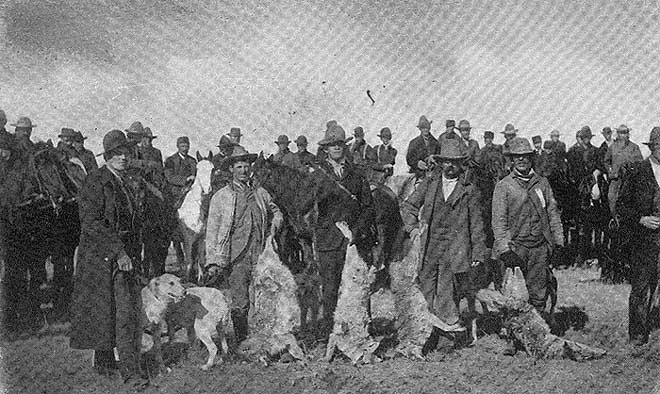
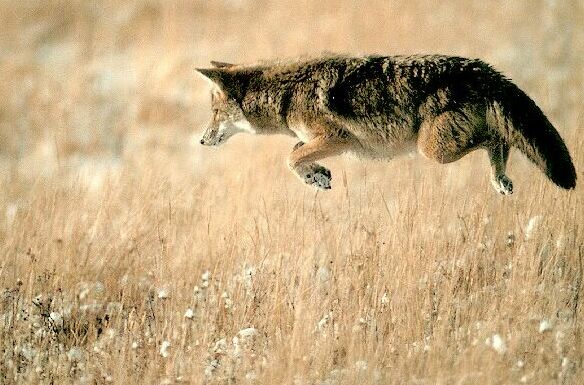
Coyote are another matter, and when they are hunted the goal is termination. Unlike fox, which will generally circle back and stay within a defined home territory, coyote will run straight across country and may take hounds and horses across roads and out of hunt-permission territory. Unlike fox, coyote are considered a fairly serious pest as they may, on occasion, prey on cats, small dogs, sheep, and ducks.
Information on working terriers, dogs, natural history, hunting, and the environment, with occasional political commentary as I see fit. This web log is associated with the Terrierman.com web site.
Tuesday, May 24, 2022
Fox Hunting Over the Globe
Coyote are another matter, and when they are hunted the goal is termination. Unlike fox, which will generally circle back and stay within a defined home territory, coyote will run straight across country and may take hounds and horses across roads and out of hunt-permission territory. Unlike fox, coyote are considered a fairly serious pest as they may, on occasion, prey on cats, small dogs, sheep, and ducks.
Saturday, February 16, 2019
Thursday, May 17, 2018
Sunday, April 09, 2017
The Natural History of Fox
Natural History, January, 1985
___________________________________
THE LITTLE FOXES by J. David Henry
___________________________________
They may look endearing, but young red foxes fight violently and, when necessary, steal food from one another.
It happens during the coldest part of the year -- a time when northerners bundle up against twilight days and -- 40 degree air with parka and wind pants, gauntlet and mukluk. It is a time when darkness pervades the forest, when everything seems brittle.
Yet, during this inhospitable period in late January or early February, while most animals are simply trying to survive the frozen wastes of a boreal winter, red foxes begin to court. It is not difficult to know when the foxes are feeling amorous; a musky odor begins to emanate from the urine they leave in the snow. This scent is particularly strong in the urine of males. In Prince Albert National Park in northern Saskatchewan, where I do my research, foxes develop this breeding odor over the course of a week or so. Then, for the next month or six weeks, a skunky fragrance permeates the woods wherever a red fox and his vixen have established their territory, the area they use for hunting and scavenging and defend against other foxes. After studying foxes for years, I can say with confidence that it is my nose, more than anything, that first tells me the foxes are courting.
During this amatory interlude, the dog fox and vixen, both of which have been leading solitary lives on the territory, now begin to seek one another out. They travel together for several weeks, becoming increasingly confident about touching one another, until they finally breed. During the courtship period, the vixen visits and cleans out several lairs on the territory, one of which she will choose as her whelping den.
Why does a vixen choose to give birth to her pups in one place rather than another? What does she see in a particular piece of earth? After surveying thirty-five whelping dens, I found that they have certain typical characteristics. The den is usually located on a hillside in sandy loam. It is often in the forest but close to a meadow or open slope. And it usually has multiple entrances, the largest one about ten inches in diameter. Finally, the den retreat is normally within one hundred yards of a water source, although this source can be anything from a large lake to a humble pool in a muskeg. With these requirements, vixens have to be selective about where they bear and raise their cubs.
Certain features, such as the nearby drinking water, have obvious advantages; but I was not sure I understood the others. Why are they so common? After reflecting about them, I feel that vixens probably select sandy loam because they can dig into it more easily, but it could also be that this soil, combined with the hillside location and nearby open area, may make for a site where snow melts early, frost leaves the ground quickly, and drainage is always good. Vixens use the surrounding forest for shelter and escape; they can sun themselves in the adjacent meadow and their rambunctious pups can play there.
A vixen may use the same whelping den year after year, and when she dies, the site may be passed on to one of her daughters. One fox lair near my cabin, for instance, has been active for nine of the last twelve years. Since adult foxes in the wild usually live only three to seven years, this den was probably occupied by several different fox families. On the other hand, abandoned lairs that deteriorate may be renovated by foxes after a long vacancy. The first den I ever studied in detail, in 1972, was active until 1974. After that, it lay vacant until a young fox couple reoccupied it and raised a family there during the spring of 1980.
Foxes never seem to rely on just the whelping den, however. In my area, they always have other, smaller burrows hidden away on their territory. If disturbed or threatened at the whelping site, the vixen or dog fox will simply move the pups to a new location. Frequently, the vixen initiates the move, which sometimes leaves her mate in a quandary.
I remember one such experience when, for an extended period, I was observing foxes at a den twenty-four hours a day in order to document how the six-week-old pups were being raised. One afternoon, in an attempt to get some photographs, I unwittingly crossed an invisible but important vulpine boundary, and the vixen reacted as if she had decided enough was enough. She waited until the middle of the night and then moved the pups, not carrying them as other canids do but marching them along behind her. About first light the dog fox returned to the den with a rabbit in his mouth. He went to the main entrance and called the pups with the rapid "wuk . . . wuk . . . wuk" chortle that foxes use, but no one came forth. Setting the rabbit down, he began to smell around the area. He apparently was able to figure out what had happened by the odors that remained on the ground. Sniffing the site thoroughly, he finally detected the trail that the vixen and four kits had taken through the forest. He returned to the den, hid the rabbit, and then began to track down his family, following their scent through the bush. On the other hand, I, not being blessed with the nose of a fox, spent the next seven days searching in vain for the new den site.
But I am getting ahead of myself. Let me backtrack and follow the pups through their eventful early life. After a gestation period of fifty-two days, the kits are born; in my study area this occurs during late March or early April. The average litter comprises five whining, hungry mouths, but a litter of nine cubs is not uncommon. Regardless of the size of the litter at birth, some cubs usually die. The number that survive depends, among other things, upon the amount of food the adult foxes can find on their territory.
When the kits are born, they are helpless and weigh less than a quarter of a pound. Except for their smaller size, they are remarkably similar to newborn coyote and wolf pups--with one important exception. Even at birth, most young foxes have a curious white tip on the tail. Red foxes retain this white tag throughout their lives, and they are the only North American canid species to show this distinctive marking.
During their first month of life, young foxes do not possess the brilliant red coat that is the hallmark of the species; instead, their coats are charcoal gray. Foxes are not the only canids with this feature. At birth, the whelps of coyotes, wolves, and other species of wild canids are also cloaked with dark gray fur. As far as I can determine, this special natal fur does not have any physiological function. It may serve as camouflage while the young canids remain in the darkness of the den.
Fox kits grow slowly during their first few weeks; their eyes do not open until they are ten or twelve days old. During early life, the vixen constantly attends them. In many areas, the vixen may venture out of the den after only two days, but in northern Saskatchewan she remains inside constantly from a few days prior to birth until the kits are approximately ten days old. She is completely dependent on the male for her food during this period. This he provides with regularity.
Why is the vixen unwilling to leave the kits? David Macdonald, who has studied red foxes extensively in Britain, suggests that the kits are so small and vulnerable during early life that the vixen must surround them with her warm body if they are to survive. This maternal protection becomes increasingly important the farther north one goes. At the time the kits are born, the ground in northern Saskatchewan is still frozen and covered with snow. The den is damp, and the air temperature inside is a chilly 32 degrees Fahrenheit or colder. The vixen acts literally as a thermal blanket, protecting the cubs in their frosty underground chamber. One could almost say the incubates them. By then they are well furred and large enough to maintain their own body temperature. She now spends more and more time away from the lair hunting for prey for herself, but she continues to receive some food from her mate. And she does return to the den at regular intervals to nurse the kits. While in the den, she attends to her other maternal duties as well. She plays or naps with the cubs and then grooms them--cleaning out their ears, licking their groin regions, and eating their waste products. She maintains this routine until they are five weeks old, when she begins to wean them.
The early life of a kit fox is not the care-free, leisurely existence that one might imagine. It is business from an early age. During their second week, the kits begin to grow faster and their milk teeth start to come in--canines first, followed by incisors, and finally, premolars. During their third week, they begin to experiment with their teeth. They chew and suck on meat that the parents have brought them and learn to enjoy the juices found in a freshly killed rabbit. Now they enter an important phase of their development.
At this time, the fox kits are far from fully coordinated and have been above ground only for short periods. Yet at about twenty-five days of age, they begin to fight viciously; they clash with each other in short, serious, and sometimes fatal contests. (Fatalities are rare, however.) Fox kits do not act like cute, cuddly puppies such as those of the domestic dog; rather, they have always seemed to me to have a slightly demonic character about them. They are tough, month-old thugs, little street fighters that initiate fights and, over a period of ten days, establish a strict dominance hierarchy. The alpha (or dominant) member of the little establishes itself, and the process continues all the way down to the weakest animal.
Evidence suggests that these dominance relationships among the cubs remain stable and have a great bearing on their survival. If the adults are bringing the kits only a limited supply of food, competition for it is keen. By establishing a hierarchy, the kits determine who can steal food from whom. The largest member of the litter, whether male or female, usually becomes the alpha pup. Using either intimidation or direct attack, this animal steals food from its litter mates. Each pup steals food from littermates below it in the hierarchy. It is a blunt fact of a fox's life that the dominant pups get a larger portion of the food and have the best chance of surviving, while smaller and submissive ones may perish. The runt of the litter usually dies first, then the second lowest in the hierarchy, and so on. It is a brutal process; but given the constraints of the hierarchy, it is the only way healthier kits can survive. Nor have parent foxes evolved to interfere with this sibling rivalry, since the competition results in a litter composed of the healthiest whelps. Pared down, the litter size is also now in balance with the food resources of the territory.
By early May the fox kits in my area begin to come above ground for longer periods of time. At this point, the hierarchy is solidly established and, with that crucial matter out of the way, the aggressiveness of the cubs actually diminishes. Gradually, they become more social, playful, and puppylike. It is at this time that most people first see young foxes. How much has happened in their lives before we are even aware of them!
When a parent fox returns to the den during early May and chortles for the pups, they stumble out--unsteady on their feet, blue eyed, and still dark coated. But at about this time an important change takes place: at about five weeks of age, they start to lose their dark natal coat and get a new pelage. Once again it is not the brilliant red of an adult fox, but a sandy-colored juvenile coat that almost perfectly matches the sandy soil of the den site. This coat helps to camouflage the pups around the den and protect them from occasional predators, such as hawks, owls, and coyotes.
Reflecting on the sandy-colored coat, I began to realize that this juvenile pelage had come about from an interesting series of events. I can imagine it evolving something like this: At first the vixen tended to dig her whelping den in sandy loam simply because it afforded good digging. But over time, the fur of the kits slowly evolved to match the soil's color. Evolutionary theory states that, if the sandy-colored pups have even a slightly better chance of surviving, all fox kits will eventually develop this coloration. As this happened, there was great pressure on the vixen to locate her den in sandy-colored soil. Consequently, the selection of the den by the vixen and the juvenile pelage of the kits are co-adapted to protect the young during their vulnerable first month outside the den.
This buff coat of the young foxes is actually a specially colored underfur (the underwool of adult foxes is a dark gray). The kits keep this juvenile coat for approximately five weeks, but starting in early June, outer red guard hairs begin to grow through. By the end of June, kits display the bright red coats normally associated with adult foxes.
When the kits are five weeks old, they begin the transition that will launch them into adult life. The pups now begin eating solid food, and the vixen starts to wean them. Weaning fox pups is an uncomplicated procedure. If the kits try to nurse, the vixen rolls over on her stomach. If they persist, she threatens them and runs off a short distance. She becomes increasingly unreceptive to their suckling, and by the time they are eight weeks old, the pups are completely weaned. But being weaned doesn't mean being cut off. The parents continue to hunt and scavenge at different times of the day and night in order to supply the kits with sustenance. These adults bring in an assortment of prey and present it to their pups. For example, in one week the menu included rabbits, mice, voles, squirrels, groundhogs, songbirds, grouse, and a spawning long-nosed sucker.
Distributing this food is a household ritual in a fox family and always happens in the same way. Carrying the item in its mouth, the adult fox arrives at the den, chortles, and one or more of the pups rush out to greet it. The first pup to reach the parent crouches low and beats its tail about wildly. The kit whines and creeps toward the adult and then reaching up, it smells, licks, bites at the corners of the adult's mouth.
There seems to be a consistent rule in fox families that the adult will give the food to the first pup that begs for it. This way, supplies are more or less evenly distributed. Basically, the hungriest pup keeps the best watch, gets to the parent first, and is given the food. However, once it has received its ration, the kit still has to defend its prize against litter mates, either by running off or by threatening any siblings that come near. As I explained earlier, a dominant pup will frequently challenge and steal the provision from its subordinate litter mate.
Food-begging behavior, by the way, also appears many months later but in a completely different context--as part of the submissive behaviors shown by adult foxes. When two full-grown animals meet, the subordinate fox often acts as if it were a young pup, begging to be fed. It crouches low, whines, and beats its tail madly in every direction. This keeps the white tip of the tail in constant motion (much like waving a white handkerchief) and lets it function as an attention-getting device. The subordinate fox slowly creeps up to the dominant fox and carefully reaches up to smell and lick the corner of its mouth. This use of infantile behavior by adults is not unique among red foxes. Embracing among adults, which is used as a greeting and reassuring gesture not only among humans but also chimpanzees and baboons, may be derived from infantile grasping. People in love sometimes coo and baby-talk to each other; we sometimes stammer or show shy juvenile behaviors when introduced to famous people.
The role of the dog fox in raising the kits has been debated among naturalists and field biologists. Some state that the male fox is never seen around the den, while others conclude that he supplies most of the food for the pups. There must be considerable variation among red foxes of different areas. The causes of these differences are not fully understood. But in Prince Albert National Park, an area where the foxes are almost completely protected from hunting and trapping, I have consistently observed male foxes bringing food to the pups until they are approximately ten weeks old.
In addition to the parents, other foxes will occasionally feed the pups. These "helper" foxes are an interesting phenomenon. Most often the assistant appears to be a daughter from the previous year's litter that has stayed on the family territory but not given birth to pups of her own. When she is present, she makes a definite contribution to rearing.
This helper illustrates an important point about evolution. Evolutionary theory states that individuals of a species that are most physically and behaviorally fit will leave the greatest number of offspring. But twenty years ago, British biologist W.D. Hamilton stressed that an individual's relatives are also important. For example, red fox helpers are as closely related to their full siblings as they would be to their own offspring. If an assistant increases the survival rate of her younger brothers and sisters, she helps some of her own genes survive into future generations.
Foxes that aid in raising their younger brothers and sisters may also derive other benefits. For example, they may gain experience that will help them rear their own offspring more successfully. In a few cases, they may also inherit part of their parents' territory.
Hamilton's theory makes another prediction about these young vixens. It states that if food is scarce, the daughter will help raise and feed her mother's litter. However, if food is abundant, the male fox will breed with both the older vixen and his daughter, and both vixens will raise litters on the family territory. The male will bring food to both litters, and the vixens, instead of competing, will tolerate each other. Why does the theory predict these events? Because when food is abundant--considering the genetic relationships involved--each fox will pass on more of his or her genes to the next generation if multiple litters are reared on the territory.
My field observations tentatively seem to support these predictions. In my study area, during years when prey was abundant (one year, for example, there was a peak in the snowshoe hare population), I have occasionally observed two vixens raising separate litters several hundred yards from each other, and once, within the same den. In both cases the vixens got along amicably and one dog fox brought food to all the pups. These observations suggest that the vixens were acquainted and may have been related. These preliminary data are interesting, but before we draw any final conclusions about this aspect of the fox's family life, more detailed research is needed.
During middle and late June, the pups' transition to adult life continues. They have grown to be nearly two-thirds the size of adults; they are fully coordinated and exhibit a bright red coat. During this period the parents start to visit the den less frequently, and the amount of food they bring starts to diminish.
At this point, as in many species, a classic conflict between parent and offspring arises. The fox kits appear perfectly content to remain at the den, play continually, and be fed by the parents. However, the adult foxes, which have been run ragged, seem to have some other arrangement in mind. And fortunately for them, they control the situation.
During June the pups wait endlessly for the adults to arrive with food. When an adult finally does appear, one pup gets the food, which he quickly consumes. Then the adult often takes one or several of the pups on exploratory trips away from the site. At first the parents lead the kits away and later accompany them home. But after a few of these excursions, the kits return on their own. I wish I could have gone along, but the parent foxes never tolerated me on the expeditions, and this aspect of fox life has always eluded me.
The kits, while hanging around the den, begin to eat wild fruit and to hunt insects and whatever other prey they can find. Gradually they become more confident, venturing forth slightly farther each day and spending less time at the lair. Thus it seems that a combination of boredom and hunger eventually drives the kits away from the den site, whereupon they start a predatory, scavenging life of their own.
At first the pups travel in twos or threes. However, since the prey they hunt are small and quick, to capture one, the fox must hunt in a stalking, catlike manner using a surprise attack. These constraints slowly force the young foxes to become solitary predators.
Occasionally, the vixen and pups will rendezvous on the territory during late summer and early fall. When this happens, the foxes greet, play, and generally enjoy each other. By this point, however, the dog fox is intolerant of his cubs. During September, the male kits begin to mature sexually, and this increases the competition between father and son.
No one is certain what causes the kits to finally leave the territory altogether. Adult foxes have not been seen aggressively driving their young away, but they may exclude them from the best hunting and scavenging sites. Whatever the cause, during late September or October, the kits begin to disperse. Males leave first and travel the farthest. Each tends to travel in one direction until he has found an available territory. Once male kits have left their birthplace, they usually don't return. Female kits may remain on the family territory into December, and if food is plentiful, one or several female offspring may stay on.
Such is the way it happens. Each spring, kits are born; as helpless as embryos, they would freeze without their mother's constant attention. In the course of six short months, these tiny, helpless creatures grow into self-sufficient, graceful, flame-colored predators that leave their families and seek out their own part of the forest. When a young fox leaves, it becomes self-reliant and takes on the ways and manners of adults. It claims a territory and inhabits it with another fox--its prospective mate. During the frozen darkness of winter, the pair set up the territory and court, and the cycle inherent in a fox's life completes itself.
.
Tuesday, March 19, 2013
Rats Like Cats and Dogs That Work
It's always amusing to me to read the hunting stories of others.
The rats are always as big as cats, the fox as big as coyotes.
Pictures? Didn't think to bring a camera.
A scale? No, never had one of those.
A tape measure? No, never had one of those either.
Of course, the same is said about various breeds of dogs.
A lady in Ireland posted on the Internet that she had working Glen of Imaal terriers.
Really? Registered dogs and not Jack Russell crosses?
I sent her an email, noting that if she had pictures of her dogs with locator collars on, and a fox at a sette, I would send her a copy of my book for FREE, as I would be thrilled to see such a thing. I was not interested in posting the pictures -- just interested in seeing them.
Bottom line: I am still waiting for those pictures.
She said she never allowed pictures when hunting. Really? Odd. It's completely legal to hunt fox with dogs in Ireland, and I have a hard drive full of such things sent to me by my Irish friends who have no fear of sending them around.
Surely she knew hunting fox was legal in Ireland? Silence on that question.
Instead, the response back was a slide off into the ether. It seems someone "owed her a day out" and she would send me pictures then. Eh?? OK.
But I'm still waiting. Maybe one day they will come. That said, I did find it an odd choice of words. Someone has to take her out? Why? Does she not own her own tools? Can she and her dogs not locate their own fox? Is her idea of a working dog a "one and done" kind of thing in which a working dog is made in a single dig?
And why do all my Irish friends use Patterdales and Jack Russells? Even in European countries where Badger digging is entirely legal, no one is using a Glen of Imaal terrier! In fact, hardly anyone in the world, digging or not, has any interest in owning this nearly useless and not very attractive breed whose true history is that of a left-over turnspit dog. No wonder they are one of the rarest breeds on earth.
Perhaps this person in Ireland is genuine, but you will pardon me if I profess some skepticism. You see, I have never met anyone who actually hunts with dogs but who has no hunting pictures. I have, however, heard a lot of "fish stories" in my day, and more than a few dog yarns from pretenders as well. I am always eager to be proved wrong, but with some breeds I have yet to have that pleasure.
Speaking of which, if anyone is really good at PhotoShop, I need some help illustrating the story of how my dogs bagged an 80-pound fox, a 75-pound raccoon, and a 40-pound groundhog. It would be especially nice if a Super Model could be slipped in standing next to me as well.
Now, to be clear there's nothing at all going on between me and the Super Model. It's just that Claudia Schiffer really likes to hunt. We are just good friends.
.
Thursday, February 28, 2013
Clash of Opinions is Actually a Clash of Knowledge
Kellert breaks hunters down into three core groups:
Utilitarian-meat hunters;
Domination-sport hunters, and;
Naturalist-nature hunters.
Kellert notes that while the groups blur a little at the edges, these three psycho-demographic groups do exist, and represent striking differences of attitude within America's hunting population.
Utilitarian-meat hunters represent about 44 percent of all American hunters. This group tends to talk of "harvesting" game as a renewable resource and many have a "pioneer spirit" forged in self-sufficiency. As a group utilitarian-meat hunters tend to be older, more rural and less educated, but test pretty well when it came to knowledge about wildlife. Few Americans oppose them.
The second group, the domination-hunter, comprise about 38 percent of all hunters. Most domination-hunters are urban men, have served in the military, and see hunting as a way of expressing their manly prowess. Domination hunters know very little about wildlife, and many actually fear it, having an exaggerated "dangerous game" mindset of the kind we often see in pulp hunting magazines ("Mauled by a Grizzly," "When Sharks Attack", "Stalked by a Killer Moose"). Domination hunters showed little interest in wildlife in their youth, and as adults tend to see wild animals as uncontrolled and therefore as "bad" or nuisance animals. The domination hunter is the group non-hunters dislike, and which antihunters try to use to negatively portray ALL hunters.
The third group of hunters -- naturalist hunters -- represent less than 18 percent of all hunters. This group tends to be younger, more educated, and with higher levels of education and income than the other groups. This category also includes more women hunters. Nature hunters tend to backpack, bird watch and camp, as well as hunt. This group also spends more time actually hunting than either of the other two previous groups. Nature hunters have far and away the highest level of knowledge about wildlife and seek an intense involvement with wildlife and do not fear it.
Kellert also goes on to analyze antihunters as a group and finds, not surprisingly, that about 80 percent are women. Most are urban women living on one coast or another.
Antis had very little actual experience with wildlife and, along with domination hunters, had "among the lowest knowledge-of-animals scores of any group included in the study."
In another ironic parallel with domination hunters, "it appeared that antihunters manifested more fear and lack of interest in wildlife" than average Americans.
What was striking to me about reading Kellert's research was how it explains much of the silliness and stupidity we see in the arena of wildlife management today, where antihunters who have never walked a hedgerow clash all with macho-men domination-hunters who would never consider going into the woods without a Bowie Knife as large as medieval falchion.
Neither group seems to have very much knowledge about wildlife. One group does not hunt at all, and the other does not seem to hunt very much.
Left out of the debate -- and too often ignoring it -- are utilitarian-meat hunters and nature-naturalistic hunters which form a majority of the people who actually spend any time in forest or field.
The good news is that in America, unlike in much of Europe, wildlife management decisions tend to be left to an increasingly well-educated groups of professional wildlife managers with degrees in biology, zoology, resource management, forestry, population dynamics, law enforcement and even economics. The watchword in the U.S. is not knee-jerk emotionalism, but sustainability and habitat protection. As a consequence, we have more deer, elk, moose, bear, wolf, fox, alligator, whales, peregrine falcons, bald eagle, osprey, groundhog, raccoon, possum, coyote, bison, beaver and mountain lion today than we have ever had in the last 100 years, and the numbers for all of these species is going up, up, up.
.
Tuesday, August 28, 2012
The Beast of Exmoor and Other Nonsense
| A repost from February 2009 |
Stories of feral "beasts" lurking in the darkness of the English countryside have been around for hundred of years, and were already old when Sir Arthur Conan Doyle used such a tale as the basis of The Hound of the Baskervilles.
The stories persist, of course.
Here are a few contemporary descriptions of various U.K. beasties:
- Beast of Muchty: "I was travelling to my work at 04:30 when a cat the size of a Lurcher, jet black, small head, very slim with a long tail ran in front of my car (about fifty yards). The whole incident was over in 2 seconds ... "
- Beast of Bont: "The main evidence for the existence of these sharp-clawed, but mysterious stalkers has been the death toll among vulnerable herds of sheep."
- Beast of Barford: "It is twice the size of a dog print and clearly shows three huge claws and a large pad at the back. Wildlife experts believe the print is the most conclusive evidence yet that big cats are roaming Warwickshire."
- The Beast of Gloucester and The Black Beast of Inkeberrow: "A 'huge black beast' ran in front of Ray Lock's car on the other side of the river near Lydney... one evening near Monmouth where it was described as 'jet black and about the size of a large dog.'"
- Beast of Burford: "A £5,000 reward has been offered for the capture of a 'big cat' which has been terrorising a farming community ..... Pc Ray Hamilton, wildlife crime officer at Thames Valley Police, admitted there had been several sightings - but said this was not unusual. 'We've had sightings of everything you could imagine - pink flamingos, lions, dingos, wolves and even a giant ant-eater in Pangbourne.'"
The human desire to create imaginary "beasts" seems to have some correlation to the loss of large predators and true wilderness.
With the extinction of the bear and the wolf, the U.K. has lost all large predators and now has to suffice with two rather unimpressive meso-predators, the fox (average weight 15 pounds and living almost entirely off of mice) and the badger (average weight around 25 to 30 pounds and living almost entirely off of worms, beetle grubs, and small bulbs).
So what are these large feral "beasts" seen in the English countryside, and why is it that they are never actually found?
The short answer is that these "beasts" are nothing more than large escaped lurchers (coursing dog crosses) that have taken to livestock-worrying. As an article on the Beast of Osset notes:
"On a parkland estate in rural Yorkshire a poacher's lurcher (a fast greyhound-like hunting dog) was at large for six months but was sighted only once during that period. The gamekeepers knew it was there because they found the roe deer that it had killed, but it took a concerted effort with volunteers to flush it out of the wood."
In fact, sheep worrying is a serious problem in the U.K., and while any dog can end up attacking sheep, it is the larger dogs such as Lurchers and Bandogs (mastiff crosses) that do the damage that lead some to think a large cat or lion is loose in the English countryside.
Sheep worrying by lurcher.
In fact, a lurcher really does look like a large cat if seen in the dark or fog, and especially if it is seen only briefly from a moving car, as most "big cat" sightings are.
A Bandog (what the Hound of the Baskervilles was) really does look like a lion if seen under the same circumstances.
What is amazing about the "big cat" stories in the U.K., however, is how easy they are disprove, and yet how utterly resistant people are to having their bubbles burst.
Take the issue of "big cat footprints". Most of these footprints are clearly large dog prints. How can we be sure? Simple -- all the footprints show claw marks. All the large cats, except the cheetah, however, walk with retracted claws, otherwise they would quickly dull
This foot print of the "Beast of Barford"
is held up by a young hopeful.
The other issue has to do with hounds -- the U.K. is crawling with fox packs, and yet none has ever chased and cornered a large cat other than the now very rare native Scottish Wildcat, which is not much larger than a tabby.
You can be sure that if the big cats were out there, British fox hounds would have found them by now! In the U.S., small teams of less experienced hounds manage to track down marauding farm-country cougars in only a few hours time.
Finally, we come to the issue of rub strips -- bits of carpet and tacks impregnated with a mixture of catnip and beaver castoreum -- that have failed to turn up any positive large cat hits in the U.K.
Wherever these rub strips are used -- whether in North America, South American, Europe, Africa, or Asia -- they are quickly found and rubbed against by large cats and other predators.
A DNA analysis of fur caught on the hooks of the carpet tacks can not only identify what species of animal has left it behind, it can identify what specific animal has come by in the night.
Rub strips are so accurate they are now routinely used to survey population densities of such elusive large cats as leopard, lynx, cougar, and jaguar, as well as badger, wolverine, bear, wolf, coyote and bobcat.
Of course, "Beast of" stories are not unique to the U.K.
Here in the United States we have Sasquatch and some local tales of little green men, swamp creatures, and even a werewolf or two (all delivered with a wink to small children).
In truth, however, we have far fewer fantasy "Beast" stories than the U.K. for a simple reason: we have more real top end predators.
In states like Minnesota, Wyoming, Idaho, Montana and North Carolina we really do have wolves prowling the remote sections.
In Florida, Louisiana and South Carolina we really do have 12 foot lizards slithering out of drainage ditches and quite capable of eating an old lady alive.
Mountain lions really do prowl the remote sections of Idaho, Wyoming, Montana, New Mexico, Colorado and even Texas, and are now being found as far east as Iowa.
Black bears number well over 400,000 in the lower 48 states, and there are over 100,000 more in Alaska.
Bobcats are everywhere, as are coyotes -- the later so common that there are bounties on them, including in my home state of Virginia.
No one living in a large America city today lives more than two hours away from a major top-end predator of some kind.
This is a glorious thing, and something we should count among our greatest national treasures.
But a "Beast of Bondwynn?" No, we don't have that.
In a world in which top-end predators are still common, there is no reason to invent ghost stories.
.
Tuesday, June 05, 2012
Red Fox as Weapons of Mouse Destruction
If you use the slightest bit of common sense, the chance of getting rabies from a raccoon, fox, possum, skunk or groundhog is very low, even if you work your terriers to such quarry year-round.
The chance of getting Lyme disease is a little bit higher, but it too is a very rare problem -- far rarer than most people think.
Lyme disease was first identified in Old Lyme, Connecticut in the 1970s. This zoonotic disease is passed to humans by blacklegged deer ticks which are infected with the spiral-shaped Borrelia burgdorferi microbe.
The illness was probably around a long time before being discovered, but prior to the 1970's it was rare enough that no one bothered to name the illness, much less study it.
Then, beginning in the early 1970s, the deer population in the Middle Atlantic and Northeastern United States began to grow rapidly. At the same time, more and more people began moving into the country, generally onto small farms located next to small woods.
Small woods in the Eastern U.S. are often dominated by young oak trees, and these same small woods serve as daytime shelter for fairly dense deer populations of 50-200 animals per square mile (as compared to 25 per square mile in pre-Columbian times).
Very dense deer populations are possible in the eastern U.S. because the deer are able to feed at night in nearby hay, corn and soy fields.
The proximity of houses to shelter-belt forests means deer jungled up in these woods are safe from hunters who cannot legally fire weapons in such close proximity to occupied buildings.
Most people assume deer are the primary reservoir for Lyme disease, but scientists now believe the primary reservoir for is not deer, but something quite a bit smaller -- the whitefooted mouse.
Ticks are not born with Lyme disease. The Borrelia microbe is not passed from female tick to egg, but from Borrelia-infected mammal host to blacklegged deer tick, and from the tick to humans as part of the multiple-host lifestyle of all ticks (for more on that, see >> here).
Almost all whitefooted deer mice have Borrelia coursing through their veins. In addition, almost every tick that bites a whitefooted mouse ends up carrying Borreleia. For reasons not yet understood, other Borrelia-infected animals do not pass Borrelia on quite so easily. While possums, raccoons, fox, coyotes and most birds can carry Borrelia, and often host deer ticks as well, the ticks that feed on these animals become infected with Borrelia only 10% of the time as compared with a 90% infection rate for whitefooted mice.
Clearly, a key component to controlling Lyme disease is reducing the number of whitefooted mice in an area.
Mice populations, it turns out, tend to explode with acorn production which tends to be cyclical. In high-mast years when the ground is littered with vast numbers of acorns, the whitefooted mouse population in small oak woods will explode, and with it the incidence of Lyme disease in an area. Deer coming into these woods pick up the ticks and ensure their dispersal while supplying the tick with a large blood meal (absent a human host).
Obviously, ending acorn production in the Eastern woods is not in the cards. So what else can be done?
One thing that seems to reduce mice populations is to increase the degree of ecological diversity in an area. As the variety of plant sources increase, the popualtions of meso-predators such as possums, raccoons, fox and coyote tends to increase, and with it a decline in mice populations.
Predators, such as fox, are impotant to keeping whitefooted mice populations -- and to some extent Lyme disease -- in check. Fox are highly mobile predators that continuously suppress mice populations all year long. In the absence of mice, fox easily switch to berries, crickets and grasshoppers, young rabbits, voles, and even roadkill and garbage. When mice populations do rise, however, a few red fox can go a long way towards knocking their numbers back down again.
How many mice can a fox eat in a year? If it eats little else, a fox can knock off about 5,000 mice a year. That's not enought to eliminate Lyme disease in an area, but it can have a significant impact, and every little bit helps.
What else can be done? In many areas more deer culling needs to be done, especially of does. With a reduction in deer densities, forest understory has a chance of growing back in, and with it will come an increase in bird populations and other non-mouse fauna.
Such simple precautions such as spraying your pants with bug spray before going out walking in forest and field can help reduce the chance of tick-borne infection quite a lot, as can mowing walking paths short. Move brush piles and firewood stacks away from the house as they are havens for mice populations. After returning from a day in the field, check yourself over for ticks, paying especially close attention to areas you do not normally look at, such as the back of your legs and your back and neck.
If you find a tick, do not worry -- a tick has to feast on you for three days or so before it is able to transmit Borrelia. If a tick bite, or a bite from an unknown bug, develops a large red ring around it, see a doctor immediatly or (if you have doxycline in your vet kit) take a 3-day regime of doxycline. Lyme disease generally very easy to treat in its early stages with a simple one or two-week regime of antibiotics.
And, of course, practice agressive flea- and tick-prevention on your dogs. I hunt most weekends and generally wash the dogs with a low-cost flea shampoo after they return. A few days later I look them over pretty carefully to see if they have any ticks on them that I might have missed while washing them (it helps to have smooth coated dogs!). Other folks use Frontline. Whatever works for you is fine.
The most important element of flea and tick control is vigilance -- paying close attention, on a daily basis, to your dogs. Simply running a hand over their coats once a day will tell you a lot, and not just about ticks, but about weight gain and muscle tone as well.
.
Tuesday, February 28, 2012
Urban Fox and Coyotes
I directed them to the work of David MacDonald who has tracked fox all over London, and suggested if they wanted to see a working fox den "any old gamekeeper should be able to help you but they are not going to be interested in wrecking the thing or in romanticizing the fox. Fox are generally harmless, and are valued, but like any thing they can be a nuisance in the wrong place. In short, fox are neither demons nor saint -- they are like feral cats, and in fact occupy that niche quite well."
I also noted that fox only den underground for a short part of the year, and that in an urban environment, that might not be in a dirt den, but in a crawl space under an outbuilding, under old roofing or detritus in a dump, under or inside an abandoned car, or inside a dry drain.
Of course, here in the U.S. we have urban and suburban fox almost everywhere, and I can get photos of them almost any night.
We now also have growing numbers of suburban and even urban coyotes.
In an essay called New Dog in Town, Christopher Ketcham writes that:
Wild Coyotes have settled in or around every major city in the United States, thriving as never before, and in New York they have taken to golf. I'm told that the New Yorker coyotes spend a good deal of time near the tenth hole on the Van Cortlandt Park Golf Course in the Bronx. They apparently like to watch the players tee off among the Canada geese. They hunt squirrels and rabbits and wild turkeys along the edge of the forest surrounding the course, where there are big old hardwoods and ivy that looks like it could strangle a man—good habitat in which to den, skulk, plan. Sometimes in summer the coyotes emerge from the steam of the woods to chew golf balls and spit them onto the grass in disgust..
Until recently, I couldn't quite believe that coyotes were established New Yorkers. Among neophyte naturalists it's an anomaly, a bizarrerie, something like a miracle. Coyotes, after all, are natives of the high plains and deserts two thousand miles to the west. But for anyone who takes the time to get to know coyotes, their coming to the city is a development as natural as water finding a way downhill. It is also a lesson in evolution that has gone largely unheralded. Not in pristine wilderness, but here, amid the splendor of garbage cans filthy with food, the golf carts crawling on the fairway like alien bugs, in a park full of rats and feral cats and dullard chipmunks and thin rabbits and used condoms and bums camping out and drunks pissing in the brush, a park ringed by arguably the most urbanized ingathering of Homo sapiens in America—here the coyote thrives. It seemed to me good news....
From California to Maine, there are more coyotes than at any time since records have been kept, their territorial expansion unprecedented in speed and scope....
That the coyote has expanded his range does not surprise biologists. What does confound is the suggestion, hotly debated, that the coyotes now taking over the eastern United States in fact represent a new subspecies of wild dog on the continent, the Canis latrans varietas. The western coyote is a smaller creature than the eastern cousin. The westerner weighs in at perhaps thirty pounds, looking somewhat like a fat fox. The eastern coyote grows as big as sixty pounds at his heftiest.... Chuck Jones, the animator, pegged the Trickster, in cartoon Latin, as Eatibus anythingus. Which is true: coyotes eat garbage, darkness, rats, air — they'd lap my beer if I let them.
Thursday, June 02, 2011
Coyotes are a Birds Best Friend

Researchers have found that areas with the most coyotes had the fewest cats and the most songbirds.
The reason for this is pretty simple: Coyotes prey on cats, raccoons and possums, all of which prey on songbirds and songbird nests. Feral and domestic cats alone kill over three billion birds and small mammals each year in the U.S.!
.
Tuesday, December 14, 2010
Variability in Size & Law and Among Wild Canids
![]() |
| A 104-pound coyote or a wolf with a little coyote in it? |
My response was the same as it always is:
[F]ox size are variable all over, just as wolves are, and coyotes are, but they "bell out" at an average weight of around 15 pounds +/- two pounds, and that's true all over.
Yes, across broad regions there is some variation in size, but this seems to be mostly due to the length of the body. Italian dog foxes average two pounds lighter than their English kin, and Italian vixens averaged one pound lighter than their English counterparts. Though you would think this might make for an English fox with a slightly larger chest, this does not appear to be the case -- body length seems to be the determinant variable.
In my experience, Maryland fox are about 12-15 pounds, but I have handled some smaller (11 pounds) and a few that were considerably larger. I do not kill fox, but I have friends who do, and they have booked a few as big as 22 pounds. Still a small chest though. A fox is mostly fur! It says a lot that there are no fox taxidermy manikins with chests larger than 14" around.
Wolves and coyotes, of course, are another matter altogether.
Both are extremely variable in size, reflecting the fact that they are true dogs (Canis) with the extreme plasticity we see in that genus, rather than merely a canidae which includes the fox (Vulpes) genus.
How variable are coyotes in size?
Western coyotes seem to average around 22-30 pounds or so, with Eastern Coyotes weighing in at 30-40 pounds. That said, in some places, such as New York's Adirondacks National Park, the coyotes are very large (50-60 pounds) and DNA testing shows a lot of wolf blood running just below the surface.
Coyotes and wolves will interbreed if they cannot find a mate, and both species will, on rare occasion, naturally hybridize with domestic dogs.
The "Red Wolf," which was once common all along the East Coast, and has since been reintroduced into North Carolina, is simply a stable wolf-coyote hybrid.
So how big and how small can a coyote get?
On the small side of the stick, the answer is about 18 pounds -- well within the bell curve for a large red fox.
On the large side, however, the question is a little harder to answer, as it depends on what you want to call a coyote.
In Maine there are "coyotes" that weigh more than 70 pounds, but most of these really large animals are at least half wolf. In fact, about one out of every five Maine "coyotes" is actually at least 50 percent wolf.
The biggest allegedly pure coyote ever shot appears to be a "coyote" shot in Carroll County, Missouri on the opening day of the deer season this November 13th.
On the web site of the Missouri Department of Conservation they say:
DNA tests show that a 104-pound canine shot by a hunter in Carroll County Nov. 13 was an unusually large coyote.
The hunter shot the big canine on opening day of Missouri’s November firearms deer season, thinking it was a coyote. Coyotes are legal game during deer season. However, when the hunter saw the animal’s size, he wondered if he had mistakenly shot a wolf. He reported the kill to Conservation Agent Marc Bagley. Bagley took possession of the animal and turned it over to the Missouri Department of Conservation’s (MDC) Resource Science Division for identification.
Resource Scientist Jeff Beringer said the MDC staff took measurements and collected tissue and hair samples for DNA analysis. The test showed the animal was a coyote.
According to Beringer, the coyote was a male approximately 3 years old. It had no tattoos, microchip or evidence of ear tags that would indicate it might have escaped or been released from captivity.
Do I actually believe this animal is 100 percent coyote?
Not for a minute.
But I am prepared to be wrong. I suppose it's possible that this animal had a brain tumor that made its pituitary glands go wild.
But I am a natural skeptic, and so far I note that there are no full-bodied pictures of this animal next to something which provides scale. No video either, that I can find.
I think that's odd.
You would think a 104-pound coyote would have more pictures and video taken of it than Anna Nicole Smith just back from the dead and parading topless on Wall Street.
So where are the pictures? Where is the video? The one head-shot picture we have shows an animal with wolf ears.
And please, no nonsense about there being no pictures because someone, somewhere, is worried about "the antis." The antis??? Flush that nonsense, please!
This is America, and we hunt and fish and trap without apology. We have hunting shows on TV every night, and politicians stepping on themselves to be filmed blasting away at Caribou, Geese and Dove. In this country, we're not squeamish about showing pictures of any animal, dead or alive!
So where are the pictures and video tape of this 104-pound coyote? What's the name of the outfit that did the DNA work?
Inquiring minds want to know!
And perhaps I will get an answer... I just shot an email to the dedicated state wildlife personnel in Missouri asking a few questions. I hope they have time to shoot an answer back! They might not, of course -- it's the middle of every kind of hunting season under the sun, and there's a lot of work to be done out in the field, I imagine. But stay tuned!
_ _ _ _ _ _
- Early test results showed coyote DNA was present in the sampled animal
- Follow up tests are planned using DNA from wolves from nearby great lake states to see if their wolves also have coyote DNA.
- It is possible for this animal to be a wolf or wolf hybrid and carry coyote DNA
Bingo.
So, back to the question: When is a wolf a wolf, and when is a coyote a coyote? Does a single drop of coyote blood in an animal make it a coyote, or are we going to snap a line and say that every animal over 70 pounds is a wolf, and no DNA testing needed at all?
The reason this question is important, is that while the coyote is not protected anywhere, the wolf is protected almost everywhere.
A deer hunter shooting a 30-pound coyote has done nothing wrong.
A deer hunter shooting a 104-pound wolf (three times larger and with very different ears, as can be seen in the photo at top) has just shot a protected animal.
One question that naturally springs to mind is this: Is Missouri trying to blur the distinction between wolves and coyotes for a larger political purpose, or perhaps just this once to give this particular shooter a break for making an "honest mistake?"
Time will tell as we see what is said, and how it is messaged, and how the information is used.
Remember, according to the biologists, a Red Wolf (Canis rufus) is just a wolf-coyote hybrid, identical in every way to the animal shot in Missouri in terms of size and looks. In addition, the Red Wolf is the wolf that was once native to this area, so eventual return to the area is not entirely unexpected.
But Red Wolves are entirely protected, and anyone shooting one is punishable by up to a year in jail and a $100,000 fine under the Endangered Species Act.
Which beggars the question. Is the Red Wolf a species or a hybrid, or can a species be (as I would argue) a stable hybrid?
This is the question that I think is about to get launched with a little more urgency.... and which no doubt will burn up the keyboards of arm chair pundits on both sides of the debate.
Monday, August 23, 2010
Coyote Hunting USA, Dates Unknown
The number of coyotes in the U.S. has risen quite a bit since these pictures were taken, and coyotes are now found in every state, with the largest coyotes found in the Eastern U.S. The bottom picture shows a couple of coyotes and a red fox for comparison's sake.
About 500,000 coyotes are shot or trapped in the U.S. every year, but their population numbers keep climbing.
.
Friday, July 02, 2010
Where the Buffalo Roam -- Again

A repost from this blog, circa December 2004.
Thanks to Teddy Roosevelt, Aldo Leopold, Gifford Pinchot, the American environmental movement, the Lacey Act, the Weeks Act, the Clean Water Act, the Endangered Species Act, the Pittman-Roberts Act, the Conservations Reserve Program, the Migratory Bird Conservation Act, and the Duck Stamp Act (to name just a few), America's wildlife is coming back.
All of this legislation has been supported by hunters who understood the value of the land and the wildlife on it. Environmentalists and hunter-anglers have worked hand-in-hand to bring back the wild turkey, to protect bear habitat, to preserve salmon spawning streams, and to shelter riparian areas.
For the terrier enthusiast, the result is plain to see in the hedgerow and forest: a record number of red fox, raccoon, possum and groundhogs spreading out into historically new territory.
Even species once pushed to the edge of extinction are now roaring back from the abyss -- alligators, bald eagles, beaver, Canada geese, wolves, and buffalo.
If the story of 19th Century America was about stripping the land and exterminating every species on it, the story of the 20th Century has been about bringing it all back.
Where the Buffalo Roam -- Again
San Francisco Chronicle, April 22, 2001
________________
Brian Meirs first noticed it a few years ago. The game was coming back.
It was subtle in the beginning - a few more sharp-tailed grouse along the section roads than usual, more deer peering from the margins of the hayfields at night. Then people started noticing there were larger numbers of pronghorn antelope than had ever been seen, and they were hanging around closer to town.
"Even 10 years ago, you never heard of mountain lion or elk around here," said Meirs, a state game warden who works the vast plains and mesa country around Buffalo. "Now they're pretty common. There are even occasional wolf sightings. It's like the wildlife was back there in the shadows, waiting for a change."
The change has been building for decades. The western Great Plains contain the country's greatest demographic anomaly: Its human population is emptying out. The trend, the 2000 census shows, has really gained force over the past decade with the drying up of the ranching economy.
But as people move away, wildlife is starting to fill the vacuum. In an unexpected way, a vision of the Great Plains as a wild commons is taking hold.
"It's funny - Buffalo Commons is really happening," Meirs said, as he sat in his truck on the main drag of Buffalo, a thoroughfare framed by abandoned storefronts. "Not like people thought it would. But it's happening."
The concept of the Buffalo Commons was floated by New Jersey sociologists Frank and Deborah Popper in 1988. The Poppers observed that agriculture had failed miserably on the Great Plains, and noted that the region would probably be almost wholly depopulated save for a few cities by the mid-21st century.The highest and best use for the area, the Poppers argued, was in its pristine state: A restored prairie cleared of fences and abandoned ranches, reseeded with native bunchgrasses, teeming with wildlife. And foremost among these resurgent animals would be the emblematic beast of the Plains: the buffalo. Back by the tens, perhaps hundreds, of thousands. Plains residents, both white and Native American, would earn their money through ecotourism and franchise hunting, not punching cows and growing dryland wheat.
Because the Poppers' proposal was predicated in part on federal buyouts of private property, it kicked off a howling storm of protest from the Great Plains agricultural community. Ranchers saw it as the most sinister possible example of a federal land grab. Resistance was so great that the idea died aborning.But that didn't change the reality of Plains demographics - a reality best apprehended from the air.
Fly in a puddle jumper from Denver to Bismarck, N.D., and look down. There are great tracts of Badlands and rolling prairie, huge expanses of "pothole country" spangled with ponds and marshes, entire square miles of dryland wheat and irrigated alfalfa, serpentine brown rivers lined with cottonwoods, the occasional road. Very few ranches, and fewer towns. No cities. The West and East coasts, the intermountain West, the Southwest, the Gulf Coast and the Deep South - they're exploding with development. Even the industrial Northeast, long a laggard in population growth,
is gaining new people.
But not out here where the buffalo once roamed. Nearly three-quarters of Plains counties - 322 of 443 - have lost population since 1930. According to the 2000 census, 272 of 443 of the Plains counties have experienced population declines since 1990.Demographers estimate that rural counties of the Dakotas could lose an additional third of their population in the next 20 years. From eastern New Mexico through the Texas and Oklahoma panhandles, to large portions of Colorado, Kansas, Nebraska, the Dakotas and Montana, the story is the same.
The depopulation affecting the region is nothing more than the dying of a dream. Or a scheme, at least. At the turn of the century, the western Plains were considered the globe's most promising emerging breadbasket.
Cattle had thrived on the rich prairie bunchgrasses after the subjugation of the Plains Indians and the elimination of the buffalo.Now, decided the pols in Washington, D.C., the rich black earth beneath the virgin sod would grow the nation's wheat.
The late 19th century and early 20th century were fairly wet on the prairie, reinforcing a popular idea of the time that "rain followed the plow." But years of drought followed, and homesteaders began washing out. The ruins of their farms are all over the Plains, ranging from abandoned dugout hovels to derelict three-story houses that are home to nothing but bats and owls.
"Agriculture around here is changing so fast you won't even recognize it in 10 years," said game warden Meirs as he sat in his truck listening to the wind whistle down Buffalo's main street. "The cattle and sheep are going by the wayside."
Buffalo Commons, it seems, is destined to occur - no matter what it's called, no matter who loves or hates it. But the forging of the Commons isn't a completely passive process.
True, the great federal investment envisioned by the Poppers didn't happen, nor is that likely. Given general public sentiment against extravagant government spending programs, it's inconceivable that Congress would loosen up the purse strings to fund the purchase of tens of millions of acres of bankrupt rangeland.
Instead, Buffalo Commons is becoming a private enterprise. And leading the movement is media mogul Ted Turner, who appears to have made the North American bison his private totem. Turner owns about 1.7 million acres divided among several ranches scattered across the Plains, and that figure is growing.
"I heard tell that Ted Turner wants to be able to ride all the way from Canada to Mexico on his own land," drawled one Nebraska rancher. "And the way he's going, it isn't going to be too long before he can do that." Turner looks for a certain kind of property: One that's in grass rather than croplands, with natural contours intact. He wants good biodiversity - country that supports substantial populations of wildlife of numerous species. And when he buys properties, he more or less follows the same formula: Tear out all the cross fencing and replant pastures with bunchgrasses and other native vegetation. Bring in the buffalo.
Turner believes that ranching can be profitable on the Plains - but not necessarily by raising cattle. He's promoting the sale of buffalo breeding stock and meat, luxury big game and bird hunts and ecotourism tours as the economic saviors of the region.
Unlike many celebrity landowners, Turner isn't gate-happy, and doesn't seem to mind rubberneckers as long as they don't stop to shoot his buffalo. And there are plenty of buffalo to see. Under a sky crowded with lowering gray cumulus, a couple of hundred of the shaggy beasts grazed near a roadside. About a mile away, on the same vast tract of rolling prairie, a similar number fed.
A Lakota hunter could have witnessed precisely this scene in this same place 150 years ago.
And buffalo aren't the only animals thriving on Turner's property. Big coveys of sharp-tailed grouse fly unhurriedly out of the way at the approach of a truck. White-tailed deer bolt from every coulee. Stop to watch scores of blue-winged teal bank and swoop around a pothole, and you catch the eerie, wild yapping of two coyotes singing in antiphony in the distance. Although he is operating on the most ambitious scale, Turner is by no means the only New Age buffalo rancher on the Plains. Many of Turner's compeers don't necessarily share his wildlife habitat goals. But the wildlife is nevertheless reaping the benefits of their bison husbandry.
Kirk Budd, the proprietor of Freshwater Ranch in Nebraska's Sand Hills, has lived the quintessential hardscrabble Plains life. He raised cattle until "they just about starved me out." He was a bush pilot in Canada for years, and was a crop duster until a pesticide accident almost killed him. Things, in short, were looking pretty grim for Budd. He was in danger of busting out, losing his ranch.Then a few years ago, he bought some buffalo.
"They were cheap then," recalled Budd, crawling out from under an airplane he was repairing at his ranch. "About $400 for a cow. So I figured what the heck." Budd gradually expanded his herd, keeping the heifer calves, selling the bulls. He now owns several hundred buffalo on three ranches totaling 11,000 acres. Many are verging on coal black, and all are huge - much darker and far larger than Turner's brown-and-russet buffalo. His bred heifers sell for about $4,000.
Although Budd doesn't believe bison will utterly supplant cattle on the Plains, he feels buffalo ranching will continue to grow. "The National Buffalo Association says the country's herds are growing at 12 percent a year, but I know it's more than that. I know a lot of people in this business, and everyone is keeping all their heifers. I figure the real figure is more like 40 percent a year."
And compared with cattle, buffalo have been good to his land, Budd notes. Cattle like to wallow in water, tearing up creeks and ponds and trampling vegetation. But buffalo associate water with predators. They all go down at once to drink, then get out right away to higher ground. The creeks stay vegetated, and the water stays clean.
Indeed, the Freshwater Ranch looks markedly different from neighboring properties where cattle are grazed. The forage is in better condition, and the streams and ponds are far more vegetated. A creek that runs by the ranch house looks like prime trout water, and Budd confirms it is full of
large brown trout.
And the ranch burgeons with wildlife. "A lot of critters like being with buffalo," Budd said. "They evolved with them. Deer, elk, antelope, wild turkeys. We even have bighorn sheep on one of our ranches. You can ranch buffalo, maybe even tame some you raise from a bottle. But they're basically wildlife. And you can see that reflected in the condition of the range on any ranch where they're raised."
As bullish as he is on buffalo, Budd doesn't think much of Buffalo Commons. "That will never, never fly out here," he said. "As soon as you start talking big government involvement, people resist. Also, a lot of this land is still irrigated, particularly to the east of the Sand Hills. It's growing soybeans, wheat, corn and alfalfa. "As a general policy, I don't think you should take all that food land out of production for a wildlife park. That's just not good for the nation."
While Plains farmers resist government intervention, they do understand - and appreciate - government subsidies. Federal payouts have been part of America's ranching and farming culture for decades, and although they have diminished in recent years, they're still relied on to make ends meet. Since the mid-1980s, many of those subsidies have been paid to cattle ranchers to conserve wildlife habitat on their lands. In the Dakotas, almost 500,000 acres of upland and wetland habitat have been preserved under these conservation reserve programs, benefiting a variety of species, but particularly migratory waterfowl.
The coteau region - a vast, hilly stretch of glacially carved potholes and ponds in the Dakotas, eastern Montana, Saskatchewan and Alberta - is a duck factory, explained Scott McCleod, a biologist with the northern Plains regional office of Ducks Unlimited in Bismarck. Ducks Unlimited is a conservation organization composed of primarily hunters that preserve wetlands and grasslands prairie. So far, it has saved 8 million acres of habitat essential to waterfowl in the United States and Canada.
"Sixty to 70 percent of the continent's major duck species breed in the prairie pothole region," McCleod said. "During the winter and spring migrations, the potholes serve as critical resting and staging areas for the birds."
The historic temptation for farmers, McLeod said, has been to drain the potholes to increase tillable acreage and plow the grass for relatively profitable crops like wheat, corn and sunflowers. "That's why we like to work with cattle ranchers rather than farmers," said McCleod. "Ranchers are
interested in the same thing we are - preserving the grasslands."
The restoration under way is not necessarily a process that will proceed smoothly and steadily. Federal funds for conservation reserve programs could dry up; a prolonged recession could make the buying of megaranches by conservation-minded billionaires like Turner a thing of the past. But nothing, it seems, will change the bedrock reality of the western Plains: They are not well-suited for agriculture or year-round human habitation.
Native Americans knew how to live on them - by passing through, by following the buffalo that peregrinated from horizon to horizon. The record of permanent settlement on the Plains, on the other hand, has been dismal. One way or another, the Plains will devolve to their earlier condition: To a sea of grass, where people are the transient visitors, wildlife the enduring residents.
Bison are generally considered the emblematic animal of the Great Plains, and reintroduction efforts for the shaggy beasts are almost universally popular. But there's another keystone Plains species essential to grasslands restoration - and it's not nearly as esteemed as the buffalo. Prairie dogs were once the most common mammal in North America. In the late 19th century, about five billion prairie dogs of five species inhabited the Plains from Canada to Mexico. The vast majority were black-tailed prairie dogs, a stocky, buff-colored rodent that weighs between two to three pounds. Their vast towns comprised complete ecologies in their own right: One in Texas measured 100 miles wide, 250 miles long and contained an estimated 400 million dogs.
Prairie dogs shaped the Plains as much as the buffalo, and a considerable array of wild species depended on the rodents for shelter and food. The prairie dogs' various diggings provide
shelter for a great many animals: badgers, foxes, burrowing owls and a tremendous variety of reptiles, amphibians and insects.
The huge quantity of feces and urine produced by the dog towns was a gigantic fertilizing mechanism for the Plains. Today, prairie dogs only inhabit about 1 percent of their former range; the black-tailed prairie dog is a candidate for protection under the U.S. Endangered Species Act. Their decline began shortly after cattlemen moved to the Plains. Seen as competitors with cattle for forage, the dogs were poisoned and shot out.
A coalition of environmentalists is agitating for a return of the dog. "Prairie dogs are decreasing in numbers across their range," said Jonathan Proctor, a program associate with the Predator Coalition Alliance in Bozeman, Mont. Proctor's group was able to secure a temporary ban on poisoning on federal lands through a petition to list black-tailed prairie dogs under the U.S. Endangered Species Act.
But the dogs are still shot in large numbers, often for sport. Such activities are widely condoned by ranchers. "There's no shortage of prairie dogs," said South Dakota rancher Pat Clark, who said the animals compete with cattle for grass and endanger livestock with their burrows. "They're all over the place." But scattered families of prairie dogs are no indication of the general health of the five species, Proctor said. Despite the pressures facing prairie dogs, Proctor said he is guardedly optimistic about their future. Colorado recently banned sport hunting for black-tailed prairie dogs, and South Dakota and Montana are considering similar restrictions, said Proctor.
"Basically, they'll come back if we stop actively killing them," he said.

.
Friday, February 05, 2010
Central Park Coyote (with picture goodness)
Another coyote has turned up in Central Park. The photo, above, is of it wandering across the ice of The Pool, in the northwest corner of the park near 102nd Street, east of Central Park West. Over at the Urban Hawks blog they have even more pictures of the Central Park coyote. Nice!
.
Thursday, January 21, 2010
A Coyote Walks into Harlem ...
Coyotes are now so ubiquitous on the American landscape that they just rounded up a Coyote in Harlem.This is the third Coyote captured in Manhattan in the last 10 years.
After being spotted and recognized as a Coyote, local wildlife officials caught up with this female, which was tranquilized inside Trinity Cemetery on 155th street and Broadway. It was then taken to the Wildlife Conservation Society at the Bronx Zoo, and it should be released outside the City in a day or two. Coyotes have also been spotted and caught in the Bronx, Queens, and Staten Island.
Urban coyotes are quite common in some parts of the West (such as Los Angeles), where desert scrub may flow freely into suburban backyards, but they can also be found in many Midwestern and Eastern cities as well. Washington, D.C., for example, has coyotes residing in Rock Creek Park, while Cook County, Illinois has an Urban Coyote Project to study animals living in Chicago and its suburbs..
.
Sunday, December 27, 2009
Florida Coyotes


Coyotes are now found in every state of the Union except Hawaii, and everywhere their numbers are on the rise.
Sean O'Quinn sends me these photos of a coyote he photographed just a few miles outside of Fort Pierce, Florida. He says coyotes have just arrived in his neck of the woods, but clearly they fear little if they are so bold as to be abroad in daylight.
Eastern coyotes are extremely variable in size, with some as large as small wolves, and others sized quite a lot smaller, similar to their western counterpart.
In the East, there is no shortage of food for coyotes, from mice, rats, possums, rabbits, squirrels, raccoons, groundhogs, and wild turkey, to gut-shot deer, downed duck, and feral cats. Perhaps the biggest buffet of all is roadkill. Around Ft. Pierce, the menu will be supplemented by snakes, frogs, and lizards (including iguanas), which are all found in abundance.
Ft. Pierce is surrounded by farm land and variable edge habitat combining pine woods, scrub, lush prairie areas, marsh, lake, and shore. Bottom line: It would hard to find a more ideal location in which to grow up as a young coyote.
.
Wednesday, December 23, 2009
American Jack Rabbit History
A repost from this blog circa February 2006.
A Jack Rabbit is not a rabbit -- it is a hare. The name comes from the fact that early settlers distinguished this animal from the various forms of cotton tail rabbits by comparing the ears of this hare to that of a jack ass. A "jack ass rabbit" became, in time, a "jack rabbit".
American jack rabbits come in two basic flavors -- white-tailed jack rabbits and black-tailed jack rabbits. There is also the snowshoe hare, but it is uncommon in the U.S. which is the southern terminus of its range.
Jack rabbits are so common in much of the drier parts of the American west that in most states the law says you can kill as many as you want, any way you want, on your own property.
Long gunners kill about 2 million jack rabbits in California every year, and the numbers are not in decline as a consequence. Kills by coursing dogs, such as greyhounds, are so rare they do not even register in the statistics.
Truth be told, it is hard to make a dent on jack rabbit populations because they are as prolific as .... well rabbits. Female jack rabbits breed for about half the year (January to July) and have 3 or 4 litters a year with three or four young on average. Gestation is 41 to 47 days, and the young are born alive and running, straight out of the box -- there is no den or nest.
The white-tailed jack rabbit is about 8 pounds and a bit larger than its black-tailed cousin. Fox eat almost no jack rabbits (too big and fast for a fox to catch), but coyotes take quite a few. The main enemy of the jack rabbit is tularemia -- an ugly little disease, and not a very nice way to die.
Jack rabbit hunts are an old tradition in the American West. Hunting them with dogs, however, is certainly less efficient and more sporting than the way it once was done!
The old-fashioned American jack rabbit hunts that occurred in the West were done with snow fencing that would stretch out for a mile or two in a large funnel. Rabbits would then be driven into the funnel and the rabbits would then be penned at the end of the funnel and clubbed to death.
The picture above is of an 1893 Fresno, California bunny roundup with snow fence used as a "boma" to corral the rabbits.
Some jack rabbits were eaten, but the real reason for the jack rabbit roundup was that 15 jack rabbits could supposedly eat about as much as a cow, and while there was a market for cattle hide and salted beef, there was no market for jack rabbit.
Jack rabbit roundups in the American west were not hunting -- they were a failed attempt at extermination.
1894 jack rabbit haul from Lamar, Colorado.
The first greyhound coursing clubs in the U.S. were a product of the massive rabbit drives pictured above. The healthiest rabbits taken in a jack rabbit drive were sold to coursing clubs (some are far away as Florida!). Today, the live rabbits that were once used in open fields, have been replaced with race tracks in which a mechanical bunny runs down an elevated track. In less formal "lure coursing" trials, a plastic bag is tied to a moving string run across a motor fly wheel and pulleys.
20,000 rabbits taken in one Fresno, Califonira Jack Rabbit roundup, 1893
Around the turn of the 20th Century, the federal government put most of the American West in control of the Bureau of Land Management, the U.S. Forest Service, various Indian reservations, and the military. Federal protection of these environmentally marginal lands has meant that jack rabbits have been allowed to breed unfettered by cattlemen for about 100 years now. The cow at McDonald's is probably a feed-lot animal, not a free-range western cow competing head-to-head with jack rabbits. In short, the jack rabbit has never had it so good.
A few greyhounds are still used to course jack rabbits in the West, but they are not much of a threat to jack rabbit populations. The reason for that is pretty simple: A jack rabbit can hit speeds of 40-45 mph and turn on a dime. The few rabbits that are caught are easily replaced through natural reproduction.
In fact, getting chopped by a greyhound may be the best of all possible exits for a jack rabbit. The alternative death is not a hospital bed with a morphine drip and soft music in the background, but debilitating disease, vehicle impact, starvation, or being ripped apart by a coyote, owl, and/or the blast of a shotgun or a .22 rifle. In the litany of ways a rabbit can die, a chop by a practiced greyhound is a good way to go.
.