Showing posts with label eagle. Show all posts

Thursday, February 28, 2013

Clash of Opinions is Actually a Clash of Knowledge

In Heartsblood: Hunting, Spirituality and Wildness in America, David Peterson notes that back in 1978 Yale University behavioral scientist Stephen Kellert authored a paper entitled "Attitudes and Characteristics of Hunters and Antihunters" in which he summarized his research into the psychology and world-view of these two opposing groups of people.

Kellert breaks hunters down into three core groups:

Utilitarian-meat hunters;
Domination-sport hunters, and;
Naturalist-nature hunters.

Kellert notes that while the groups blur a little at the edges, these three psycho-demographic groups do exist, and represent striking differences of attitude within America's hunting population.

Utilitarian-meat hunters represent about 44 percent of all American hunters. This group tends to talk of "harvesting" game as a renewable resource and many have a "pioneer spirit" forged in self-sufficiency. As a group utilitarian-meat hunters tend to be older, more rural and less educated, but test pretty well when it came to knowledge about wildlife. Few Americans oppose them.

The second group, the domination-hunter, comprise about 38 percent of all hunters. Most domination-hunters are urban men, have served in the military, and see hunting as a way of expressing their manly prowess. Domination hunters know very little about wildlife, and many actually fear it, having an exaggerated "dangerous game" mindset of the kind we often see in pulp hunting magazines ("Mauled by a Grizzly," "When Sharks Attack", "Stalked by a Killer Moose"). Domination hunters showed little interest in wildlife in their youth, and as adults tend to see wild animals as uncontrolled and therefore as "bad" or nuisance animals. The domination hunter is the group non-hunters dislike, and which antihunters try to use to negatively portray ALL hunters.

The third group of hunters -- naturalist hunters -- represent less than 18 percent of all hunters. This group tends to be younger, more educated, and with higher levels of education and income than the other groups. This category also includes more women hunters. Nature hunters tend to backpack, bird watch and camp, as well as hunt. This group also spends more time actually hunting than either of the other two previous groups. Nature hunters have far and away the highest level of knowledge about wildlife and seek an intense involvement with wildlife and do not fear it.

Kellert also goes on to analyze antihunters as a group and finds, not surprisingly, that about 80 percent are women. Most are urban women living on one coast or another.

Antis had very little actual experience with wildlife and, along with domination hunters, had "among the lowest knowledge-of-animals scores of any group included in the study."
In another ironic parallel with domination hunters, "it appeared that antihunters manifested more fear and lack of interest in wildlife" than average Americans.

What was striking to me about reading Kellert's research was how it explains much of the silliness and stupidity we see in the arena of wildlife management today, where antihunters who have never walked a hedgerow clash all with macho-men domination-hunters who would never consider going into the woods without a Bowie Knife as large as medieval falchion.

Neither group seems to have very much knowledge about wildlife. One group does not hunt at all, and the other does not seem to hunt very much.

Left out of the debate -- and too often ignoring it -- are utilitarian-meat hunters and nature-naturalistic hunters which form a majority of the people who actually spend any time in forest or field.

The good news is that in America, unlike in much of Europe, wildlife management decisions tend to be left to an increasingly well-educated groups of professional wildlife managers with degrees in biology, zoology, resource management, forestry, population dynamics, law enforcement and even economics. The watchword in the U.S. is not knee-jerk emotionalism, but sustainability and habitat protection. As a consequence, we have more deer, elk, moose, bear, wolf, fox, alligator, whales, peregrine falcons, bald eagle, osprey, groundhog, raccoon, possum, coyote, bison, beaver and mountain lion today than we have ever had in the last 100 years, and the numbers for all of these species is going up, up, up.
.

Thursday, January 19, 2012

The Coolest Man in the World Has Throat Cancer


Over at the Querencia blog, Steve Bodio mourns that his mongolian friend, Aralbai, who was deemed to be "the coolest man in the world" by Field and Stream magazine, has throat cancer at the very young age of 54, and he is refusing chemo and radiation. Read the rest here.
.

Thursday, May 19, 2011

And Then God Came Down Like an Eagle


From The Vancouver Sun comes this real-life story about a poodle and a Golden Eagle and a little divine intervention:

She's a vagabond toy poodle, named May by SPCA staff because earlier this month she fell out of the sky and landed in the grounds of Sechelt's Shorncliffe Nursing Home.

How she came to be flying over the nursing home is explained by the deep talon marks in her back and sides, showing she was probably the unwilling passenger of a hungry eagle that had picked her up but eventually found her 18 pounds too much to hold on to.

May, her ribs broken, her body lacerated, was found by nursing staff May 2 and delivered to the Sunshine Coast SPCA.

The fall injured her, says BC SPCA official Lorie Chortyk, but the whole unnerving ordeal likely saved her life.

"Ironically, if it hadn't been for this we might never have found her," said Chortyk.

She carried no identification and her generally poor condition indicated she had been wandering without care for some time before attracting the eagle's attention.

"She's been a stray. There's been severe neglect, and who knows how long she's been out there. We estimate she's six years old but her nails were growing into her pads and her teeth are badly decayed," said Chortyk.

Saturday, November 06, 2010

Harris Hawk X Golden Eagle

Harris Hawk X Golden Eagle in midflight.  Click to enlarge.

As I noted a while back in a post about species loss, a good case can be made that more species are provably being created every year than being driven to extinction. To be clear, I am not saying that species extinction is not a very, very serious problem, only that we should at least mention that useful species and subspecies are being created every day, and in every key type:  fur, fin and feather.   In the history of the world, I am pretty sure the creation of the leghorn chicken is more important than the loss of a subspecies of finch found only on one isolated atoll in the Pacific.

Several examples of speciation (it is a process, not an event) can be found in the world of falconry, where advances in aviary management and artificial insemination have resulted in all kinds of hybrids, such as Gyr/Peregrine and Gyr/Saker crosses that are not only fertile, but which combine the useful characteristics of one species (such as the speed of the Peregrine) with the useful characteristics of another (such as the size and strength of the Gyrfalcon).

The first hybrid falcons were produced in 1971 in western Ireland when falconers Ronald Stevens and John Morris put a male Saker into a moulting mew with a female peregrine. The two young falconers were quite astonished when the birds mated and produced viable hybrid chicks.

Soon other hybrids were being produced, revealing both the extreme plasticity and suspect nature of raptor classification.

One factor driving advances in falcon and hawk hybridization is that in Britain it is now illegal to use wild-caught birds of any kind for falconry. As a consequence, British hawkers and falconers are entirely dependent on captive-bred birds and are eager to fly birds that are demonstrably not wild-born, hence an affinity for hybrids.

Perhaps the most unusual hybrid created in recent years is a cross between a Harris Hawk and a Golden Eagle. These birds have only recently been created by S.&S. Falconry in Canada, and it remains to be seen whether the docile and biddable brain of a Harris Hawk can be reliably placed within the larger body of a Golden Eagle. If so, we will surely end up with the ultimate Jack Rabbit-hunting raptor, as the pictures above, and below, suggest.
.

Success with a Harris Hawk-Golden Eagle hybrid.

What makes this mating so unusual, of course, is that we have not only crossed the species line, but we have crossed the genera and subfamily line as well. 

An eagle crossing with a hawk?  Impossible!   But of course, apparently, it's not.   A Buteoninae (hawk) of the genus Parabuteo and the species unicinctus will produce viable young when crossed with a Aquilinae (eagle) of the genus Aquila and the species chrysaetos.   The mind riots.

And, of course, that's not the only "out-of-bounds" cross that's possible.    Cooper’s hawk (Accipiter cooperii) and Red-tailed hawks (Buteo jamaicensis) will also cross with Harris’s hawks (Parabuteo unicinctus).

None of this is likely to have too much effect on the wild, by the way, other than to make sure that most wild-caught birds are left alone to breed freely. 

Today, most falconers and hawkers, the world over, are using captive-bred birds, and many of the female hybrid crosses lay infertile eggs.  But not all of them.  And, of course, the male birds are generally very fertile. 

So, yes, some introduction of genetic variability into the great web of life is possible, but that has always been true, and it is always happening (at a very low level) in the wild.  A Grizzly bear can mate with a Polar bear and have fertile young, and yes that occasionally happens in northern Canada and Alaska.   Natural Saker and Gyrfalcon crosses are fairly common, and quite fertile, while certain ducks and fish species hybridize all the time.  Cougar and Jaguar hybrids occasionally occur in the wild, along with Lynx and Bobcat hybrids

Most naturally occurring hybrids go nowhere, of course, some because they are infertile, others because they send the wrong mating signals.   In extreme cases, such as crosses between Mule Deer and Whitetail, the result is otherwise maladaptive.  When startled,  mule-whitetail crosses do not know if they are to bounce away like a mule, or run like a whitetail.  The result:  they tend to get so confused they are quickly eaten!

But of course, stable hybrids are found in the wild, no matter how distressing that idea is to armchair theorists.  For example, DNA research has proven what has always been suspected -- that the Eastern Red Wolf in the U.S. is nothing more than a stable hybrid of a Grey Wolf and a Coyote.

Special thanks to Teddy M. for sending the pics and telling me of this unusual raptor cross!  Not sure who the pics are from, but hat's off for the terrific shots and let me know if you don't want them used.

Tuesday, March 09, 2010

The Battle Between Fur and Feather


"Maladaptive".

It's one of my favorite words, as it explains why most predators are so cautious in the wild, and why so many prey species appear to be so lucky.

To be too bold or too aggressive is to be maladaptive. "Too bold is soon cold."

A predator cannot afford damage to muscle, joint, bone, tooth, wing, or talon.

And yet a predator cannot afford to be slow, and cannot always be cautious. At some point is has to eat.

And so the great game begins.

Every flight or run holds within it the possibility of great tragedy -- a torn cruciate ligament, a ripped claw, a shattered beak, a lost eye.

Is it any wonder that lions, tigers, and bears are generally so cautious around men? Most of the time, we represent the unknown, and the unknown always represents the chance of great harm.

It does not take much to undo a top predator. And yes, they somehow know that.

Monday, March 08, 2010

One Tough Old Bird


In the picture above, taken last Thursday, Florida Bald Eagle No. 512 is released back into the wild after being rescued and rehabilitated for the second time in 19 years.

This bird was first brought into rescue in 1996, after being shot in the leg and through the wing. Released back to the wild in 1998, she thrived until getting mugged by another eagle while attempting to defend her nesting site. It seems a younger female eagle kicked her off her roost in late November, pinned her to the ground, plucked her chest feathers, and then skewered her with her talons.

Rescued after the battle, Bald Eagle No 512 spent the next three months recovering from her injuries at the Audubon Center for Birds of Prey. Now healthy, #512 was re-released at the same exact same location she first flew to freedom in 1998.

How long do Bald Eagles live? In zoos, they have lived as long as 48 years. On average, however, 15-20 years seems to be about average, so Bald Eagle No. 512 is doing pretty well thanks to a little help from her friends.

Thursday, October 22, 2009

Wild Golden Eagles Hunting Reindeer in Finland

A BBC natural history film crew has filmed wild Goldem Eagles hunting reindeer calves along the migration route in northern Finland. Check out the video!

Monday, October 19, 2009

Parahawking in Nepal :: As Cool as It Gets


Parahawking involves skydiving while specially-trained birds of prey swarm around you, including vultures, eagles, and falcons. Parahawking is available in Nepal courtesy of a bird rescue group called Himalayan Raptor Rescue.

"Our birds need to be rewarded for guiding us into the thermals. During the flight the passenger will place small morsels of meat onto his gloved hand, the birds will come and gently land on the hand to take the food, and then gracefully fly away to find the next thermal. A perfect symbiotic relationship."


Right. And if you are going, for God's sake take me with you!
.

Tuesday, September 01, 2009

Dead Frozen Eagles in a National Repository


Reid Farmer over at the Querencia blog has a nice post about the National Eagle Repository (check out the picture!) that was recently feature in The Denver Post. As Reid notes,

Under the Bald and Golden Eagle Protection Act of 1940, it's illegal to kill Bald or Golden eagles or to possess any feathers or other body parts. Native Americans are allowed to possess them for use in religious ceremonies but must obtain them from the Repository. Dead eagles and feathers from all over the country from a variety of sources are shipped here. The Repository processes 2,000 birds a year.


Not said is that the rapid proliferation of rifle ownership, coupled with weak game laws, and runaway tourism, conspired to push Bald Eagles and Golden Eagles very nearly over the edge shortly after the turn of the 20th Century.

The story is simple: It takes a lot of dead eagles to make an Indian war bonnet. As the West opened up, more and more people invaded land that had once been very sparsely populated, and everyone wanted a trophy of what was very clearly a vanishing Native American way of life.

Politicians, wealthy tourists and museums all clamored for war bonnets made with "real eagle feathers." So too did the various "Wild West" shows that sprouted up and toured both the American East and all parts of Europe.

Adding to the carnage was the common use of "pole traps" by land owners bent on protecting barnyard chickens and ducks.

The result was predictable: a rapid decline in the Bald and Golden Eagle population of the U.S. long before the advent of DDT.

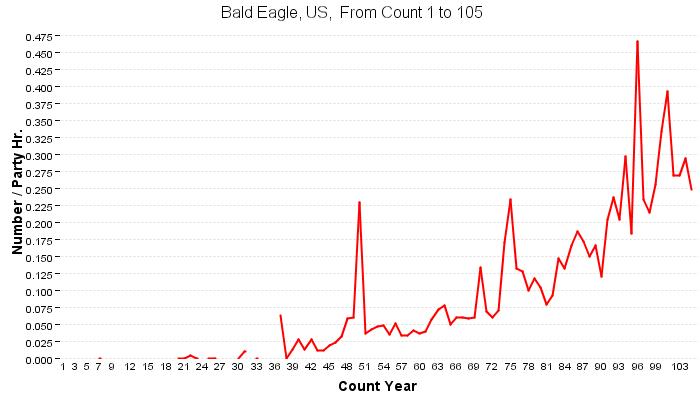
I detail this story -- complete with graphs of National Audubon Society data showing Bald Eagle decline and recovery -- in a 2008 post to this blog entitled "Bald is Beautiful." Check it out.

As to the white man in the picture, above right, he's none other than Calvin Coolidge posing in a Sioux war bonnet in 1927. This kind of photo-op never goes out of style, as this contemporary picture makes clear.

.

Monday, July 06, 2009

Kyrgyzstan: A Rough Country from Another Time

In February, the Parliament of Kyrgyzstan voted to terminate the U.S. lease of Manas Air Base, and to require the U.S. forces to vacate within six months. Then, on June 23rd, U.S. personnel signed some paper and paid a lot of money, and the base closure was miraculously rescinded.

Funny how those things work!

If you were stationed in Kyrgyzstan, what might you see if you got outside the base?

The short story is that this is a country where most people travel on horses, and the culture seems to be stuck 250 years in the past.

The national sport, to give you some small idea, is centered around playing keep-away with a dead goat, with both teams fully mounted and galloping around at full tilt. How come we don't have fun sports like this in the U.S.?

In any case, The Boston Globe has put up a few pictures showing life in Kyrgyzstan, and I sample a few below. Click to make bigger and got to the link to see the full set. You will note that a fair number of pictures are of ethnic Kazakhs. Most folks in Kyrgyzstan, of course, are Kyrgyz.


Wolf-bating with a chained wolf. Action gets ...


Reaction.


Sheep herding in a land of wolves and horses.


A Kazakh hunter flies his golden eagle.


Kazakh hunters in full dress with golden eagles.
.

Thursday, June 25, 2009

The Cull of the Wild


This book set out the tenets of wildlife management still in use today.


This post is reprinted from this blog circa June, 2005


Despite a three-fold increase in U.S. population since 1900, the U.S. now has more bear, cougar, buffalo, turkey, geese, duck, fox, raccoon, possum, alligator, groundhog, bald eagle, pronghorn, wolf, coyote, bobcat, and deer than at any time in the last 100 years. Beaver, turkey and river otter have been reintroduced into areas where they were wiped out, and wolf, elk and cougar are beginning to return to the east.

Though animal rights organizations decry sport hunting, the truth is that organizations such as Ducks Unlimited, the Rocky Mountain Elk Foundation, Trout Unlimited, Pheasants Forever, Quail Unlimited, and the National Wild Turkey Federation are the backbone of true wildlife protection in the United States. These organizations, and their state and local affiliates, work to protect and improve habitat across the U.S., as well as fund wildlife reintroduction and research campaigns.

For their part, groups such as the Humane Society of the United States and People for the Ethical Treatment of Animals (PETA) are little more than direct mail mills. Both organizations are entirely absent from all habitat protection efforts in the U.S., and neither organization runs even a single animal shelter in the U.S. despite the scores of millions of dollars they collect from the public. Instead these organizations send out millions of pieces of direct mail every year -- all of it highly emotional and designed to get suburban matrons to part with their "most generous gift of $10, $20 or even $50".

One of the perennial topics of animal rights direct mail campaigns is a push to outlaw trapping. Carefully staged photos and antique traps are used to pluck at the heartstrings, but donor beware! It should serve as a warning that blue-chip environmental organizations such as the National Audubon Society have sued the Humane Society (and won) in order to preserve the use of leghold traps as a wildlife management tool. All of the wolves now in the Yellowstone, for example, are routinely caught in leghold traps in order to inoculate them against rabies and distemper and to switch out the batteries on their radio-tracking collars. Modern leghold traps, properly set, are far more selective and less brutal than those that existed 100 or even 50 years ago -- a fact conveniently omitted from the direct mail literature of animal rights advocates.

Trapping for pelts in the U.S. is now largely independent of wildlife numbers -- when trapping numbers go down it is not because of a dip in the target species population, but because of a dip in pelt prices.

As of this writing, green (untanned) fox or raccoon pelts sell for between $8 and $12 dollars apiece -- not much considering the time and effort it takes to boil, dye and and wax a trap, set it out, check it daily, and skin and flesh the resulting catch.

That said, a surprising number of fox and raccoon are still trapped in the U.S. In the winter of 1999-2000, for example, when pelt prices were quite low, 29,739 fox were trapped in the state of Virginia (15,632 red fox and 14,107 Gray Fox), as well as 83,369 raccoon, 3,304 coyote, and 3,050 bobcat. In Pennsylvania that same year, 63,654 fox were taken (26,794 Gray fox and 36,860 red fox), as well as 107,407 raccoon, 9,508 coyote, and 58 bobcat.

For comparison purposes, the state of Virginia is 42,700 square miles in size, and Pennsylvania is 46,058 square miles in size as compared to England, which is 50,800 square miles and all of the UK which is 94,200 square miles in size.

.

Thursday, April 09, 2009

A Real Eagle-Eye View of the World


Link

So here's the concept: Strap a tiny video on top of an eagle and then see the world as she see its. This was shot in Spain, I believe. The web site is of falconer Jose Luis Ortiz. Nice!

.

Wednesday, April 08, 2009

A Harry Potter Bird


This is a very tame Sumatran Barred Eagle-owl. Is this the perfect bird for the next Harry Potter movie, or what?
.

Wednesday, December 10, 2008

Aeschylus, the Patron Saint of Bad Falconry


Aeschylus is regarded as the founder of Greek tragedy, so it's only fitting that he would have the most absurd death story of them all.

How did he die?

Simple: He was bludgeoned to death.

With a turtle.

In 458 B.C.

It seems that eagles in the area surrounding Sicily loved turtle meat, but had a problem getting past the hard shell to the meat inside.

Solution: Lift the turtles up to great heights and then drop them on the rocks to crack them open like coconuts.

As the story goes, Aeschylus was out in the sun one day when an eagle mistook the top of his bald head for a rock, and dropped a turtle on him, killing him dead on the spot.

The turtle, supposedly, survived.

As fanciful as this story may seem, it contains a note of plausability as the Lammergeier, or Bearded Vulture (Gypaetus barbatus), is native to the area, and is famous for dropping bones and tortoises on rocks to break them open.

Another bit of trivia about Bearded Vultures: In 1945, a 23-year old by the name of Shimon Perski and 59-year old David Ben-Gurion found a nest of Bearded Vultures in the Negev desert of Israel.

Young Persky liked the hebrew name for the bird -- Peres -- so much that he changed his name to Shimon Peres.

Shimon Peres, of course, went on to become Israel's ninth President and win the 1994 Nobel Peace Prize. The older David Ben-Gurion went on to become Israel's first Prime Minister.

Now you know.
.

Thursday, November 13, 2008

New Falconry Regs


The U.S. Fish and Wildlife Service (FWS) has announced a major revision to the regulations governing falconry.

The federal permit has been slated to be eliminated in favor of state, tribal or territorial falconry permits. All states, except Hawaii, already administer falconry permitting programs.

Dual state/federal permitting will no longer be necessary.

In addition, the U.S. FWS will now have an electronic reporting system for the acquisition, transfer or loss of falconry birds, to replace the current paper reporting system.

The final rule can be found at http://migratorybirds.fws.gov/ and a good Question and Answer piece (PDF) can be found here.
.

Friday, September 05, 2008

Bald Is Beautiful


A friend sent me some pretty terrific bald eagle pictures taken in Canada, which got me to thinking about these magnificent birds. When I was kid, there were very few bald eagles left on the East Coast. Today, I only have to drive to Wilson Bridge, about 10 minutes away, to see seven or eight of them (or more) in all their glory.

The return of the Bald Eagle is generally credited to a ban on DDT, but that's a lie. DDT did not kill off the Bald Eagle -- lead poisoning did, in the form of bullets shot from rifles.

The short story here is a common one in American wildlife: as guns became more accurate, cheaper and more powerful between 1850 and 1900, game laws did not keep up. The result was a true wildlife massacre. We not only shot out all of the buffalo that once grazed on the East Coast, we also shot out all the passenger pigeons, Canada geese, beaver, elk, wolves, deer, mountain lions and yes, eagles, osprey and no small number of hawks.

Eagles, osprey and hawks were also decimated by the use of pole traps -- leghold traps set on the top of poles placed around fishing nets and barn yards. Nothing kills hawks and eagles faster or more efficiently than a pole trap.

Native Americans did their fair share of shooting eagles too; it takes a lot of feathers to make a bonnet for the tourist trade, and there was no shortage of bonnets being made and shipped east to museums, collectors, and other wealthy patrons.


The graph above (click here to see full-sized graph) shows Bald Eagle populations as tracked by the National Audubon Society's Christmas Bird Count, which has tracked bird populations in the U.S. since 1900.

As you can see, by 1900 -- more than 40 years before DDT was invented -- Bald Eagle populations were vanishingly low. The same is true for Osprey -- another bird unlikely to be misidentified by a dedicated bird watcher. You can pick any non-migrating bird you want and track the data by going here >> http://audubon2.org/birds/cbc/hr/table.html (note Osprey migrate in the North but tend to reside year-round in the South).

Ironically, Bald Eagle populations climbed between 1940 and 1970, when DDT was in full use in the U.S. The reason for this is fairly simple: the Bald Eagle Protection Act of 1940 made it illegal to shoot Bald Eagles. This protection was further expanded when the Endangered Species Act was passed in 1973.

Left to their own devices, and protected from unregulated shooting and trapping, Bald Eagle populations took flight and have now soared. Today, there are about about 8,00 nesting pairs of Bald Eagles in the Lower Forty-Eight, and the Bald Eagle is now a candidate for de-listing from the Endangered Species Act.

Another American success story. Add that to the rostrum of success we have achieved through a marriage between hunters and conservationists: the return of the white tail deer, moose, elk, cougar, beaver, Canadian geese, wood ducks, and wolves.
.

Tuesday, April 22, 2008

Winged Weapons of Mouse Destruction


A young Falco sparverius. The American Kestrel or Sparrow Hawk, sometimes called a "spar", is actually a small falcon.


Humans like to think that we see well -- a vanity we cultivate by comparing ourselves to dogs, rats and other mammals that mostly see in black and white, grays, light yellows, and blues.

In fact, most mammals have a sharply reduced visual spectrum because early mammals went through a very long period when almost all of them lived an entirely nocturnal existence.

Most mammals are still nocturnal. If you wonder where the raccoons, possum, deer and fox are in your area, the answer is that most move about only at night. The rest of the time they are resting up in thick tangles of growth, tucked up into underground dens or hollow trees, slumped into small depressions and wallows, and otherwise "loafing on the couch," just out of eyesight.

Since most humans never stray far from car or path -- and almost never venture into dense tangle or on to even slightly swampy ground -- the critters remain undiscovered.

Animals that are mostly nocturnal do well with eyes that see very little color.

The canine eye is a good example. Though your dog may sleep all night (and half the day too!) it is still only a few thousand years removed from its wolf or proto-wolf progenitor; not enough time for physical evolution of the canine eye to have occurred.

The bottom line is that dogs do not see very well -- not even sight hounds or seeing eye dogs. In fact, dogs seem to see only about one-sixth as well as humans.

Not all mammals see in a reduced spectrum, however. The progenitors of old-world apes experienced a mutation millions of years ago that resulted in more cones and rods being added to their eyes. The result is a wide range of color vision among old-world apes (chimps, gorillas, orangutans) and their cousins, we humans.

Surprisingly, some of the oldest and most primitive animals on the planet have a wider spectral rangethan humans and chimps. This includes reptiles and the likely descendants of dinosaurs -- birds.

Anyone who has tried to stalk a wild turkey knows how incredibly sharp their eyes are. In fact, all birds have remarkable eyesight. It's been estimated that a common sparrow hawk, for example, could read a newspaper from 25 yards away, while an eagle can spot the twitching ears of a rabbit from a distance of two miles.

The reason avian acuity is so high is that a bird's eye is built entirely differently from that of a human or a dog. For one thing, the retina of a bird is enormous.

The retina is the screen at the back of the eye on which an image, coming through the lens, is focused. This screen is composed of light-sensitive rods and cones, with the rods registering shapes and the cones differentiating colors.

On rods alone, the avian eye far eclipses that of the dog or the human. A human eye, for example, has about 200,000 rods, while an eagle has about a million -- five times more.

The true knockout blow for birds, however, is in the cone department. It turns out that many birds, and especially birds of prey, have cones in their eyes that enable them to see a much wider spectrum than we can, and for some birds -- such as the American Kestrel or sparrow hawk (actually a kind of small falcon) -- this spectrum includes ultraviolet light.

What's the benefit of being able to see in the ultraviolet spectrum? Simple: mouse urine glows purple in ultraviolet light (one reason "black light" is used to find old pet urine stains on wooden floors).

When a sparrow hawk hunts along a hedge, it is able to look for urine stains that mark mouse holes, runways and nests.

Mice and rats mark their burrows and runways with urine scent trails because, like most mammals, they do not have very good eyesight. Scent cues help rats and mice orient themselves in the complex world of hedge, forest, field and barn. The result is that a rat or mouse can "run" a scent trail very fast without spending time in the open trying to figure things out.

Experienced human ratters know this about rodents, and so they will drag their boot across the middle of a shed and spin long boards perpendicular to where they have been lying, all in an attempt to break up or disturb invisible scent trails. A few seconds hesitation by a confused and disoriented rat is just the edge a terrier needs to even the odds on the farm.

For a sparrow hawk, visible urine trails enable it to focus on areas where small rodent activity is heaviest. By simply flying over a hedge or field, and then lighting on a fence post, telephone pole, or dead tree near visible urine marks, a sparrow hawk can dramatically increase its chance of finding lunch.

Once activity in the grass is spotted, a sparrow hawk will face into the wind and hover low over a grassy area -- a tactic that earned it the name "windhover" or "wind fucker" in 17th Century Holland, when the terminology was considered a little less offensive that it is today.

As for ultraviolet vision, it's not all about food -- it's about sex too. It seems that all those rather drab-looking birds we see in the hedge look a lot prettier when they are seen through the lens of an ultraviolet-sensitive eye.

Birds species in which male and females look very much alike to us look very different to the birds themselves, as they have twice as many cones in their eyes and so can see shade and colors we miss altogether.

.

Saturday, April 19, 2008

Hunting Fox with Eagle, Saving Wildlife With Film


Felix Rodríguez de La Fuente hunting Red Fox with a Golden Eagle in Spain. Felix Rodríguez de La Fuente was a world-class falconer and more-or-less the Spanish equivalent of Jacques-Cousteau-meets-David-Attenborough.

His wildlife narratives (complete with multiple-camera crews, transportation, etc.), were paid for by a rich Saudi prince who recognized his extraordinary abilities with Golden Eagles and the fact that he was a once-in-a-lifetime character who might translate well on to film.

Felix Rodríguez de La Fuente died in 1980 in an airplane crash in Alaska, and his funeral was attended by thousands. Today, there are several statues of him in Spain, where he is a national hero for his efforts to popularize and protect Iberian wildlife.

Rodríguez de La Fuenta's films have recently been digitally remastered which is terrific, as a whole new generation of folks can now see them.

Whatever you think aesthetically about filmed (and yes sometimes partly staged) wildlife shows a-la Frank Buck, Wild Kingdom, Steve Irwin, Jacques Cousteau and David Attenborough, there can be little doubt that these things have done a great deal of good for wildlife and wild places, because they have let people know what is out there and what is at risk of being lost.

That said, it is always fun to mock these things a little bit, and the segment below is pretty rich. Can you figure out who is playing "Cousteau?" I think this might be his only good performance ever!


.

Friday, April 18, 2008

Golden Eagles Hunting Chamois or Goat


In Spanish, and a bit long, but some jaw-dropping photography here. A warning that this video does show nature "red in tooth and claw." Or red in beak and claw, if you prefer.
.

Tuesday, April 08, 2008

Extreme Hunting


Hunting roe deer with Golden Eagles. Hat tip to Isaac Nichols at Another Falconry Blog.

To see the other end of the sport, in terms of size, check out this clip of hunting grasshoppers with an American Kestrel (aka a "sparrow hawk").
.