Showing posts with label deer. Show all posts

Monday, July 04, 2022

The Dog Tick Life Cycle

This is a repost from July 2006

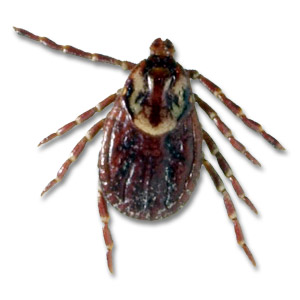
Summer is here, which means tick season is hard upon us. American Dog Ticks are known as "three-host ticks," because they have three different host animals in their lifetime.

First, the larva hatch out from the eggs, which may have been deposited in a groundog den frequented by fox, raccoon, possum or groundhogs. Larvae only have six legs, like an insect, and are white.


The larva will stay on the ground or climb up a plant or shrub to wait for a host to pass by. The larva will wait with their front claws outstretched to grab the first small mammal that comes by -- at this stage it is called a "Questing Tick."

The first animal to go by is is usually a mouse, rabbit, squirrel, or chipmunk. The larva will drink its fill of blood on this first host animal (a period of about four days) and then drop off.

Next the larva will shed its skin and become a larger eight-legged nymph tick. These nymph ticks are still very small, and will look for a new host which is likely to be another small mammal such as a possum, raccoon, groundhog or fox.

Once the nymph has grabbed on to a new host, it will again drink more blood (this time for a period of about six days) before it drops off again and molts a second time.

During this third stage of a tick's life, male and female ticks will look for a larger mammal to serve as a host. This mamaml might be a raccoon, possum, fox, skunk, woodchuck, deer, dog, or even human. The male will not feed at this terminal stage of its lifecycle, but will mate with the female as she feeds on the host animal.

After mating, the male will die and the female tick will engorge herself before droping off the host animal to lay her eggs -- many as 4,000 of them -- on the ground.

If a tick falls off a groundhog, fox, raccoon or possum in an earth den, the larva may hatch out, with thousands of little white tick larvae waiting to latch on to your dog. These "seed tick" infestations will require several flea and tick dips and very systematic work with a flea comb to clear from a dog's fur follicles.
.

Thursday, January 11, 2018

Vicious: Wolves and Men in America


Despite a lot of talk and unfounded rumor, there is only one record of a non-rabid wolf killing a human in North America since the arrival of Europeans.

Yet humans have killed wolves wholesale, using poison, traps, clubs, rifles, and even laying out mackerel hooks inside lumps of meat and fat. Nothing was too brutal in the quest to exterminate the wolf, and by 1880 a large part of America was wolf-free.

The wolf hung on into the 20th Century, however, in large part because the bounty system did not pay enough for people to spend months tracking down the last western wolves which were smarter and more trap-shy than most. When the Government began paying a professional cadre of wolfers to exterminate the last of their kind, however, the fate of the wolf was sealed.

Ironically, one of the last Government wolfers was Aldo Leopold, whose birthday it is today.  Aldo was a wolfer when he was a young man working for the U.S. Forest Service in New Mexico. Leopold went on to write the first book on Game Management in the U.S., and became, posthumously, an icon of the modern environmental movement with his memoir, A Sand County Almanac.

Buried in that little book is an essay called "Thinking Like a Mountain," and within it a section in which Leopold observes the dying of a "fierce green fire" within a wolf as it bleeds out on on rock after being shot.

Up until that hunt, Leopold had thought what he had been doing was good for deer and the mountain, but after seeing the wolf die he suspected neither the deer nor the mountain agreed with that view.


In time, as deer overgrazed sections of the West and East, Leopold began to fully understand the importance of keeping top predators in the eco-system. "A thing is right," he wrote "when it tends to preserve the integrity, stability, and beauty of a biotic community. It is wrong when it tends otherwise."

But Leopold came to this conclusion many decades after shooting out the last wolves of New Mexico, and in his youth he was among the cadres of Government wolfers who told stories about wolf hunts in order to help raise cash to support the public extermination effort.

Government-sponsored wolfers created traveling displays of wolf pelts and wolf skulls. These displays and stories memorialized the last of the western wolves and gave them names: The Custer Wolf, Old Three Toes, Old Lefty, and Old Rags the Digger, among them.

By giving individual wolves names and personalities, Government trappers helped break down the wall between wolf myth and wolf reality. The wolf, which had once seemed threatening, dangerous and mysterious, now became the outlaw hero of the story, and an emblem of the last days of the romantic (and dying) American frontier.

This is the essential plot structure of Jon T. Coleman's book "Vicious: Wolves and Men in America."

The book is not a text on wolf biology, but a history book that analyzes the gaps and nexus between wolf myth and wolf reality. Though well-written, it is more than a little burdened by the weight of being overly-academic and spending perhaps too much time on folklore and not enough on basic wolf biology. No matter -- if you have ever wondered how the wolf went from pariah to paragon in the space of 50 years, this book tells the tale.

Coleman suggests that the wolf reintroduction efforts of the 1990s (which have been quite successful) occurred because America is now mostly urban and has little contact with farm animals which now come from protected feed lots rather than the free-range forests and fields where wolf, ranchers, farmers and livestock once battled.

"Human predation has become so technical and abstract [in the lat 20th Century] that the consumers of animal protein no longer feel emotionally connected to the beasts they ingest...
Reintroduced wolves have thrived in a cultural environment that accepts the scientific extermination of millions of domestic animals but rejects violence towards a handful of wild creatures."

Would the wolf have been reintroduced if Americans still lived on grass-fed beef?

Perhaps not.

Did cows have to fatten in feed lots in order for America to returns its large predators to their spot on the ecological ladder?

Perhaps.

It is an uncomfortable kind of tradeoff.


Thursday, April 06, 2017

From Near Extinction to Common Pest in 50 Years


It is hard to describe the destruction of American wildlife between 1850 and 1900.

By 1850 all the Elk had been shot out in the East, the Forest Bison pushed into complete extinction, the Wolf extirpated from everywhere in the East but the Maine woods.

Between 1850 and 1900 the great herds of Plains Bison were cut down to within a few hundred animals of extinction, White Tail Deer and Wild Turkey were virtually extirpated along most of the Atlantic seaboard, geese and ducks of every type were slaughtered in dizzying numbers by shrapnel fired from cannon used by market hunters, and the beaver had simply vanished from every state East of Ohio. The Carolina Parakeet and Passenger Pigeon were gone, as was the Eskimo Curlew -- birds which once numbered in the millions.

The turn around in American wildlife populations began with passage of the Lacey Act in 1907, which banned market hunting.

A critical turn around in the fortunes of wild geese and duck occurred in 1935 when live decoys -- wild birds that had been trapped and made flightless with pinned or clipped wings -- was made illegal.

It looked like the ban on live decoys had come too late for some species, however. One of those species was the Giant Canada Goose which was thought to be extinct -- or nearly extinct -- in the wild.

The good news is that while there were almost no wild Canada Geese left, captive decoy goose populations still existed. With the 1935 ban on the use of decoy geese, most of these animals were released into marshes and onto ponds. Unable to fly, many of these animals quickly fell prey to fox and dogs, but some managed to grow back their feathers or live long enough to reproduce.

During World War II and into the 1950s, the descendants of once-captive Giant Canada Geese slowly multiplied in remote marshes and isolated ponds. While a natural recovery seemed to be occurring, these descendants of once-captive geese were largely non-migratory since, after three or four generations in captivity prior to 1935, they no longer had any "lead geese" to show them the way North.

In the 1960s the Giant Canada Geese population remained so low across the U.S. that it was considered extirpated in most states and near-extinct in the wild. In order to prevent extinction, a systematic effort was made to captive-raise Giant Canada Geese and introduce small flocks back into areas where they had once existed.

The introduction of Canada Geese was a phenomenal success. Absent hunting and disease, small flocks of Canada Geese grew by 10 to 20 percent percent a year -- a population doubling time of just 3 to 7 years time.

In a relatively short period of time, states saw a phenomenal growth in their Giant Canada Goose populations. Ohio, to cite on example, began with just 20 captive-raised birds in 1956, but by 2002 had a population of over 140,000 birds. Today almost all the geese you see in the Eastern U.S,. and Midwest are Giant Canada Geese.


The U.S. Fish and Wildlife Service estimates the current resident Giant Canada Goose population of the U.S. at 4 million birds and growing rapidly, with a small number of truly migratory Giant Canada Geese still found in the mid-Atlantic flyway.

Giant Canada Geese have also been introduced into other parts of the world, most notably Europe, where they are also thriving.

The "goose problem" today is not extinction but an over-abundance of geese in areas where heavy population densities may inconvenience golfers and cause eutrophication of farm ponds.

A boom in geese populations, however is not too bad a problem as problems go, and it has certainly been a benefit for fox which frequently raid Canada Goose nests in order to feed rapidly growing kits.

The rise of Canada Geese has also created a boom in sport hunting which now pumps hundreds of millions of dollars a year into rural economies. No one has benefited more from the demise of commercial market hunting than the sport hunter.

With the demise of market hunting, and with the assistance of capable wildlife managers, the Giant Canada Goose has returned, as has the wild turkey, the beaver, the bison, the elk, white tail deer, alligator and even the wolf. Truly, these are the good old days.


.

Monday, December 12, 2016

What Horror Is This?


Four dead deer, cut in half and dumped off a dirt road down by the flood plain of a small river near where I hunt.

A wasteful psychopathic hunter? Not likely. After a bit of a puzzle I figured it out: road kill deer, cut in half by a single-man road crew that loaded them into the back of a small pickup truck before disposing of the bodies in an out-of-the-way location. A few of the deer that had not been too damaged may have been skinned out.

Gut-shot deer and roadkill deer are an important food source for fox in winter. The meat stays good all winter (fox are not too finicky) and provides a ready bounty for fox, possum, coyote and the occasional raccoon. When it snows I will check this area for tracks.
.

Friday, November 13, 2015

The Real Threat to Hunting


A repost from this blog, July 2004.

For hunters, fluttering orange tape and popsicle-colored sticks mean only one thing: Doom.

This is the spoor of the tract-home surveyor. This is the end of the game.

The hill where your terrier worked that fine red fox last season will soon be covered by plastic-sided houses and kiddie swing sets.

The hedgerow you counted on for the occasional raccoon and a steady supply of groundhogs will soon be an asphalt ribbon.

Across the country the same story is playing out, again and again. It is not PETA that is hammering hunters, but real estate developers.

Pheasant, quail and bear are long gone from most areas, as are bobcat, cougar and wolf.

Even if deer and geese manage to thrive on 15-acre tracts, the American hunter will not.

When land is cut up into small parcels, acquiring permissions is difficult and firing a gun impossible. More houses means more roads. It does not take too many roads before a man with working dogs no longer feels comfortable letting them off leash.

Most of us know the big picture: forests are falling to farms, and farms are falling to freeway all over the planet. Across the globe wild rivers are being dammed, and increasing numbers of species are being pushed on to the endangered species list. Cars, factories and electricity-generating power plants are spewing forth greenhouse gases contributing to global warming, even as mile-long gill nets decimate fishing grounds, and raw sewage spills untreated into once pristine waters.

The environment is not committing suicide -- we are killing it. As Pogo so aptly put it, "we have met the enemy, and he is us." The common denominator to every clearcut forest and decimated hedgerow is human population growth.

It’s hard to overstate the speed of human population growth. It took perhaps two million years to add the first billion people to the population of the world -- a number reached about 1830. It took only 100 more years to add the second billion people (1930), and just thirty more years to add the third billion (1960). The global population counter clicked past four billion by 1975, five billion by 1987, and six billion by 1999. World population will climb past seven billion within the next 15 years.

It’s hard to get a handle on such numbing numbers. Let's bring it closer to home to gain a little perspective. Surely, we have nothing to worry about here in the United States, right?

Think again.

Consider what has happened in your own lifetime. Take a look at the table below, and find your approximate age in the far left column. The number next to it is the size of the U.S. population when you were born, and the number to the right of that is the relative population growth that has occurred in the U.S. since then.


Of course, the U.S. population growth that has occurred since you were born is only part of the story.

Let’s think for a minute about the U.S. population growth that will happen over the rest of your lifetime. I will use middle-range Census Bureau projections even though these numbers have consistently been too low for over 50 years because Census Bureau demographers habitually under-estimate illegal immigration and over-estimate emigration (people leaving).

In the table below, look in the left column to find your approximate age -- or the age of your children or grandchildren if you prefer. Now look at the next column to see what the population of the U.S. will be when you (or your children or grandchildren) are age 70. The third column gives the percentage population growth that will occur in the intervening years. Again, these are very conservative numbers.


Another way to think about these numbers: over the course of the next 50 years, using the very conservative mid-range projections of the U.S. Census Bureau, the U.S. will add about 150 million people to its population -- a sum greater than the population of the United States west of the Mississippi River today.

To put it another way, over the course of the next 50 years, the U.S. will add more than twice the current population of the United Kingdom.

Where is all this population growth coming from? Most of it originates overseas.

About 70 percent of all future U.S. population growth will be due to immigration (legal and illegal) and the children and grandchildren of immigrants that have not yet landed on our shores. In a very real sense, America's hunting and angling future is being determined in Karachi, Mexico City, Beijing, Moscow, Dublin and Hanoi.

Most of the organizations that we think of as protecting the environment and sports hunting do not mention the speed of U.S. population growth, not because it is not an issue, but because they are afraid that talking about limits on immigration might harm future membership growth. After all, today's illegal alien is tomorrow's permanent resident alien or U.S. citizen, right? At the top reaches of organizations as divergent as the Sierra Club and the National Rifle Association, success is not defined by what is going on in forest and field, but about what can be done to grow out the membership base now and in the future. Association executives are as enamored with population growth as any real estate agent or strip mall developer.

I suspect it will only be in hindsight that we realize what we have lost and what we have gained. Very few people notice the absence of box turtles or make the connection between population growth, habitat change, and Lyme disease.

Only when we are very old and America has changed to the point where we no longer recognize it will we understand the wisdom of Sioux Chief Ben American Horse, who warned Vice President Alben Barkley, "Be careful of your immigrations laws. We were damn careless with ours."
.

Monday, November 24, 2014

The Archeology of Hunting

.

Humans have spent most of their time on earth hunting, and it is not entirely surprising that there is at least some archaeological evidence of the activity.

In North American before Columbus, there were no metal tools or horses. Hunting was done entirely on foot, and hides and meat were hauled off by humans and dogs pulling travois skids.

In some rare locations a very efficient form of hunting was accomplished by running bison herds off of cliffs or "Buffalo Jumps" -- a fact we know today only because of the enormous piles of bison bones at the base of these cliffs, and the related stone tools and campfires.

Archaeologists have discovered that drive lines were made to direct herds of bison to the jumps. The drive lines consisted of rows of rock piles known as "dead men," arranged like a wide funnel that started up to 8 miles away from the jump site. The funnel gradually narrowed toward the jump end. Hunters hiding behind the "dead men" rock piles would spring out and wave robes and shout in order to frighten the animals and keep them inside the funnel and headed in a stampede towards the jump where they would tumble down, breaking legs and necks as they fell.

In Europe, large Deer Parks were created during the Middle Ages as a way of setting off land for aristocratic hunters and managing sustainable game populations for food. The edges of these parks were often edged by massive earthwork moats and mounds which, in turn, were topped by wooden fences. The moats were on the inside and prevented the deer from getting a foothold or a run-up to the top of the mound which was constructed from the earth taken from the moat excavation. Many UK locations with "Park" in their name are, in fact, old Deer Parks and with careful observation in some locations, you can see parts of remnant ditches and mounds.

As with the ancient Buffalo Jumps, hunting in deer parks was accomplished by driving game through funnel fences to archers who were positioned on the ground or in tree stands.

In the 14th Century there were over 3,000 deer parks in England occupying around 650,000 acres of land (over 1,000 squre miles). These deer parks were managed for wild game and for wood. In the larger deer parks streams were dammed to make small lakes and ponds for fishing and ice making.

Most of the large deer parks fell into disrepair in late Medieval times as the feudal system collapsed under the weight of the Plague, and a new form of hunting -- coursing with horses and dogs -- was imported from France.

Another archaeological remnant of hunting to be found in Europe are rabbit warrens. The rabbit is not naive to the UK -- it was introduced (probably from Spain) by the Romans shortly after the First Century AD. Across the UK ancient artificial warrens can be found to this day. These warrens are called "pillow mounds" or buries and are flat topped, 10 to 20 metres long, 5 to 10 metres wide, and up to a metre high, sometimes surrounded by a shallow ditch. About 2,000 of these ancient buries survive in England, and in some of them artificial runs are covered with stone slabs. Some of the very largest artificial warrens had professional staff (a warrener) and buildings.


*.


Duck and Fish Ponds provide additional archaeological evidence of hunting and angling across the globe. Many of these ponds have artificial islands on them created as spots where ducks and geese can breed free of predators. While the waters of these ponds were stocked with fish, the ponds were often designed with "dog-leg" lagoons, or a narrows on one end, where ducks and geese could be driven and easily netted.

The United States is a very young nation, and much of the Western U.S. was nearly devoid of people only 150 years ago. That said, Americans are industrious and the construction of small ponds and large lakes for water storage and ice-making naturally led to increased still-water angling and duck hunting.

In short order, some people began construction of dams specifically to increase angling and hunting opportunities. One such dam was constructed on the South Fork River near Johnstown, Pennsylvania. The dam itself was a massive earthen affair constructed by the South Fork Fishing and Hunting Club which counted among its 66 wealthy Pittsburgh residents Andrew Carnegie, Henry Clay Frick, Andrew W. Mellon, and Philander Knox.

At the time of its construction, the South Fork Dam was one of the largest in the world, but it was not well constructed. A flawed design was made worse when the Fishing and Hunting Club put screens across the safety spillway to prevent fish from washing over the dam during heavy rains. The spillway screens were constantly clogged with debris, but despite many warnings about the safety of the dam, the rich aristocrats who owned the hunting club continued on, business as usual.

On May 31, 1889, after a period of heavy rain, the dam finally gave way sending a 45-foot-tall wall of muddy water racing down the Conemaugh Valley. More than 2,209 lives were lost and 27,000 people were made homeless -- one of the greatest single losses of human life in the history of the United States.


Civilian Conservation Corps Tree Planters, 1939


The most notable period of U.S. construction for wildlife benefits began with the advent of the Civilian Conservation Corps (CCC) in 1936. The CCC was created as a Depression-era jobs program which eventually put millions of young men to work on reforestation, soil erosion, flood prevention, and trail construction projects across the United States..

The Corps was badly needed -- America had ruined scores of millions of acres of once-forested lands during the rip-rape-and-ruin robber baron era that lasted from 1850-1900.

Massive tracts of forest in our eastern mountains had been swept clean of trees, and streams were choked with silt. Wildlife had been shot out to the point that deer were nearly extinct, all beaver were gone, and ducks and geese were a rarity in areas where they had once been in dense numbers.

The Lacey act of 1907 and the Weeks Act of 1911 were important for protecting wildlife and conserving land, but wild America had been so severely hammered by unrestrained greed that it was to clear that it would take millions of hours of human labor and a lot of time to begin to set things right.

President Franklin Delano Roosevelt started the ball rolling in 1934 with the appointment of Committee on Wild-Life Restoration whose mandate was to prepare a plan to restore America's dwindling wildlife populations. Among its members were the great wildlife manager Aldo Leopold, and cartoonist Ding Darling.

The Wild-Life Committee recommended far-reaching changes to improve habitat for waterfowl, upland game, mammals, and song birds, including the acquisition of millions of acres of additional sub-marginal lands for habitat improvement, and appropriations of $50 million to restore these lands to some semblance of their natural self.

It did not take a genius to see that the Wildlife Restoration Plan and the Civilian Conservation Corps were ideal partners, and under the tutelage of Darling -- a man who later went on to create the Federal Duck Stamp Program and found the National Wildlife Federation -- significant gains were made in record time.

By the end of 1942, national wildlife refuges, national forests, and other public lands across the U.S. had been improved by CCC workers who constructed dams, dikes and fish hatcheries, planted millions of trees to stabilize stream banks and cover over ruined land, and erected numerous buildings, fire towers, telephone lines and support facilities for camping grounds, and improved backcountry-access for hunters and hikers.

Civilian Conservation Corps construction projects remain a significant addition to our National Parks, National Forests and Wildlife Refuge System to this day, and are too-little heralded part of our American wildlife heritage.
.

Friday, July 19, 2013

The Questing Tick And Your Dog


Summer is here, which means tick season is hard upon us.

American Dog Ticks are known as "three-host ticks," because they have three different host animals in their lifetime.

First, the larva hatch out from the eggs, which may have been deposited in a den frequented by fox, raccoon, possum or groundhogs. Larvae only have six legs, like an insect, and are white.


The larva will stay on the ground or climb up a plant or shrub to wait for a host to pass by. The larva will wait with their front claws outstretched to grab the first small mammal that comes by -- at this stage it is called a "Questing Tick."

The first animal to go by is is usually a mouse, rabbit, squirrel, or chipmunk. The larva will drink its fill of blood on this first host animal (a period of about four days) and then drop off.

Next the larva will shed its skin and become a larger eight-legged nymph tick. These nymph ticks are still very small, and will look for a new host which is likely to be another small mammal such as a possum, raccoon, groundhog or fox.

Once the nymph has grabbed on to a new host, it will again drink more blood (this time for a period of about six days) before it drops off again and molts a second time.

During this third stage of a tick's life, male and female ticks will look for a larger mammal to serve as a host. This mammal might be a raccoon, possum, fox, skunk, woodchuck, deer, dog, or even human. The male will not feed at this terminal stage of its life cycle, but will mate with the female as she feeds on the host animal.

After mating, the male will die and the female tick will engorge herself before dropping off the host animal to lay her eggs -- many as 4,000 of them -- on the ground.

If a tick falls off a groundhog, fox, raccoon or possum in an earth den, the larva may hatch out, with thousands of little white tick larvae waiting to latch on to your dog. These "seed tick" infestations will require several flea and tick dips, and very systematic work with a flea comb, to clear from a dog's fur follicles.
.
.

Thursday, February 28, 2013

Clash of Opinions is Actually a Clash of Knowledge

In Heartsblood: Hunting, Spirituality and Wildness in America, David Peterson notes that back in 1978 Yale University behavioral scientist Stephen Kellert authored a paper entitled "Attitudes and Characteristics of Hunters and Antihunters" in which he summarized his research into the psychology and world-view of these two opposing groups of people.

Kellert breaks hunters down into three core groups:

Utilitarian-meat hunters;
Domination-sport hunters, and;
Naturalist-nature hunters.

Kellert notes that while the groups blur a little at the edges, these three psycho-demographic groups do exist, and represent striking differences of attitude within America's hunting population.

Utilitarian-meat hunters represent about 44 percent of all American hunters. This group tends to talk of "harvesting" game as a renewable resource and many have a "pioneer spirit" forged in self-sufficiency. As a group utilitarian-meat hunters tend to be older, more rural and less educated, but test pretty well when it came to knowledge about wildlife. Few Americans oppose them.

The second group, the domination-hunter, comprise about 38 percent of all hunters. Most domination-hunters are urban men, have served in the military, and see hunting as a way of expressing their manly prowess. Domination hunters know very little about wildlife, and many actually fear it, having an exaggerated "dangerous game" mindset of the kind we often see in pulp hunting magazines ("Mauled by a Grizzly," "When Sharks Attack", "Stalked by a Killer Moose"). Domination hunters showed little interest in wildlife in their youth, and as adults tend to see wild animals as uncontrolled and therefore as "bad" or nuisance animals. The domination hunter is the group non-hunters dislike, and which antihunters try to use to negatively portray ALL hunters.

The third group of hunters -- naturalist hunters -- represent less than 18 percent of all hunters. This group tends to be younger, more educated, and with higher levels of education and income than the other groups. This category also includes more women hunters. Nature hunters tend to backpack, bird watch and camp, as well as hunt. This group also spends more time actually hunting than either of the other two previous groups. Nature hunters have far and away the highest level of knowledge about wildlife and seek an intense involvement with wildlife and do not fear it.

Kellert also goes on to analyze antihunters as a group and finds, not surprisingly, that about 80 percent are women. Most are urban women living on one coast or another.

Antis had very little actual experience with wildlife and, along with domination hunters, had "among the lowest knowledge-of-animals scores of any group included in the study."
In another ironic parallel with domination hunters, "it appeared that antihunters manifested more fear and lack of interest in wildlife" than average Americans.

What was striking to me about reading Kellert's research was how it explains much of the silliness and stupidity we see in the arena of wildlife management today, where antihunters who have never walked a hedgerow clash all with macho-men domination-hunters who would never consider going into the woods without a Bowie Knife as large as medieval falchion.

Neither group seems to have very much knowledge about wildlife. One group does not hunt at all, and the other does not seem to hunt very much.

Left out of the debate -- and too often ignoring it -- are utilitarian-meat hunters and nature-naturalistic hunters which form a majority of the people who actually spend any time in forest or field.

The good news is that in America, unlike in much of Europe, wildlife management decisions tend to be left to an increasingly well-educated groups of professional wildlife managers with degrees in biology, zoology, resource management, forestry, population dynamics, law enforcement and even economics. The watchword in the U.S. is not knee-jerk emotionalism, but sustainability and habitat protection. As a consequence, we have more deer, elk, moose, bear, wolf, fox, alligator, whales, peregrine falcons, bald eagle, osprey, groundhog, raccoon, possum, coyote, bison, beaver and mountain lion today than we have ever had in the last 100 years, and the numbers for all of these species is going up, up, up.
.

Tuesday, June 05, 2012

Red Fox as Weapons of Mouse Destruction


If you use the slightest bit of common sense, the chance of getting rabies from a raccoon, fox, possum, skunk or groundhog is very low, even if you work your terriers to such quarry year-round.

The chance of getting Lyme disease is a little bit higher, but it too is a very rare problem -- far rarer than most people think.

Lyme disease was first identified in Old Lyme, Connecticut in the 1970s. This zoonotic disease is passed to humans by blacklegged deer ticks which are infected with the spiral-shaped Borrelia burgdorferi microbe.

The illness was probably around a long time before being discovered, but prior to the 1970's it was rare enough that no one bothered to name the illness, much less study it.

Then, beginning in the early 1970s, the deer population in the Middle Atlantic and Northeastern United States began to grow rapidly. At the same time, more and more people began moving into the country, generally onto small farms located next to small woods.

Small woods in the Eastern U.S. are often dominated by young oak trees, and these same small woods serve as daytime shelter for fairly dense deer populations of 50-200 animals per square mile (as compared to 25 per square mile in pre-Columbian times).

Very dense deer populations are possible in the eastern U.S. because the deer are able to feed at night in nearby hay, corn and soy fields.

The proximity of houses to shelter-belt forests means deer jungled up in these woods are safe from hunters who cannot legally fire weapons in such close proximity to occupied buildings.

Most people assume deer are the primary reservoir for Lyme disease, but scientists now believe the primary reservoir for is not deer, but something quite a bit smaller -- the whitefooted mouse.

Ticks are not born with Lyme disease. The Borrelia microbe is not passed from female tick to egg, but from Borrelia-infected mammal host to blacklegged deer tick, and from the tick to humans as part of the multiple-host lifestyle of all ticks (for more on that, see >> here).

Almost all whitefooted deer mice have Borrelia coursing through their veins. In addition, almost every tick that bites a whitefooted mouse ends up carrying Borreleia. For reasons not yet understood, other Borrelia-infected animals do not pass Borrelia on quite so easily. While possums, raccoons, fox, coyotes and most birds can carry Borrelia, and often host deer ticks as well, the ticks that feed on these animals become infected with Borrelia only 10% of the time as compared with a 90% infection rate for whitefooted mice.

Clearly, a key component to controlling Lyme disease is reducing the number of whitefooted mice in an area.

Mice populations, it turns out, tend to explode with acorn production which tends to be cyclical. In high-mast years when the ground is littered with vast numbers of acorns, the whitefooted mouse population in small oak woods will explode, and with it the incidence of Lyme disease in an area. Deer coming into these woods pick up the ticks and ensure their dispersal while supplying the tick with a large blood meal (absent a human host).

Obviously, ending acorn production in the Eastern woods is not in the cards. So what else can be done?

One thing that seems to reduce mice populations is to increase the degree of ecological diversity in an area. As the variety of plant sources increase, the popualtions of meso-predators such as possums, raccoons, fox and coyote tends to increase, and with it a decline in mice populations.

Predators, such as fox, are impotant to keeping whitefooted mice populations -- and to some extent Lyme disease -- in check. Fox are highly mobile predators that continuously suppress mice populations all year long. In the absence of mice, fox easily switch to berries, crickets and grasshoppers, young rabbits, voles, and even roadkill and garbage. When mice populations do rise, however, a few red fox can go a long way towards knocking their numbers back down again.

How many mice can a fox eat in a year? If it eats little else, a fox can knock off about 5,000 mice a year. That's not enought to eliminate Lyme disease in an area, but it can have a significant impact, and every little bit helps.

What else can be done? In many areas more deer culling needs to be done, especially of does. With a reduction in deer densities, forest understory has a chance of growing back in, and with it will come an increase in bird populations and other non-mouse fauna.

Such simple precautions such as spraying your pants with bug spray before going out walking in forest and field can help reduce the chance of tick-borne infection quite a lot, as can mowing walking paths short. Move brush piles and firewood stacks away from the house as they are havens for mice populations. After returning from a day in the field, check yourself over for ticks, paying especially close attention to areas you do not normally look at, such as the back of your legs and your back and neck.

If you find a tick, do not worry -- a tick has to feast on you for three days or so before it is able to transmit Borrelia. If a tick bite, or a bite from an unknown bug, develops a large red ring around it, see a doctor immediatly or (if you have doxycline in your vet kit) take a 3-day regime of doxycline. Lyme disease generally very easy to treat in its early stages with a simple one or two-week regime of antibiotics.

And, of course, practice agressive flea- and tick-prevention on your dogs. I hunt most weekends and generally wash the dogs with a low-cost flea shampoo after they return. A few days later I look them over pretty carefully to see if they have any ticks on them that I might have missed while washing them (it helps to have smooth coated dogs!). Other folks use Frontline. Whatever works for you is fine.

The most important element of flea and tick control is vigilance -- paying close attention, on a daily basis, to your dogs. Simply running a hand over their coats once a day will tell you a lot, and not just about ticks, but about weight gain and muscle tone as well.

The Red Fox: the ultimate weapon of mouse destruction.
.

Wednesday, December 14, 2011

Monday, November 28, 2011

Busting Dogs Off Deer


Few things are cheaper and more reliable than a simple leash.

A video of a man screaming at his deer-chasing dog in the U.K. seems to have created a small interest in how to bust dogs off deer.

Dogs chasing deer is not a new problem but an old one, and it is not limited to deer. Dogs may bust on fox, geese, feral cats, horse, sheep, bear, and even cars and bicycles.

Anything that moves away quickly -- and especially anything that moves away while making noise -- will tend to trigger the prey drive in a dog.

What to do about it?

Well to start, recognize that prey drive is a deeply-seated code that is curled up like a watch spring in some dogs, and that pursuit is a self-reinforcing behavior.

What's that mean?

Simple enough: It means the dog gets a great deal of pleasure from the pursuit itself.  

For a dog, chasing things is a peak experience in and of itself.  It is FUN in capital letters. 

What that means for you, the owner or trainer, is that you are going to have to use all three legs of operant conditioning in order to achieve success if you have a dog with a lot of prey-drive.

As I noted in an earlier piece entitled Milking Stools and Operant Conditioning, the complete tool box of dog training (i.e. operant conditioning) can be thought of as:
  1. Reinforcement (treats, play, etc.);
    .
  2. Punishment (voice corrections, leash corrections, etc.), and;
    .
  3. Extinction (no reaction from behavior, desensitization).

So where to start?

Well a short history tour will do no harm.

One common way that working dog men and women have brought on new dogs in the hunt field is to couple them to old dogs so that the new sapling learns to "pack up" with the group. 

Once experienced and inexperienced hounds and terriers are coupled together for a while, the young dog tends learn that the goal is not to chase ANY scent, but a specific scent.  Hound and terrier couples are still sold, of course, but coupling an old working dog with a new prospect is not too useful a tip for the typical pet owner who has a single non-working dog.  So what else is there to do?


Another ancient technique for busting dogs off deer is to extinguish the dog's interest in deer scent by flooding the dog with deer stink. 

One method of doing this is to tie a deer's tarsal gland to a hound's collar.  Glands are actually sold for this -- see page 18 and 19 of the last (2010) Bill Boatman Catalogue -- as well as special collars and deer scent preparations sold by others.  I have never tried this method, but folks like Bill Boatman who have run beagles and large hounds longer than I have been alive (I am 52), are due some respect. 


The more traditional method of busting dogs off deer is to teach the dog a sit, to sit-stay, and to whoa (a command that simply means "stop and do not move until I release you".

All of this is done with a flat collar, a slip collar, or a prong collar, and a 6-foot leash, a 15-foot leash, and a 30-foot leash, using traditional methods that may include food rewards, clickers, pushing down bottoms, stepping on leashes, etc. 

There are a dozen ways to teach sit and sit-stay, and different dogs seem to "get it" quicker with one system or another depending on age, temperament, and the ability of the owner to communicate consistently.


Once your dog KNOWS sit and sit-stay on leash, and is 100% on these commands without distraction, you will want to take the dog to places where distractions such as other dogs, wildlife and farm stock (sheep, feral cats) are abundant. 

Work the dog on a short leash, and then on a long leash or check cord, and be quite tough on the dog when it starts to move towards a distraction and ignores a sit command.  Sit means SIT 100 percent of the time and whoa means NO moving forward!  Do not repeat commands. 

Once the dog understands that you consider deer scent and chasing cats and others dogs complete nonsense, and once the dog always obeys a sit command when on leash, you now want to move to the next stage which is making the dog bomb-proof off leash.  If your dog has a low prey drive, and is a soft and compliant dog in general, you may find it is pretty bomb-proof right off the mark, in which case lucky you!

More commonly, and especially with working dogs that have strong prey drives and no outlet for them, you will see compliance slip a bit when a dog is taken off-leash.  Old military trainers like Konrad Most and William Koehler could be pretty tough on dogs that would regress when off-leash, and for a pretty good reason:  a bolting or barking dog in a military situation can end up killing an entire platoon of humans.  Tolerance for disobedience, especially when given a sit, sit-stay, or whoa command was very low and for a darn good reason.

The good news is that today we have a new tool in hand, and while it is not the right tool for most training jobs, an e-collar is a very good tool for teaching a whoa and for busting dogs off deer provided it is used correctly.

As I note in an earlier piece entitled The Limits and Strengths of E-collars, electronic collars are NOT for teaching basic obedience, but are excellent tools for long-distance reminding.  This kind of long-distance reminding is particularly useful for deer-chasing dogs that have already been been taught sit, sit-stay, and whoa, and which have been long-lined on a check cord with distractions such as deer scent and running deer.


Again, to go back to basics, you do not start off with an e-collar by turning it up to 11.  You start with a setting so low it barely tingles, and you start using it with leash on to remind the dog that scent is a NO. 

The dog already knows this because you have taught it -- you are just reaching out and tapping the dog on the shoulder as a reminder if it forgets on a long line.  Yes, you may have to jolt the dog once or twice when the dog is a bit too excited fully off-leash at the beginning, but I have busted my own dogs off deer and never moved the collar past 3.  Remote collars are not about frying a dog -- they are about reminding a dog from a distance.

Go through the old Bill Boatman catalogue or that of any other hound and working dog shop, and you will see all the basic tools ever used to bust dogs off deer -- brace tethers, deer tarsal glands, check ropes, and e-collars. 

Here is the entire history of busting dogs off deer and other "trash" wildlife, and it all works, but the check cord and the e-collar together are the basic tools for modern field dog training because they both work well separately, even if they work best together, as described

But, of course, all of this is likely to be far too much work and bother for the owner of Fenton, the dog seen rioting on deer in the video at top. 

Here, what is needed is nothing more than a leash, or perhaps a simple 20 foot length of parachute cord tied to a belt clip on one end and a leash on the other.

It is an old truth that few things are cheaper and more reliable than a leash, and in this particular case Fenton's owner, an architect and father of two, should have known that Richmond Park, south west of London, has a herd of deer, and it is illegal to run dogs off-leash as a consequence.

Now, the poor fellow is keeping his head low, and thinking of changing the dog's name so he does not get in trouble with the authorities.  

That's a lot of trouble that could have been solved with a check cord or a leash of the simplest variety.
.
Friday, October 28, 2011

Florida Python Swallows Deer (With Pictures)


This very large Burmese python was captured and killed in the Florida Everglades on Thursday, right after it caught and consumed a whitetail deer.

The snake was 15.6 feet long, weighed 215 pounds (counting the prey inside). 

The doe deer inside weighed 76-poundsSource.


Monday, October 17, 2011

A Small Fright in the Backyard

I got home after dark tonight, but I was dedicated to putting in the new goldfish pond pump I bought late yesterday afternoon, and so the dark was not going to slow me down.

After wiring the pump base to a 5-gallon plastic bucket top, and cutting off the bottom of the bucket so the pump would sit at the right height on the submerged bucket top, I noticed that the dogs were barking up a frenetic storm in the back yard. 

What the hell?  It must be a fox, possum or raccoon.

I gathered up the pump and bucket and went down the dark path towards the pond, when a massive eight-point buck stormed me charging, antlers down, and the dogs hard behind him.  There was a fence to the left and a steep rise of land on the right.  The dogs and the little pond were behind, and only I was ahead of the deer, but there was nowhere else for me to go!. 

Thank God, the deer decided I was scarier than the dogs, and he whirled in mid-air, leaped over the two dogs, and then cleared the back fence sight unseen in the dark.  Jesus! 

I will move the camera trap back to the pond area and see if I can get a few shots of my backyard bucks and does this time of year.  They come around a lot, mostly to drink from the pond after the dogs have gone to bed.  I might get some good shots later this week.
.

Tuesday, September 13, 2011

Deer in the Woods, Deer in the Road


The Perennial Plate Episode 40: Road Kill (Deer in the woods, Deer in the road) from Daniel Klein on Vimeo.

This is Minnestota, so it's not just hunters that control the deer population: there's are also about 3,000 wolves in the state.

Another thing to remember if you are deer hunting: It's a little harder if you are doing it with a camera crew in tow.

That said, one thing I like about this clip is that it's a reminder that a lot of deer are hit on the roads every year (see here for state-specific data), and if the deer are not too badly smashed, and the weather is right, and a crew arrives in time, a lot of that meat can be put to good use.
.

Wednesday, November 24, 2010

Let Us Give Thanks for Wild Turkey and Uncle Sam


Wild Turkey Feathers. This is a repost from Nov. 2008

Let us give thanks to the Wild Turkey, America's largest ground-nesting bird.

Back when my grandfather was born, the Wild Turkey was teetering on the edge of extinction. Today we have more Wild Turkeys in America's woods than existed in pre-Columbian times.

How is that possible?

Good question. But before we get there, let's dwell a little bit longer on the miracle.

You see, it generally requires a lot of forest -- 2,000 acres or more -- to maintain the kind of food crop and cover that Wild Turkey need to thrive.

The reason for this is that in the dead of winter, Wild Turkey depend on acorns and other nuts and seed for survival. This food is only produced in abundance by mature hardwood trees -- oak, beech, dogwood, cherry and gum.

So what's the big deal? We have a lot of forest in America.

True enough now, but not as true a century ago in the Eastern U.S. and much of the Midwest. Back around 1900, virtually all the big stands of large trees had been logged out in the Eastern U.S. and across much of the Midwest as well. As the trees vanished, Wild Turkey populations plummeted.

Wild Turkey populations were further pushed to oblivion by rapid improvements in gun accuracy, and weak game laws that had yet to catch up to the changing dynamics of landscape and technology.

By 1910, there were fewer than 30,000 Wild Turkeys left in America.

Then, an amazing turnaround occurred. That turnaround started with passage of the Lacey Act in 1900. The Lacey Act ended commercial hunting of wild animals.

Commercial hunting is not sport or recreational hunting -- it is the opposite of that. In commercial hunting, the goal is not having a fun day in the field to fill your own freezer with wild meat, but a full year in the field to fill the freezers of 10,000 people whose primary concern is the price per pound.

To put it simply, commercial hunting is to sport hunting what gill-netting is to fly fishing. One comes with a factory ship attached; the other a simple wicker creel.

No single action has done more to improve the status of American wildlife than passage of the Lacey Act. Prior to its passage, commercial hunters bled the land white, shooting everything that moved. Wild game merchants sold pigeons for a penny apiece, and ducks for only a little more.

Hunters, using cannons loaded with shrapnel, would shoot 400 ducks in a day in Maryland's Eastern Shore marshes, while market deer hunters would set up bait stations near roads and shoot 20 deer in a night.

The Lacey Act helped put an end to this kind of unrestricted slaughter of American wildlife, but it did nothing to restore badly degraded habitat.

Wildlife without habitat is a zoo.

Habitat without wildlife is scenery.

America -- still a young nation -- remembered when it had both, and it wanted it all back.

The second steps on the road to wildlife recovery occurred between 1905 and 1911. It was during this period that Theodore Roosevelt set aside 42 million acres as National Forest and created an additional 53 National Wildlife Refuges as well.

It was also during this period that Congress passed the Weeks Act authorizing the U.S. government to buy up millions of acres of mountain land in the East that had been chopped clean of its forest in order to obtain wood for railroad ties, paper, firewood and timber.

With the Depression of the 1930s, and rapid migration of millions of people from the rural countryside to the city, more and more marginal farmland began to revert back to woody plots.

Spontaneous forest regeneration in Appalachia, along with tree-planting by the U.S. Government-funded Civilian Conservation Corps, helped restore more than 6 million acres of hardwood forests on denuded land purchased under the Weeks Act.

In 1937, the Wildlife Restoration Act (aka, the Pittman-Robertson Act) initiated a new tax on rifles, shotguns and ammunition, with this dedicated revenue going to help fund wildlife conservation.

Pittman-Robertson Act funds were used to purchase millions of acres of public hunting lands and to fund wildlife reintroduction efforts for Whitetail Deer, Canada Geese, Elk, Beaver, Wood Duck, Black Bear, and Wild Turkey.

In the case of Wild Turkey, initial restocking efforts were not successful. Turkey eggs were collected from wild birds, and the poults that were hatched were released into the wild. Unfortunately, these pen-raised birds were quickly decimated by predation and starvation.

New tactics were tried. A few adult Wild Turkeys were caught in wooden box traps intended for deer (picture of deer trap at right). These Wild Turkey were then moved to suitable habitat, but these adults birds also perished under the onslaught of predation.

The reintroduction of Wild Turkeys was beginning to look hopeless.

After World War II, game managers began to experiment again. This time, cannon nets -- large nets propelled by black powder rocket charges -- were used. These nets enveloped entire turkey flocks at once.

Moving an entire flock of Wild Turkeys seemed to work. The first few flocks that were relocated out of the Ozarks (the last stronghold of the Wild Turkey) began to thrive, in part because regrown forest provided more food stock for the birds to live on. The millions of acres of mountain land purchased in 1911 under the Weeks Act had, by now, become large stands of maturing hardwoods in the National Forest system.


Turkeys caught in a cannon net.

Systematic restocking of Wild Turkey continued through the 1950s and 60s, and by 1973, when the National Wild Turkey Federation was formed, the population of wild birds in the U.S. had climbed to 1.3 million.

With the creation of the National Wild Turkey Federation, more sportsmen and private land owners were recruited for habitat protection and Wild Turkey reintroduction.

Today, the range of the American Wild Turkey is more extensive than ever, and the total Wild Turkey population has climbed to 5.5 million birds.

Wild turkey hunting is now a billion-dollar-a-year industry, with 2.6 million hunters harvesting about 700,000 birds a year.

And so, when we are giving Thanksgiving this Thursday, let us remember not only the Wild Turkey and America's hunting heritage, but also such "big government" programs as the Weeks Act, the Endangered Species Act, the Pittman-Robertson Act, the National Forest Service, the U.S. Fish and Wildlife Service, and the Clean Water Act.

Without Uncle Sam -- and your tax dollars -- much of America's wildlife would now be gone.

It was Uncle Sam -- and Mother Nature's natural fecundity -- that brought back the Wild Turkey, the Beaver, the Elk, the Whitetail Deer, the Black Bear, and the Bald Eagle. Ted Nugent and the National Rifle Association were nowhere to be seen, and neither were Bass Pro Shops or salesmen pushing Yamaha ATVs.

So next time you are in forest or field, remember Uncle Sam, and thank God for Mother Nature. Whether you know it or not, your hunting and fishing has always depended on both of them.


..
.

Wednesday, September 08, 2010

Bear Meets Deer


This Whitetail buck was struck by a car just as young and hungry black bear happened by.


Mother Nature takes care of the rest.


No, wildlife does not die on a morphine drip with Mozart on the stereo.


And yes, bears do eat meat when they can.

There are now about 500,000 black bear in the U.S.

I'm not sure where these photos come from (New Jersey and Virginia have both been suggested), but black bears are thriving all over, with more than 4,000 black bears in New Jersey and maybe 22,000 in Virginia.


Entrails are generally the first course for any predator. This bear will be full long before it gets to the back strap or rump.

Huge hat tip to Teddy M. for sending along these photos!
.

Saturday, January 16, 2010

Young Deer in the Corn


This little fellow's mamma was in the corn. I took this in early July or so with a point-and-shoot. Just found it on a camera memory chip in the truck.
.

Wednesday, December 16, 2009

Mountain in the Woods


On Monday I left the dogs at the house and went to a patch of woods near the house, where I tracked too small groups of deer. One group had four does, and another had six does with a 4-prong buck in attendance.

Having spent some time tracking deer in these same woods during last year's snow, I was happy (and a bit amazed) to find I could locate deer quickly in the deep ravines where I now know they jungle up during the day. Due to wet ground and slow movement on my part, I was able to get within about 60 feet of the four does. Nice!

On Tuesday, Mountain and I hit the woods. Nothing was found to ground, which was as expected this time of year, as it's still far too warm for fox, and the groundhog are hibernating. In the woods, raccoons will generally den in the tree.

In truth, I was not too disappointed to not be digging, as the ground was still very logy and wet. On the upside, I got a few pictures of Mountain while she pinged on the squirrels in the trees.


.

Monday, November 09, 2009

Deer v. Lion at National Zoo in D.C.


A wild deer from Rock Creek Park jumped into the lion exhibit at the National Zoo on Sunday afternoon.

One word: maladaptive.

A female lion went after the deer, mashed it to the ground, and then let it go. The deer dived into the moat and got got away. Zoo officials cleared visitors from the area and rescued the deer, but its injuries were too serious and it was euthanized.