Showing posts with label tools. Show all posts

Thursday, July 28, 2022

Fifty five Pounds.


Fifty five pounds.

That's the official weight of what I carry into the field to dig on the dogs. I have often wondered, but never checked.  I just did.  It was easy enough:  sling the pack on my back with water bottles in it, shoulder the post hole digger and the bar.

The postie weighs 15 pounds I think, the bar another five, the shovel a little over 5.

Add to that a half gallon of water (about 4 pounds), and assorted stakes, collars, tie outs, two leashes, a root saw, two knives, a long-handled trowel, a scraper, a pole snare, a locator box, a machete, a small veterinary kit, two short lengths of parachute cord, an extra pair of leather gloves, a collapsible water dish for the dogs, a cell phone, collar tape, and the pack itself, and you have 57 pounds, which I have rounded down to 55 pounds as understatement beats overstatement most of the time.

No apologies.  I have used everything and been glad I had it, and it's mine to carry and I generally carry it alone.  I know how to shave weight in a rather extreme manner when it comes to backpacking, but when a dog's life is in the swing I do not want to wish for a tool to do the job, and I never have, and as a consequence I have never lost a dog underground.  Knock on wood.

.

Sunday, November 04, 2018

How to Dig a Hole


T shirt available here


An instruction piece on how to dig a hole?

I would not write such a piece if I had not seen it done poorly often enough.

Let's start at the beginning: Slow down.

As odd a piece of advice as that sounds, that's where to start when it comes to digging holes. Most people are too quick to dig, and don't give their dog enough time to push quarry to a stop end or a bolt hole. If you've dug to your dog only to find it has moved farther down the pipe, you are probably guilty of digging too soon -- welcome to the club!

Once you think the dog has worked the quarry to a stop end, and you've located the spot with the locator box, drive the bar into the ground a foot or two, and give it a good rattle. Stomp on the ground. Then wait a few seconds and box again. If the dog and the quarry are still in the same place, you're ready to dig.

If the box suggests the den pipe may be only two to three feet down, I would recommend using the bar to make sure you have the exact location of the den pipe fixed.

Using a digging bar as a probe is not difficult, but it’s not quite as obvious as it sounds either. The trick to getting a bar through two, three or even four feet of dirt and small stones is to repeatedly slam the bar into the first bar hole you create, and then widen that hole with a strong stirring motion, after which you slam deeper into the soil.

SLAM, slam, stir, stir. SLAM, slam, stir, stir.

Sideways pressure on the bar should put strong pressure on the bottom side, and top edge, of the hole. The goal is to use repeated strong persuasion, and not brute sideways force. You do not want to ruin a good bar by bending it!

As you get close to the depth of where the dog is located, bar more slowly and methodically -- you do not want to slam the bar into the dog, which can kill it. Slower beats faster at this stage!

In normal soil, you should be able to tell when the bar breaks through, as the bar will suddenly pass through a 6- to 12-inch void. Bang -- you found the den pipe! It's not quite so easy if the soil is as soft as cake batter.

Digging a hole sounds simple enough, but sometimes it isn't. In the U.S., most holes are shallow, which is why we can get away with posthole diggers much of the time. They are a nicety in the dense roots and brush of a hedgerow, but many still prefer to dig with a shovel alone, and on a dig deeper than three feet, shovel excavation is always required.

If your box shows a depth of up to three feet, the quickest way to get to the dog, and still have the room you will need to work, is to trench across the pipe about 3 feet long and a shovel-head-and-a-half wide. When you get down to within a foot of the pipe, use your bar to locate it, and then use a posthole digger or the shovel to carefully cut down into the pipe. A posthole digger is excellent here because it will remove the dirt cleanly. You will have to overlap the cutting circle of the posthole digger to cut an earth hole that is 10 to 12 inches across or more. I recommend digging deeper than the pipe and allowing the dog to push any extra dirt into the small "well" that results. Your final result should be a clean hole that is large enough that you can easily pull the dog when it is time to do that.

In truth, most digs require two holes. Often the terrier and the quarry move a bit farther up the pipe just as you break through. This is not a case of the dog moving backwards, but of the dog moving forwards -- often past a turn in the pipe where it had been stymied by the slashing teeth of the quarry.

If you find you need to dig another hole, do so, but again wait until the dog has pushed the quarry as far as it can. Pound on the ground one more time before you dig; you want to avoid a third hole if you possibly can.

If you are up to the quarry, it's important to block off the back end of the pipe before you pull the dog. If you fail to do so, the critter will bolt back into the rest of the sette as soon as the dog is pulled clear. Blocking off the back of the sette can be accomplished by either collapsing the pipe or by blocking it with dirt, rocks, shovel, or posthole digger.

Once you pull the dog, be careful the critter does not bolt out right over your foot and up your pants leg! Put in a shovel head if you have to step out of the hole for a minute.

Once you have pulled the dog, you may realize you have to cut the pipe back another 8 or 10 inches to get right up to the quarry in order to either see it for dispatch, to get a snare on it, or to encourage it to bolt.

One way to encourage a bolt is to drive a bar down behind the animal, and give the bar a good rattle. This is often enough to startle the quarry considerably. If the quarry is right there, simply place a branch or shovel handle in the hole, and give it a few minutes to gather its courage for the dash to freedom.

One thing I find distasteful are people who allow a dog to “work” quarry once the animal is firmly fixed in a stop end and has nowhere to go. This is baiting, and morally wrong, as well as dangerous to the dog. The job of the terrierman is to locate the quarry and dig down to it, not to “test” the dog by allowing it to subject a scared animal to more stress, or to allow the dog to become over-adrenalized to the point it may end up taking foolish risks and harming itself. There is a place to slip in the shovel and put up the dog, and that point is as soon as the quarry is firmly bottled in a short stop end.

Holes deeper than three and a half feet require a different approach, as you will need to be able to get into the hole to pull the dog and dispatch the quarry, otherwise you will find, at the end of the dig, that your arms are too short to reach.

At a depth of four feet, you should be digging a hole that is at least four feet around. When digging deeper than five feet, I recommend a square hole that is at least five feet on each side, as you will have to get the shovel sideways in the hole in order to toss out the dirt. You may want to make the hole a little bit longer than it is wide so that you have room to stand on one side of the hole while digging out the other side.

The deeper the hole, the more important it is to keep the sides square, and to level off the bottom of the hole as you dig. At depths greater than five feet, the danger of collapse has to be paid attention to, as does the logistics of clearing the hole with the dirt. Having someone topside to move spoil back from the edge is an excellent idea.

In holes that are deeper than six feet, you will want to cut footholes into the wall in order to be able to get out. In addition, you will need to cut a deep bench in one side of the hole so that the primary digger, at the bottom of the hole, can toss dirt up to a halfway point. Another digger will then stand on this bench and toss dirt clear of the hole.

If you are unlucky enough to hit running sand, you will need to put in a stick to keep track of the den pipe as you dig, and it will help if you come in from the side, rather than straight on top of the dog.

After a dig, take time to fill in holes, and in hedgerows or forest settes, jam sticks and branches crosswise into the hole so the den pipe is not packed solid with dirt when refilled.

Most dens will eventually be reoccupied, and the more dens that remain intact, the more likely your farms will remain productive for seasons to come.

Tuesday, May 01, 2018

Poison Ivy Prevention


Poison Ivy is one of the burdens of American terrier work -- it's out there and you will get it if you work enough hedgerows.

Poison ivy, poison oak and poison sumac are all in the Rhus family of plants, and these plants produce more cases of contact dermatitis than all other substances combined. Plant-caused rashes can affect any part of the body, but commonly affect the forearms, face and back of the hands.

Poison ivy skin rashes are not contagious -- only the toxic oil of the plant (urushiol) causes the poison ivy reaction, and generally it has to be on your skin for an hour or more before it takes effect.

You can reduce or eliminate your chance of getting poison ivy in the field by wiping off your arms with soap and water if they have been dragging around in poison ivy during a dig. A very easy way to do this is with a packet of "handywipes" designed to clean off oils, such as Kimberly-Clark's Professional Heavy-Duty Hand Cleaning Wipes.

Tecnu is a special outdoor skin cleanser that removes Poison Oak and Ivy Oils from your skin. This product stops the irritant from spreading, and can also decontaminate pets and tools. Small bottles are sold at many camping stores and pharmacies, such as Walgrens; just apply with a small hankerchief..


Thursday, January 11, 2018

Aldo Leopold on Gadgets and Fox Hunting


Aldo Leopold

Aldo Leopold, who was born on this day in 1887, was one of the most important people in the history of U.S. conservation. A 1909 graduate of the Yale Forestry School, Leopold wrote the first book on Game Management (it is still in print and it is still used at a text book), and was the first person to predict that the widespread extirpation of wolves through poison and trapping would result in an explosion in the deer population that, in turn, would wipe out much of the understory of American forests. Most famous for his eco-philosophical journal A Sand County Almanac, about his Wisconsin farm, Leopold also explored the role of wilderness and hunting in American culture.

In an early essay entitled Wildlife in American Culture, Leopold noted that even in the era before World War II, "the gadgeter, otherwise known as the sporting-goods dealer," was dominating the sporting press and warping America's understanding of the outdoors.

The phenomenon is very easy to see today, with hunting and fishing magazines centered less on wildlife and wild places than on the Quad Bikes, scent sprays, lures, bait, and expensive guns, rods, and reels that we are told we will need before we even think about going into the woods.

This ethos has now expanded into the world of camping and hiking, where everything has to be rip-stop, multi-fuel, Goretex, and composite construction. Not only must everything be lighter weight, there must be more luxury and options than ever before. As Leopold noted in this 1940-era essay, describing the beginning of the modern ethos:

"Then came the gadgeteer, otherwise known as the sporting-goods dealer. He has draped the American outdoorsman with an infinity of contraptions, all offered as aids to self-reliance, hardihood, woodcraft, or marksmanship, but too often functioning as substitutes for them. Gadgets fill the pockets, they dangle from neck and belt. The overflow fills the auto trunk, and also the trailer. Each item of outdoor equipment grows lighter and often better, but the aggregate poundage becomes tonnage. The traffic in gadgets adds up to astronomical sums, which are soberly published as representing 'the economic value of wildlife.' But what of cultural values?"

The great thing about fox hunting and terrier work is that, with the exception of the locator collar, the equipment we use to today would need no explanation to Jaques Du Fouilloux (1560) or Sir Walter Scott (1810). Nothing much has changed, and very little has gone "high tech," in large part because the intervening variable -- the dog -- is immune to mechanical intervention.

At its core, the fox hunter is a primitive hunter and the dog is a primitive animal. As Leopold noted about mounted American fox hunting (which has never included killing the animal being chased):

"Fox-hunting with hounds, backwoods style, presents a dramatic instance of partial and perhaps harmless mechanized invasion. This is one of the purest of sports; it has real split-rail flavor; it has man-earth drama of the first water. The fox is deliberately left unshot, hence ethical restraint is also present. But we now follow the chase in Fords! The voice of Bugle-Anne mingles with the honk of the flivver! However, no one is likely to invent a mechanical foxhound, nor to screw a polychoke on the hound's nose. No one is likely to teach dog-training by phonograph, or by other painless shortcuts. I think the gadgeteer has reached the end of his tether in dogdom."
.

Friday, January 05, 2018

Before They Were Called Dog Crates


Before they were called dog crates, they were called terrier boxes or kennel cages, as seen at top, and were frequently used to ship dogs by rail.

Somewhere around the turn of the century, a gentile version was made and sold as a "snuggery" for lap dogs -- the first "sherpa bag".

.
.

In the 1940s and 50's, production wooden boxes were produced for airline travel using a new material -- plywood.
.


Then in the 1970s, the airlines began selling fiberglass (not plastic) "Sky Kennels" produced by Doskocil (now called Petmate) which could only be bought directly from the airlines (they were not sold in stores or by mail).  Sky kennels were produced through the 1980s until they were replaced by injection-molded plastic crates.

.
The local Petco shelves.

Today's injected-molded crates made by Sky Kennel or Vari Kennel are now lighter, sturdier, and more secure than previous models, and have become the backbone of not only pet travel, but night time pet containment.
.

Monday, January 23, 2017

Measurement Informs, Exaggeration Deforms


Because I have measured and weighed a lot of American terrier quarry over the years, I am not swayed in the slightest by the opinions of show ring matrons who have never cut five feet into a den pipe, nor do I place much value on the opinions of "one and done experts" or those who dig on their dogs only once or twice a year.

Similarly, I do not pay too much attention to those who barn hunt and shoot 20 raccoons in a day. Each to his own, I suppose, but by definition true terrier work involves moving earth and rock. I have done a lot of that over the years, and 20 raccoons was never part of the equation. Shooting 20 raccoons in a barn or silo is closer to shooting fish in a barrel than it is to terrier work. I am not trying to be critical, but I am trying to draw a distinction. True terrier work, by definition, involves dirt and a shovel.

As for those Americans who breed dogs for fantasy hunts in England, Scotland and Wales, I will leave them to their fantasy digging. I live in a reality-based world, and I do my digging on real quarry in real soil within 100 miles of my house. Terrier work is, by definition, not fantasy work. It looks suspiciously like digging on real dogs in real earth in the country in which you actually live.

As to "the standard" for any breed of working terrier, it was never written by a human, but always by the quarry being pursued. Because my terriers hunt, and because I value success in the field, I want a small terrier with a chest of around 14 inches or less -- the chest size of a red fox, adult groundhog or raccoon.

If you really want to understand what is needed in a working terrier, invest in a $5 fish scale from K-Mart, and a simple cloth tape measure available from any crafts store. Measure the chest size and weigh the quarry you are actually digging on in your area.

Measurement of quarry informs about the dogs, while exaggeration and fantasy is what deforms and results in the bully-headed, big-chested non-working dogs we find in the Kennel Club ring.

Before scales and tape measures.
.

Wednesday, October 14, 2015

The Best Terrierman Pack Made


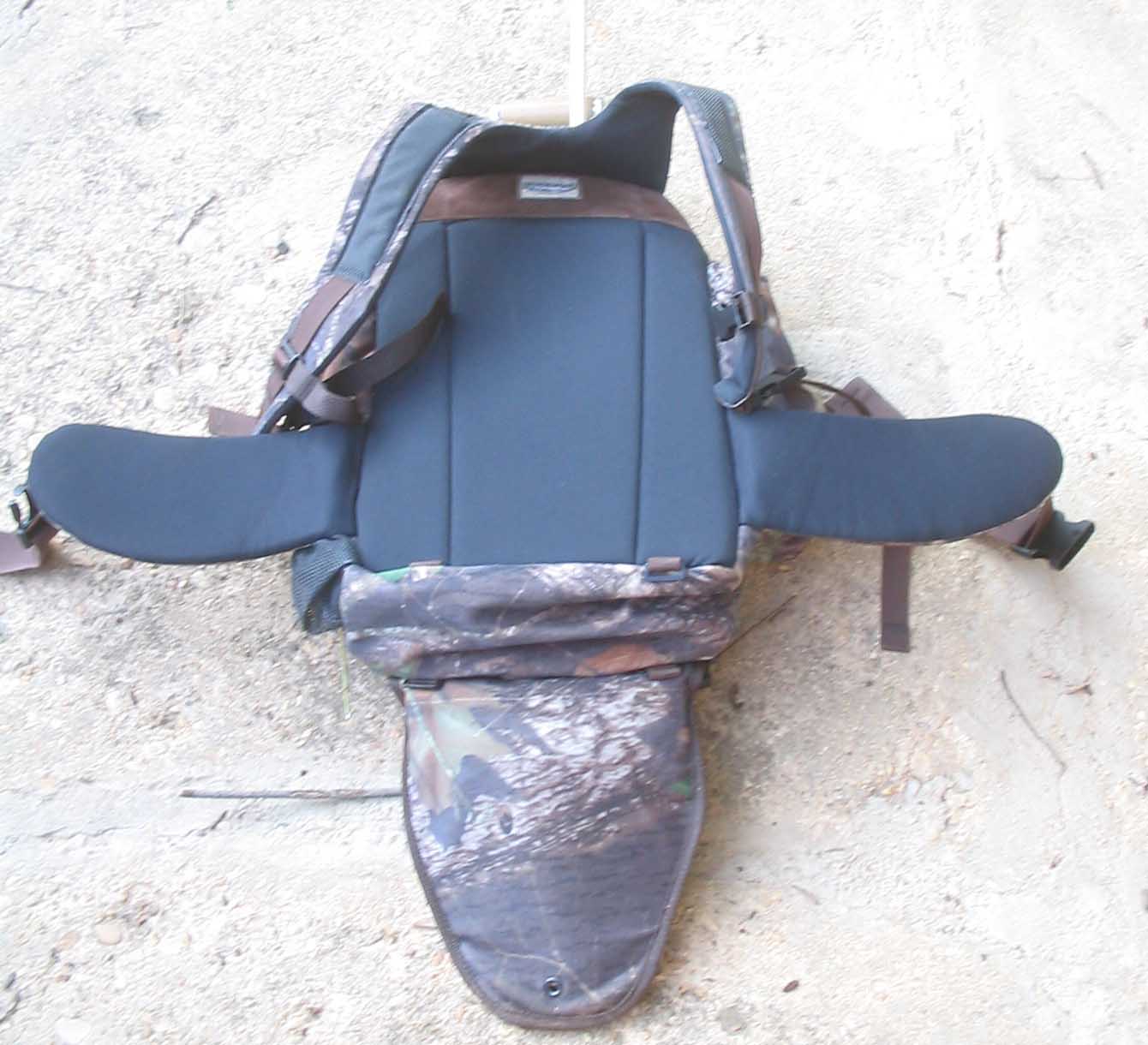
For the last eight years or so, I have been using a Brockwood "Sniper" bow pack purchased from the Bag Depot, and it is far and away the best terrier work pack made.

My Ames Pony shovel fits so perfectly it seems as if the pack was designed to carry it. My snare, machete, long-handled trowel, and tie-outs all fit perfectly as well.

The main pack is more than big enough for water on hot days, a veterinary kit, leashes, etc. The shoulder straps are well-padded, as is the back and the hip belt.

This thing is very well constructed (a lifetime guarante!) and is MADE IN AMERICA too.

You will not find a better price on a bow-rifle pack either.

Perfect!


Brookwood's Bow / Rifle Backpack

  • Size: 20" x 14" x 8"
  • Front Panel holds a Bow or Rifle securely with 2 straps and a padded protective cover
  • Made of Water-repellent Suede-Cloth, a quiet and super tuff material that resists burrs
  • Front zippered pocket with organizer and an additional front accessory pocket
  • Two side zippered pockets
  • internal frame (removable)
  • Main compartment has an internal water bladder pocket
  • Padded back with moisture wicking fabric
  • Padded waist belt with detachable belt strap
  • Padded, ergonomic shoulder straps with non-slip rubberized strips
  • Sternum strap for a secure fit
  • Made in U.S.A.
  • Manufacturer Lifetime Guarantee
  • Three camo patterns available

Monday, December 15, 2014

Are Useful Tools Ever Out of Date?


I got a letter from AARP the other day.

They wanted me to join. I am 50.

I wanted to scrawl on the envelope, NOT DEAD YET!

When I turn on the radio, the songs of my youth (such as Led Zeppelin and Grand Funk Railroad) are now on "the Oldies" station."

Oldies?

Perhaps.

Now to be clear I listen to new music -- a lot of it. And I will also venture that we have more great musicians alive right now than we have ever had in the history of the world.

But "new" does not always mean better. Sometimes it does, but not always. I am pretty sure the work of Little Wayne will be forgotten long before that of Mozart, Armstrong, Sinatra, and Springsteen.

Of course, a lot of times, the "NEW" is simply the OLD in a new wrapper.

The kids call this "sampling" which sounds so much better than plagiarism.

And, of course, it is not new is it?

When Leonard Bernstein pitched Westside Story, he pitched it short: "It's Romeo and Juliet with Puerto Ricans in New York."

When Steven Spielberg was trying to raise money for his first real movie, he said: "It's Moby Dick.... but with a shark."

When Francis Ford Coppola pitched "Apocalypse Now" he did not waste a lot of time: "It's Joseph Conrad's Heart of Darkness ... in Vietnam."

So what am I to make of all these folks claiming to be "new and improved" dog trainers? These are the folks ripping off 80-year old techniques which are derived from 150-year old techniques, which were lifted from stuff stolen from the folks who built the pyramids.

I am all for this "new" stuff. But I am not for tossing out the "old" stuff either. You see, it's all the same thing!

But of course this may come as new information to the fuzzy thinkers and instant experts.

Take the anonymous coward who showed up the other day to say he or she thought Cesar Millan's methods were "outdated."

Eh? What? What are his methods?

And what are his methods to do WHAT?

Does this person think Millan is training dogs? He is not.

Does this person think non-associative habituation is outdated? It's not.

Does this person think operant conditional extinction is outdated? It is not.

Does this person think a leash is outdated? It's not.

Does this person think exercise is outdated? It's not.

Does this person think consequences are outdated? They aren't.

Does this person think walking a dog is outdated? It's not.

Does this person think clarifying the point that dogs are not children is outdated? It's not.

Does this person think showing affection for dogs is outdated? It's not.

Does this person think the notion that a dog trainer has to be calm is outdated? It's not.

Does this person think the idea that a dog trainer has to send clear and well-timed signals is outdated? It's not.

So what is "the method" that is outdated? And what is that method being used for again?

This is a genuine question.

I hear people saying "Millan's methods are outdated" but no one seems to know what that means in the context of what he actually does, which is RE-habilitating dogs.

Instead, what I hear are anonymous cowards who are willing to "fence fighting" but stand as complete punks, ignorants or fools if that fence is removed.

And so they keep the fence up! No names. No email addresses.

When you tell me so little, you tell me so much!

Of course, along with the anonymous cowards, the zombies and the trolls, you have the parrots. These are the folks who repeat whatever they just heard on a board, or who regurgitate whatever they just read in a book, never once subjecting the idea to rationale thought, research, or field experience.

Parrots are the folks who write all-breed books and who read them and believe them.

They may squawk a lot, but their brains are the size of a shelled walnut, and they are incapable of original though or use of tools. Most spend their entire lives never leaving their cage.

And then there are the folks who actually do things. And guess what? The most successful of these use tools, both old and new, as they find them, and as they need them.

And so, in the world of working terriers we use tools and techniques straight out of the Middle Ages.

But we also use electronic locating collars in order to locate the dogs under ground. And we use plastic water bottles and, if the need arises, a veterinary staple gun and antibiotics.

Tools are not completely the same from one place to the next, either.

In the U.K., they do not use posthole diggers as the ground is a bit softer. When a UK terrierman comes over here, however, he figures out he may have a use for this "new" tool!

What? Not all geography is the same? True! But tell no one.

And not all dogs and dog problems are the same either.

But mum's the word. Tell no one.

As for my old tools, I try to keep them well-oiled.

A few years back I realized I could not scrunch down into a hole like I used to, and so now I go to the gym a couple of times a week just to keep things moving.

I have replaced a rivet or two in my shovel heads, I have replaced a few handles on my posthole diggers, I have patched a cracked locator box, swapped out some leather collars, replaced a badly frayed pack, and buried a dog or two.

But I still dig on my dogs the way it has been done for over four hundred years. I am not so vain as to think that because I invented a cheap game snare I invented digging on the dogs.

The world did not begin the day I was born!

-
A repost from 2010.

Saturday, October 25, 2014

Undiggable Earths


This groundhog sette ran more than 6 feet deep through broken slates mixed with thick tree roots. This is a diggable earth, but one you do not want to tackle solo, as I was this day in the field. This is when you want a dog that will come out rather than force you to dig down to it.


If you dig very much, your dog will eventually enter a sette that, for one reason or another, is undiggable. Perhaps it is a fine-looking earth that, when shovel is put to soil, turns out to be a heap of roofing tin covered over with dirt -- or worse, a mound of steel-belted radial tires! I have had dogs enter settes that ran under huge pieces of broken iron sewage pipe that had been dumped into a ravine, as well as rock settes and massive hay bale stacks that were not going to be shifted without a backhoe.

Sometimes a sette is theoretically diggable, but you really would prefer not to. A 10-foot solo dig for a groundhog? Not if you can avoid it!

What do you do when your dog enters an earth that could only be dug if you were forced to chainsaw down the tree and prize out the roots?

Simple.

Stand back, far away, and sit down. Do not smoke, do not talk, and do not stand up. Do not sit near the sette -- you want to be so far back from the hole that the dog cannot hear you breathe or smell you. Do not shift your weight or bang your tools -- just sit and wait and watch the hole.

How long do you wait? That depends. Most dogs will come out between a half hour and an hour after they enter. What happens if they don't? You wait some more. Do not go back to the sette and do not call the dog.

Waiting is hard, especially if it's a green dog, or you are a green digger. There's a natural desire to do something -- to start digging, to call the dog, to shove a mirror and light down the hole, to walk around topside boxing for location, etc.

If you have really ascertained that the earth is undiggable, resist temptation.

Two or three hours may go by with the dog not coming out. The good news is that most dogs will exit on their own before this amount of time has passed. Be patient.

It is in these undiggable earths that small vocal dogs prove their worth, because these dogs are less likely to get stuck, are more likely to be able to turn around underground, and are less likely to shove dirt behind them that might "bottle them up" from behind.

If the dog is vocal, and you are quiet, you should be able to hear it bay when you are close to the sette (provided it does not have a mouth full of fur).

When the dog does appear, do not walk up to it, but instead turn your back, walk slowly away, and quietly call its name -- the dog will most likely follow. If it does not follow, and instead dives back into the hole, simply sit down and wait some more -- the dog will be out again, soon enough. Now you are simply in a waiting and training game.

An experienced dog will understand, in time, that you are a team and that if you are digging it has to hold ground, but if you are not digging for a long period of time it may be a signal to come out.

Dogs learn, provided we are consistent and give them lots of experience. It is on the experience end that most terrier owners fall down.

Wednesday, March 19, 2014

A Diggers Duty to the Dog


It is not politically correct to say this, but it is nonetheless true that women, on average, have half the upper body strength of their male counterparts. 

Terrier work is not for fools, the unprepared, or the physically weak. Most of the time it is a simple things: dog in, dogs bays, quarry bolts or is dug to.

Most of the time.

There there are the other times: when the dog goes so deep it is off the Deben box and cannot be heard; when the explosive stench of skunk poison rises like smoke from the hole; when the dog refuses to shift out of a solid rock hole; when, after four feet of dirt, you hit running sand; when the dog is unable to turn around or exit due to a rock or root slipping behind it.

This is when tools matter, and you have to have the right tools with you in the field.

In terrier work, the most important tool is between your ears. A lot of things that are written off as a "tragic accident," are, in fact, a predictable nightmare.

"The collar failed."

Yes it did. But did you spend time to really tape the collar, and do you know how to tape a collar? Did you enter a dog under a power line? Did you test the batteries before they were put in? Did you check to make sure the collar and receiver were working before letting the dog loose?

I have been guilty of all of these failures at one time or another (as have most diggers), but let us be straight; our failure is not an accident. It is sloth. It is stupidity. It is recklessness.

So many "accidents" occur when dogs are in the field without collars and the dog's owner is without tools. Again, I have been guilty of this transgression, but let it be clear that stupidity, sloth and foolishness on the part of humans is the chief culprit in what is too easily an unfolding tragedy. Failure to put a dog on a leash is not an "act of God," it is the non-action of a human.

Another invaluable tool, along with common sense and a basic knowledge of terrier work, is a certain level of physical strength.

It is not politically correct to say this, but it is nonetheless true that women, on average, have half the upper body strength of their male counterparts. This is not to say women cannot dig. Some women diggers are more capable than most men (including me). It is simply to say that all diggers, and women in particular, need to make an honest assessment of their physical abilities. It is one thing to think you can dig a hole five feet square, but it is quite another to do it when the time comes. It is a risky and marginal thing for a relatively fit man to work his dog solo, and it is not recommended for most women. Two heads are better than one most of the time, and two bodies are better than one all of the time.  If your dog is skunked underground, you will have minutes to get it out, not hours.

Women who think they can equalize it all by simply putting more people in the field need to give this notion a second pause. Is more people in the field going to mean more dogs in the field as well?  I do not like large groups in the field because it is too hard to keep track of all of the dogs.  People get to talking and dogs are as fast as lightning.  It only takes one skunked dog, one dog slit open by barbed wire, one dog fight, or one dog struck by a car to seriously ruin a day.  With more dogs on the ground, the possibility for trouble begins to rise rapidly.

Another issue is that large digging groups rarely get together in the U.S., so if you are dependent on four or five people getting together for a day's outing, it may be that no one in the group is very experienced.  Lack of experience may not matter too much if it's a simple two foot pop hole in friable soil (as most may be), but if you have to drop a six foot hole or work around major obstruction and geology, muscle mass and experience can matter quite a lot.

None of this is said to be sexist, but it's important to be a realist.  Digging on the dogs is not a short walk over a manicured lawn.

It is not go-to-ground.

Diggers should be prepared to carry 40-60 pounds of tools for several miles and then sink a hole in hard stuff at the end of the journey. Poison ivy and multi-flora rose are guaranteed, and there is always a possibility (however slight) that a dog can die due to an encounter with a skunk underground, a cave in, or some other mishap.

The person who works his or her dog has a duty to the dog to be prepared to pay for any and all veterinary care needed (I once shelled out $3,000 for a very serious injury from a groundhog), to stay out all day and night digging if need be, and to even rent earth moving equipment if it is absolutely required.

If you are not prepared for the labor, the thorns, the cost, and the time, then digging on the dogs is not for you.
.

Tuesday, January 24, 2012

The Nonsense of "Pull Dogs"


In The Working Jack Russell Terrier Eddie Chapman writes:

"Something that makes my blood boil is when I hear terrier men talk about dogs they call Caesar dogs. They will show you a Russell type that has been bred too big and say, 'I use him as a Caesar dog'. If I ask what a Caesar dog is, they say it is a dog which will hold the badger, he won't let go,' they say. I have never heard such rubbish in my life. Besides being unnecessary, it is invariably cruel to the dog and more often than not he will be badly bitten for his pains. Besides that, it is unnecessarily cruel to the badger and the sort of behavior that got badger digging banned. I have tried to explain how to remove badgers from a sett without injury to dog or badger. There is nothing clever about getting a hard dog smashed up by a badger. On the contrary, it shows ignorance and a lack of responsibility and feeling. Bravery in a terrier should never be exploited."

I found it quite refreshing to read this passage, as I have often noted that there is little reason to own a "pull dog" if you actually know how to handle things at the end of a dig. The use of "pull dogs" damages dogs and quarry alike and is wasteful as it often necessitates time out of the field and expensive veterinary work.

In the U.S., the use of pull dogs (what Chapman and some others call "Caesar" dogs) is due to the prevalence of too many over-large terriers that cannot go to ground in a real earth. To say you have a "good pull dog," is to say you do not have a dog capable of actually going to ground.

If you have followed the Kennel Club dictates, and embraced a 14 inch tall dog with a 17" or 18" chest (or larger!), you are forced to rationalize a job for it. No matter that it is a stupid job forged in pain. Most people would rather see their dog injured than swallow their pride and admit they have drunk the Koolaid offered up by the Kennel Club know-nothings who think a fox den is as big around as a go-to-ground tunnel.

Another factor is that many people simply have no idea of how to handle quarry and so use the dog to to do the job. Having gotten to the end of a dig, they do not know how to get the animal out of the pipe, nor do they know how to dispatch it. In such a situation, the use of a "pull dog" is ignorance in motion.

The simplest way for a novice to handle quarry is with a snare. You can make your own for about $5, or else buy a pig snare from a feedstore.

Groundhogs can also be tailed out alive -- it is not hard if the groundhog's tail is presented, as it so often is. If very much of the pipe is remaining, however, you may find yourself in a tug-of-war with the groundhog who can jamb up inside a pipe so tightly that even a large man can have difficulty pulling one free.

Always use a snare for raccoons -- they can twist all the way around on their short fat bodies. They can grab you with their hands and have crushing bites. Rabies is not uncommon in raccoons, especially on the East Coast.

If you have entangled a fox in a net, be carefully when extricating the fox. The best advice is to pin the animal to the ground under your boot while removing the net. Work the net off the fox in sections, and then release it to hunt another day.
.

Tuesday, December 27, 2011

I Love My New Kindle Fire


My new Kindle Fire is quite the tool! Not only is it a good e-book reader, but it also gets my email, the Internet, plays all my music, is a great place to store and show pictures, and streams video and radio too (I have been watching National Geographic's Amazing Planet at Starbucks, which is about as cool a thing as I have done in the last three months). All this for $200, which I find rather amazing!

Some of this can be done with my Samsung "smart" phone, of course, and the Kindle does not replace that, as the Kindle is not a phone and is dependent on a wireless connection for everything but downloaded books and music and movies and photos, while the phone operates off of high-band radio frequencies (that's what a G3 or G4 connection is really all about).

The phone of course, it not a book reader, nor is it very good at reading stuff on the Internet (not even email). The Kindle allows me to download both recently published books and many free older books as well. For example, on my first morning with the Kindle, I downloaded four free old dog books, as well as some Conan Doyle and some obscure Mark Twain for starts. More free book are available at archive.org (2.5 million titles for free), openlibrary.org (1.5 million titles), Project Gutenberg, ManyBooks.net, and Feedbooks and select either Mobi, Text, or Kindle formats for easiest downloads.

Apparently, I can also download audio books too. I will have to try that!

This morning I figured out how to highlight text in a Kindle book, so that I can then rip and strip that text into a blog post. The trick here is to know that Kindle has created a social network which can be accessed at http://kindle.amazon.com/ One you log in, it shows you not only all the books you have downloaded, but also all the passages you have highlighted. For example, this is text I read yesterday:

“My dear fellow,” said Sherlock Holmes as we sat on either side of the fire in his lodgings at Baker Street, “life is infinitely stranger than anything which the mind of man could invent. We would not dare to conceive the things which are really mere commonplaces of existence. If we could fly out of that window hand in hand, hover over this great city, gently remove the roofs, and peep in at the queer things which are going on, the strange coincidences, the plannings, the cross-purposes, the wonderful chains of events, working through generations, and leading to the most outrageous results, it would make all fiction with its conventionalities and foreseen conclusions most stale and unprofitable.”

Kindle can read Word, .txt, .jpg, .pdf, .gif, and HTML files as well as .mobi, .prc, and if you email yourself at your Kindle email  address, it will convert files and even unzip and convert Word folders and documents so they are ready to read.

So what is the Kindle not great for?  Well. it's not a full computer with desk, chair, mouse, and key board.  Nothing really replaces that, not even a laptop or notebook in my opinion (and yes I have those too).  For actual writing, I remain a "box box table unit" man, but for researching, reading, and doing the light communications "tasking" that the world demands of us these days, the Kindle is pretty darn great!

Final two bonus bits:  It fits in the front pocket of my Carrhart pants, and it takes the same charger as my cell phone, which is particularly great in the car.

Saturday, November 26, 2011

A Bad Idea for 70 Years

From the Jan, 1941 issue of Popular Science comes this idea that has crippled people, killed dogs, and resulted in endless amounts of canine confusion:

Click to enlarge.
.

Monday, October 24, 2011

What's This Cost?

This little scraper/weeder was for sale at the local garden center. What do you think it cost?


Friday, October 14, 2011

American Working Terriers on Kindle and Nook

American Working Terriers
Price:$15.00
Support independent publishing: Buy this e-book on Lulu.
Download immediately and feel free to Facebook it!
.
Practical, common sense, terrier work for the beginner, laid out in a clear no-nonsense style with chapters on the history of working terriers in Europe and America, along with sections on introducing young dogs to work, tools, technique, American terrier quarry, hazards, and veterinary care for working dogs.

The sections on veterinary care and tools alone will save most people more money than the cost of this book, while the tips on digging, locator collars, skunk toxic shock, and handling quarry at the end of a dig, may save you more than money.
This book is about working terriers, but if you show, breed or judge any type of terrier, you will find this book an eye-opener.

275+ pages, with 80 photos and illustrations.  Want the paperback version?  Get that here.  Also available at the Apple I-store for I-PAD and Barnes and Noble for the Nook.
.

Friday, September 23, 2011

The First Shovel


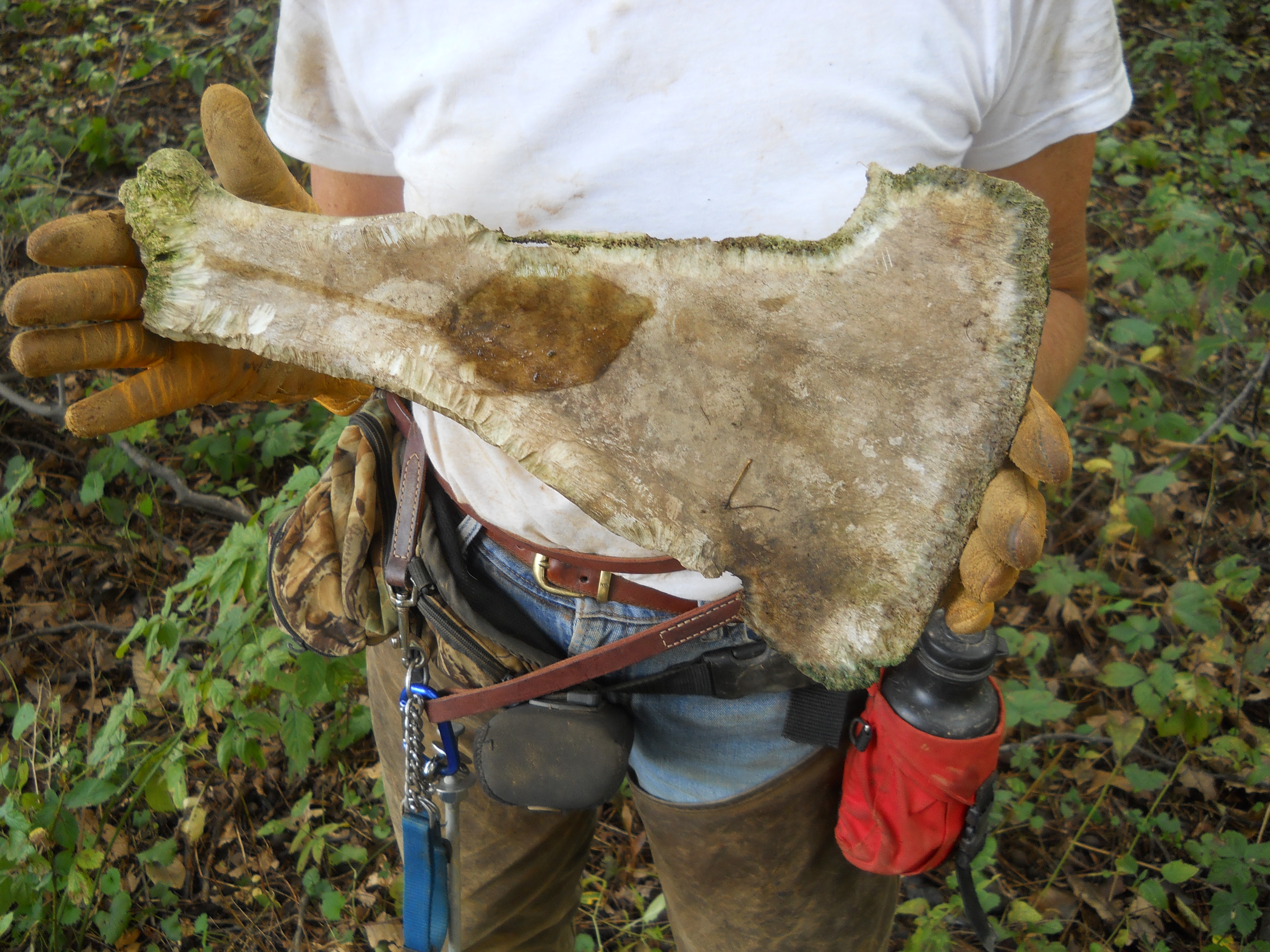
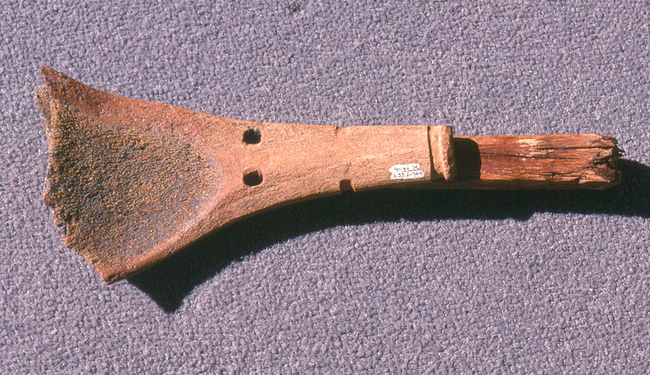
While out digging on the dogs with Connie and Kelly, we came across this cow scapula.

Cow, ox, bison, horse, caribou, and walrus scapula (as well as others) were the first shovels and are the kind of thing that dug the foundations for those massive stone buildings you find in Central America.

Large scapulas can be used as a kind of short-handled digging tool without any alteration, or else they can be hafted to a wooden handle as the caribou scapula, below, once was.


Tuesday, April 19, 2011

Digging Bars are a Necessity, Not a Nicety


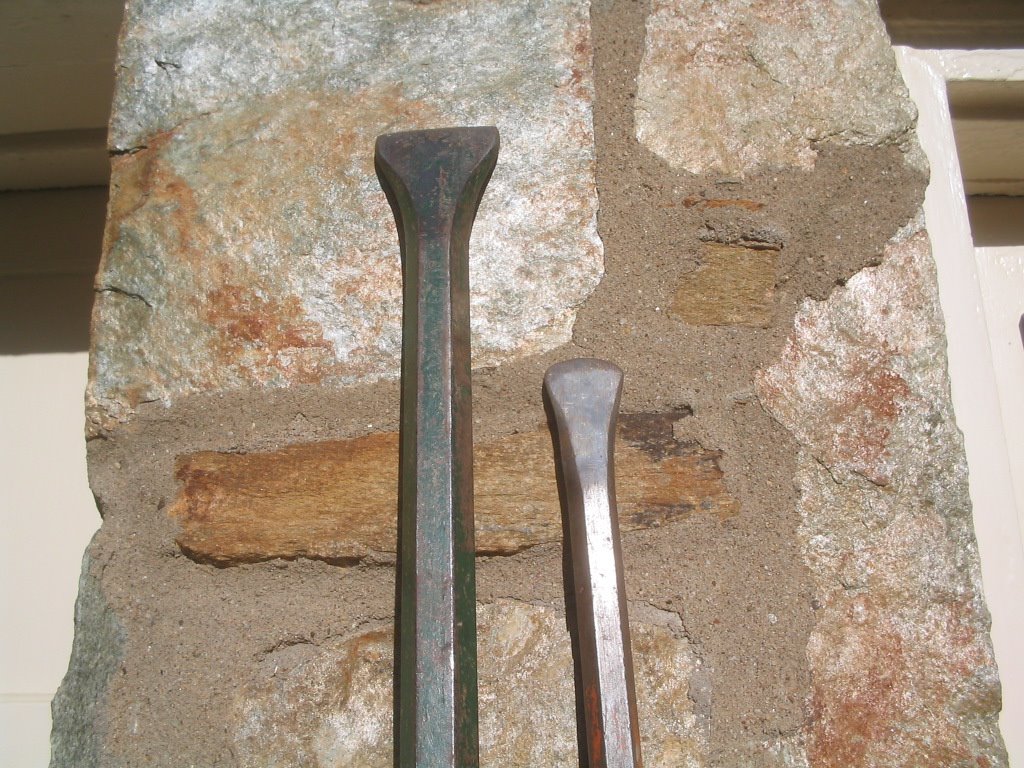
The heavy bar, at left, rarely leaves the truck, while the lighter bar, to the right, is used on almost every dig.


My digging bar is 3/4 inch hex steel with a blunt point on one end
, and a chisel tip forged into the opposite end. The bar has been hardened for about 20 inches or so on each end. This bar was a gift from veteran terrierman Larry Morrison, and has been much used. I am proud to say that this bar is as straight as the day he gave it to me -- I value this tool and do not abuse it. With proper care, I expect it to be used to dig my grave. A similar bar can be made by any welding shop -- 3/4" hex bar is off-the-shelf stock steel.

My digging bar is 6 feet long, and I consider it the proper length and shape for good digging. I find a T-bar transfers too much vibration back into my hands and is too jarring to use when being hammered through shale, marl or rock. A bar that is too short cannot be used to reach deep in order to shatter rock or cut the edge off a hole that is four feet down (a frequent need).

The digging bar to the left of my regular digging bar is the heavier type of bar you might find at Home Depot or some other hardware store. The point end of this bar is attached to a cut down drain spade head to serve as a "Bertha," spoon, or heavy grafter (all the same thing). This heavy tool can cut through solid igneous rock -- and has. It almost never leaves the truck, but when it does, serious digging of very hard stuff has to be done.

I do not believe in going into the field with too light a bar -- it's a matter of safety for the dog. Though dogs can almost always exit places they can enter, there are times when you want to get down fast. In those rare occasions where a rock has slipped behind a dog, or a stump root prevents an easy exit, you should be able to call up the heavy artillery and get the dog out without having to call for reinforcements.

I use my light bar on almost every dig, and consider it a necessity, not a nicety.

A bar slammed deep into the ground behind a critter can be rattled to make it bolt to a snare, while a blow from a chisel point can quickly dispatch an animal in a hole. And, of course, a bar can be used as a listening device.

The primary job of bar, of course, is to break up hard packed rock and marl. When a bar is absolutely needed, nothing else will do.
.

Friday, December 10, 2010

Tools for Terrier Work


Decent work gloves are a necessity for terrier work
, not only because 6-foot iron digging bars are cold and rough on the hands, but also because posthole diggers leave blisters, multilfora rose can rip your hands up pretty fast, and poison ivy is always present in American hedgerows.

I buy cheap pigskin work gloves, made in China, and was especially please to see Home Depot selling three-pairs at a time for $10 the last time I was there. 

Wow.  What a deal!

That said, if I came across the pair of gloves, pictured above, I think I would buy them as a gift for my digging buddies.  Better than nothing indeed!
.

Tuesday, September 07, 2010

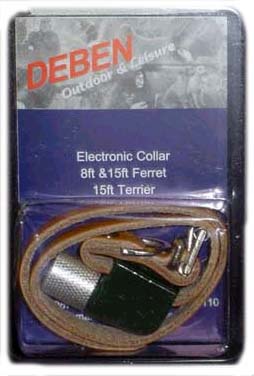
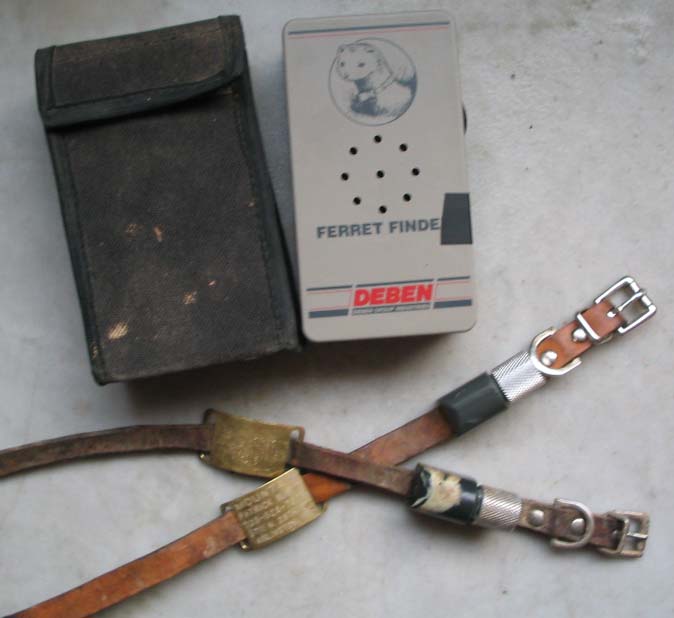
Deben Mark I Collars and Boxes for Sale

I still use the old Deben Mark I locator collars and box, and I recommend them.

The good news, for those who want to get into the world of digging, is that five of the old collar and box sets have come on the market here in the USA.

The seller is Ray H. in New Jersey, who can can be contacted at FOXHUNTERDERRY@YAHOO.COM.

If you want a phone number, send me an email and I will forward that number to you.

For those wondering, those are my old locator collars and box pictured below. Mine are a bit battered, but I have a spare box and a least two more collars beyond the two I use on my own dogs, so I am in good kit. More on how to use a locator collar -- and how to make the Mark I locator collars last forever --at this page on the Terrierman.com web site


.

Monday, May 24, 2010

The Best Great Sword Ad You Will See All Day


This is the best Great Sword promotional video you will see all day. This little beauty costs only $318 and it appears to be worth every dime.

Suggest your butcher buy one and put on a performance in his shop window; sure to boost business!
.