Showing posts with label kipling. Show all posts

Thursday, May 03, 2018

Kipling: The Power of the Dog


In my email today was a post about a much-loved terrier's passing away. It is something we must brace for from the day a puppy arrives in the house. It is never easy, but nothing loved is ever lost. Those with hunting dogs can have the consolation that at least their dogs once lived!

The Power of the Dog, by Rudyard Kipling

There is sorrow enough in the natural way
From men and women to fill our day;
And when we are certain of sorrow in store,
Why do we always arrange for more?
Brothers and sisters, I bid you beware
Of giving your heart to a dog to tear.

Buy a pup and your money will buy
Love unflinching that cannot lie--
Perfect passsion and worship fed
By a kick in the ribs or a pat on the head.
Nevertheless it is hardly fair
To risk your heart to a dog to tear.

When the fourteen years which Nature permits
Are closing in asthma, or tumour, or fits,
And the vet's unspoken prescription runs
To lethal chambers or loaded guns,
Then you will find -- it's your own affair --
But ... you've given your heart to a dog to tear.

When the body that lived at your single will,
With its whimper of welcome, is stilled (how still!)
When the spirit that answered your every mood
Is gone -- wherever it goes -- for good,
You will discover how much you care,
And will give your heart to a dog to tear.

We've sorrow enough in the natural way,
When it comes to burying Christian clay.
Our loves are not given, but only lent,
At compound interest of cent per cent.
Though it is not always the case, I believe,
That the longer we've kept 'em, the more do we grieve:
For, when debts are payable, right or wrong,
A short-term loan is as bad as a long --
So why in -- Heaven (before we are there)
Should we give our hearts to a dog to tear?

Wednesday, October 29, 2014

Rudyard Kipling: The Fox Meditates

.

Rudyard Kipling traces the history of England and western civilization through the "meditations" of the fox in the poem appended below.

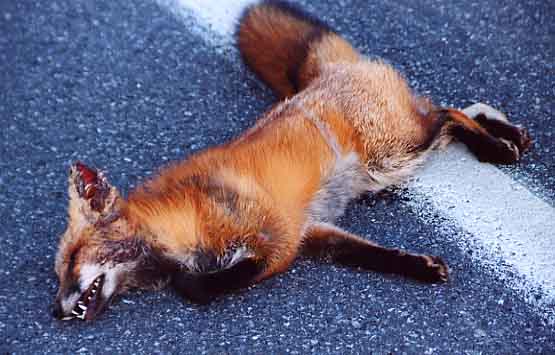
As the last verse notes, the car on the road kills far more fox than any of the mounted hunts ever did -- in fact it kills far more fox in the UK than the mounted hunts, the weekend terrier enthusiast, and the shooter and working lurcher enthusiast combined.

Kipling references the time when "hedging came in fashion" (the Enclosure Movement) and notes too the rise of wire fences and trains which enabled more and more "townies" to come into the countryside.

Carter Fell is mentioned as well -- the same Carter Fell that John Dodd of Catcleugh -- one of the creators of the Border Terrier -- was hunting during Kipling's lifetime.

For more information about the role of the Enclosure Movement in the development of terriers, see >> "A Pictorial History of Terriers; Their Politics & Their Place"

For more about how the rise of cars and easy travel to the countryside has influenced terrier work, see >> "The Sad Rise of Hard Dogs"

Rudyard Kipling was born in 1865 in Bombay India, and died in 1936 in London. He married an American woman in 1889 and, for four years, he lived in Vermont, where he wrote The Jungle Book and the sequel, Just So Stories.

Kipling was the first Englishman to receive the Nobel Prize for Literature.

The Fox Meditates by Rudyard Kipling
When Samson set my brush afire
To spoil the Timnite's barley,
I made my point for Leicestershire
And left Philistia early.
Through Gath and Rankesborough Gorse I fled,
And took the Coplow Road, sir!
And was a gentleman in Red
When all the Quorn wore woad, sir!
When Rome lay massed on Hadrian's Wall,
And nothing much was doing,
Her bored Centurions heard my call
0' nights when I went wooing.
They raised a pack - they ran it well
(For I was there to run 'em)
From Aesica to Carter Fell,
And down North Tyne to Hunnum.

When William landed hot for blood,
And Harold's hosts were smitten,
I lay at earth in Battle Wood
While Domesday Book was written.
Whatever harm he did to man,
I owe him pure affection;
For in his righteous reign began
The first of Game Protection.

When Charles, my namesake, lost his mask,
And Oliver dropped his'n,
I found those Northern Squires a task,
To keep 'em out of prison.
In boots as big as milking-pails,
With holsters on the pommel,
They chevied me across the Dales
Instead of fighting Cromwell.

When thrifty Walpole took the helm,
And hedging came in fashion,
The March of Progress gave my realm
Enclosure and Plantation.
'Twas then, to soothe their discontent,
I showed each pounded Master,
However fast the Commons went,
I went a little faster!

When Pigg and Jorrocks held the stage
And Steam had linked the Shires,
I broke the staid Victorian age
To posts, and rails, and wires.
Then fifty mile was none too far
To go by train to cover,
Till some dam' sutler pupped a car,
And decent sport was over!

When men grew shy of hunting stag,
For fear the Law might try 'em,
The Car put up an average bag
Of twenty dead per diem.
Then every road was made a rink
For Coroners to sit on;
And so began, in skid and stink,
The real blood-sport of Britain!
.

Wednesday, April 08, 2009

Rudyard Kipling: His Apologies


Picture Source


His Apologies by Rudyard Kipling

Master, this is Thy Servant. He is rising eight weeks old.
He is mainly Head and Tummy. His legs are uncontrolled.
But Thou hast forgiven his ugliness, and settled him on Thy knee...
Art Thou content with Thy Servant? He is very comfy with Thee.

Master, behold a Sinner! He hath committed a wrong.
He hath defiled Thy Premises through being kept in too long.
Wherefore his nose has been rubbed in the dirt
and his self- respect has been bruised.
Master, pardon Thy Sinner, and see he is properly loosed.

Master, again Thy Sinner! This that was once Thy Shoe,
He has found and taken and carried aside, as fitting matter to chew.
Now there is neither blacking nor tongue,
and the Housemaid has us in tow,
Master, remember Thy Servant is young, and tell her to let him go!

Master, extol Thy Servant, he has met a most Worthy Foe!
There has been fighting all over the Shop -- and into the Shop also!
Till cruel umbrellas parted the strife
(or I might have been choking him yet),
But Thy Servant has had the Time of his Life
-- and now shall we call on the vet?

Master, behold Thy Servant! Strange children came to play,
And because they fought to caress him, Thy Servant wentedst away.
But now that the Little Beasts have gone, he has returned to see
(Brushed -- with his Sunday collar on) what they left over from tea.

Master, pity Thy Servant! He is deaf and three parts blind.
He cannot catch Thy Commandments. He cannot read Thy Mind.
Oh, leave him not to his loneliness; nor make him that kitten's scorn.
He hath had no other God than Thee since the year that he was born.

Lord, look down on Thy Servant! Bad things have come to pass.
There is no heat in the midday sun, nor health in the wayside grass.
His bones are full of an old disease -- his torments run and increase.
Lord, make haste with Thy Lightnings
and grant him a quick release!

.

Tuesday, June 19, 2007

Colin Fletcher Climbs the Last Great Mountain


There are people who wrote books that are important to me. Colin Fletcher was one of those people. This obituary is from The New York Times.

"Down to Gehenna,
Or up to the Throne,
He travels the fastest,
who travels alone."
- Rudyard Kipling

Colin Fletcher, 85, a Trailblazer of Modern Backpacking, Dies

Colin Fletcher, whose ornate prose and prosaic tips on subjects like choosing the right hiking boots helped start the modern backpacking movement, died June 12 in Monterey, Calif. He was 85.

Mr. Fletcher died as a result of complications of head injuries he sustained in 2001 when he was struck by a car while walking near his home in Carmel Valley, Calif., said Chip Rawlins, who helped Mr. Fletcher write the fourth edition of "The Complete Walker" (Alfred A. Knopf, 2002). Many wilderness enthusiasts consider the work to be the hiker's bible.

First published in 1968, the book has sold more than 500,000 copies and remains in print. So, too, have two of the seven other books that Mr. Fletcher offered as paeans to soul-restoring and solitary strolls through the hinterlands. Hiking, he wrote in "The Complete Walker III," is a "simple, delightful, intended-to-be-liberating-from-the-straight-line-coordinates-of-civilization pastime."

Effusive and prolific throughout his career, Mr. Fletcher finished his next best-known book, "The Man Who Walked Through Time," the same year that he published his original walker's guide. In it he recounts his 1963 journey within the rim of the Grand Canyon. He negotiated its steep trails, rock falls and river currents, which extend 200 miles on the map but encompass more than 400 zigzag miles on foot.

"I was hopelessly insignificant and helpless, a mere insect," Mr. Fletcher wrote of his first night in the canyon.

"I saw that by going down into that huge fissure in the face of the earth, deep into the space and the silence and the solitude, I might come as close as we can at present to moving back and down through the smooth and apparently impenetrable face of time."

Mr. Fletcher also offered practical advice: how to arrange campsites, cook meals and, most importantly, pack a knapsack. His main point, Mr. Rawlins said, was to "reduce the weight of virtually every item in one's outdoor inventory."

You are "carrying your house on your back," Mr. Fletcher wrote. Although "the best roof for your bedroom is the sky," a light tarp is better than a tent. Among his other suggestions: trim the handle of your aluminum pot and even that of your toothbrush.

"Colin was sort of the founding father of modern backpacking, the first person to write about going out for an extended period and being self-sufficient," said Annette McGivney, the Southwest editor of Backpacker Magazine.

"A lot of men were coming back from Vietnam," Ms. McGivney continued, "and looking for some alternative to the regular American life." Because people began following Mr. Fletcher's advice, "the book could be credited with starting the backpacking industry," which includes gear makers and her own magazine, she said.

Often, Mr. Fletcher flavored his advice. "Even if you're in the most remote desert, he said to pack some good wine and delicacies," Ms. McGivney recalled. "Claret was his favorite wine; his favorite delicacy was smoked oysters."

Mr. Fletcher was born in Cardiff, Wales, on March 14, 1922, the only child of Herbert and Margaret Williams Fletcher. After high school, he joined the Royal Marines and served during World War II. He went to Africa after the war and worked on a farm and as a road builder in Kenya and Rhodesia. Then, in the early 1950s, he went to western Canada to work as a prospector. In 1956, he moved to San Francisco, took a job as a janitor and began hiking in the hills north of the city.

Two years later, to contemplate whether he should marry his girlfriend, Mr. Fletcher took a long hike - from Mexico to Oregon. It inspired his first book, "The Thousand-Mile Summer" (Random House, 1964). The marriage lasted a few weeks.

In 1981, Mr. Fletcher published what he considered a reflection of himself, "The Man From the Cave" (Knopf). It chronicled how, after finding a trunk and sparse belongings abandoned by someone in a desert cave in Nevada, he spent years piecing together the life story of "Trunkman," who turned out to be one William Simmons.

Mr. Simmons, otherwise known as Chuckawalla Bill, was a Spanish-American War veteran, a prospector, a cook and a boozing, womanizing, cigarette-rolling, poker-playing yarn spinner.

Mr. Fletcher said he felt connected to Mr. Simmons: "We both valued solitude and silence and square, smoothed-off granite boulders."

Friday, December 29, 2006

Carrying On


The "animal rights" lunatics in the U.K. are in a paroxysm. Here's the problem: Two years after the "ban" on fox hunting took effect, folks are still legally hunting them with gun and snare (to say nothing of the more than 100,000 fox that are run over by cars every year).

In fact, fox hunting is more popular than ever: two new mounted hunts have been created, one third of the hunts are claiming an increase in membership, and another third say they have been granted increased access to land. As for terrier work, it is legal and continues unabated.

The "ban" on fox hunting has had no impact at all on fox numbers generally -- they continue to be at record numbers, just as they were before the ban went into effect. The difference now is that every missing cat, duck, chicken or pet rabbit in the country is now blamed on animal rights loons who managed to divide the country for the sake of an ineffective -- and apparently unpopular and unnecessary -- law.

When the history of the Conservative Party is written, I hope someone will remember to thank the animal rights fringe for supplying an organizing vehicle.

This week, Boxing Day saw the largest hunt field ever, with more than 320,000 people participating in the hunts.

The latest poll shows that more than half of all Britons expect the ban on fox hunting to fall.

To tell the truth, the ban on fox hunting seems to be going a bit like the war in Iraq: Whatever it is was that was being fought for has not been won, and now it seems pretty clear there is no good way to "win" whatever it was.

So what have the anti's decided to do? Go home? Recognize that you cannot force things down people's throats if they really do not want it? Oh no! The new program is to try to use a vague "anti-social behaviour law" (or "asbo") written in 1999 to try to curb graffiti, abusive language, excessive noise, litter, drunkenness and drug dealing in the cities. The game is to see if (somehow) it can be used to curb organized fox hunting in the country.

Andrew Keogh, a Manchester lawyer who edits "Asbo Law Reports," says, "The easiest [complaint] to go for would be dogs barking or being unruly. But I view the chances of success as very slim indeed."

"Very slim indeed" is now the last best hope of the anti's. My bet is that they will demonstrate, even more forcefully, how silly, unnecessary and ineffective the law is. In a democracy, nothing makes a cause more popular than fascist opposition to it.

Meanwhile, more than 100,000 fox a year are being run over by cars, proving that Rudyard Kipling was right when he called road-kill "the real blood-sport of Britain." The mounted hunts, in their hay-day, did one-fifth the damage to fox, with less suffering, and a great deal more economic benefit to the countryside..


You will never see anyone in the Animal Rights movement leading a campaign in opposition to road construction or road widening. These folks are entirely absent from efforts to protect farm land, preserve wildlife habitat, or slow human population growth.

Conversely, as noted wildlife biologist David MacDonald has noted, no human action has been as beneficial to the red fox as the mounted hunts which have fought long and hard to protect fox habitat.